EU tools up to protect key tech from China / Photo: © AFP

 Wallabies back Meredith as playmaker for second New Zealand Test

 Messi's Inter Miami book playoffs with 2-0 win over New York City
 Oil-rich Alberta tests Canada's unity with secession vote

 EU leaders head for showdown over bloc budget
 All Blacks make three changes for second Wallabies Test
 Mourinho blasts 'shameless' timing of Vinicius ban decision
 PSG beat Man City in Champions League thriller, Barcola hits Liverpool hat-trick
 US Treasury chief urges stronger IMF role against 'distortionary policies'

 Giant-killers Bodo sink Dortmund in Champions League

 PSG outgun embattled Man City in six-goal Champions League thriller

 In Chicago, pope's hometown, Catholics express shock and support
 Musk suggests US govt behind any slowdown in Ukraine's Starshield system
 Chiclayo prays for recovery and return of the 'Peruvian pope'
 Barcola scores hat-trick as Liverpool hit LASK for six
 Healthy corals help bleached neighbors regain color: study

 Hope ton helps West Indies level T20 series at 2-2 in India

 Ukraine war reaches shores of Bulgarian fishing village
 Brazil probing 'criminal' origin of forest fires: minister to AFP
 Sally Rooney books cannot be sold in UK amid Palestine Action ban: publisher

 Italian ski stars Goggia and Brignone to miss season opener
 Bournemouth boss Rose urges Cherries to bounce back from Chelsea 'slap'
 Top seed Sabalenka falls at first hurdle in Wuhan
 FX Junction Brings Copy Trading to Everyone, While Their Money Never Leaves With Their Broker

 Brighton defender Struijk's red card overturned
 Saudi league postpones three matches after Houthi attacks
The European Union unveiled Wednesday plans to strengthen the bloc's economic security including measures to protect sensitive technology from falling into the hands of geopolitical rivals like China.
Brussels has bolstered its armoury of trade restrictions to tackle what it deems to be risks to European economic security, following Moscow's invasion of Ukraine and global trade tensions.
The fallout from the war in Ukraine hit Europe particularly hard, forcing the bloc to find alternative energy sources. Now, it wants to avoid a similar over-reliance on China, which dominates in green technology production and critical raw materials.
On Wednesday, EU officials outlined an economic security package containing five initiatives, including toughening rules on the screening of foreign direct investment (FDI) and launching discussions on coordination in the area of export controls.
The EU has already proposed new rules that it says are necessary to keep the bloc competitive during the global transition to clean technology and to bring more production to Europe.
"In this competition, Europe cannot just be the playground for bigger players, we need to be able to play ourselves," said the EU's most senior competition official, Margrethe Vestager.
"By doing what we are proposing to do, we can de-risk our economic interdependencies," she told reporters in Brussels.
Wednesday's package is part of the EU's focus on de-risking but not decoupling from China, pushed strongly by European Commission President Ursula von der Leyen.
"The change in EU-China relations has been the driving force of this embrace of economic security, which is something extremely new for the EU," said Mathieu Duchatel, director of international studies at the Institut Montaigne think tank.
- 'Focus on riskier transactions' -
EU officials also pushed back on claims the package had been watered down and that some of the initiatives would kick in too late.
One of the initiatives is to revise the EU's regulation on screening FDI, but others recommend further discussions, raising concerns that action could come too late.
For example, the commission said it wanted to promote further discussions on how to better support research and development of technologies that can be used for civil and defence purposes.
The EU also wants all member states to establish screening mechanisms, which could later lead to investments being blocked if they are believed to pose a risk.
"I would not agree that the package is watered down," the EU's trade commissioner, Valdis Dombrovskis, said.
He later said the EU wanted "to focus on riskier transactions and spend less time and resources on low-risk ones".
The negotiations are likely to prove a a delicate balancing act for the commission. Investment and export control decisions are up to national governments, therefore it must avoid overstepping its mark.
The package also recommends looking at outbound investments since the bloc currently has zero measures in place to scrutinise them.
The fear is such investments in some advanced technologies "could enhance military and intelligence capacities of actors who may use these capabilities to threaten international peace and security," the commission said, without naming countries.
The commission also proposed that the 27 member states recommend measures to enhance research security at national and sector level.
The importance of European economic security grew after statements by the commission in June, which pointed to rising geopolitical risks in the world including the war in Ukraine. There are also growing trade tensions worldwide causing concern in Brussels.
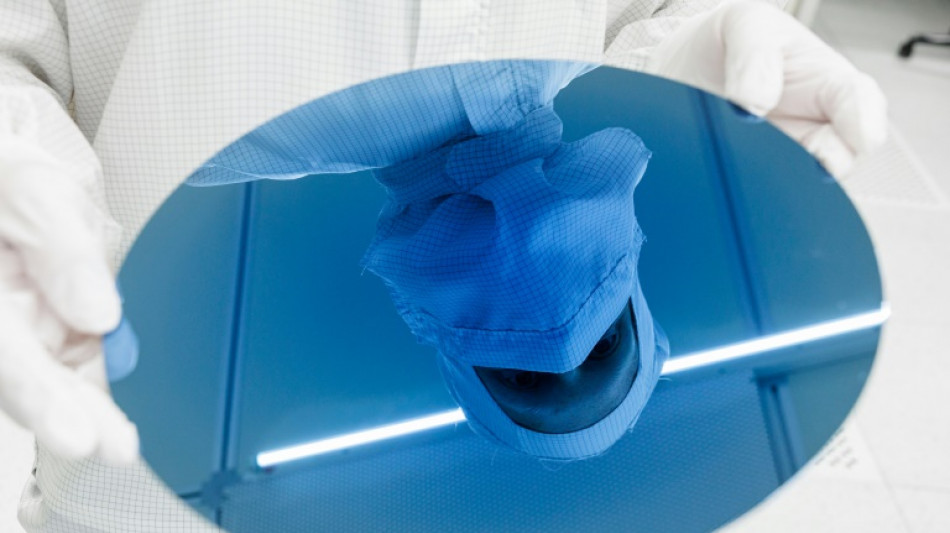
In October, the EU unveiled a list of four critical technologies -- advanced semiconductors, artificial intelligence, quantum computing and biotechnology -- that present the most sensitive and immediate risks related to technology security and leakage.
O.Lorenz--BTB