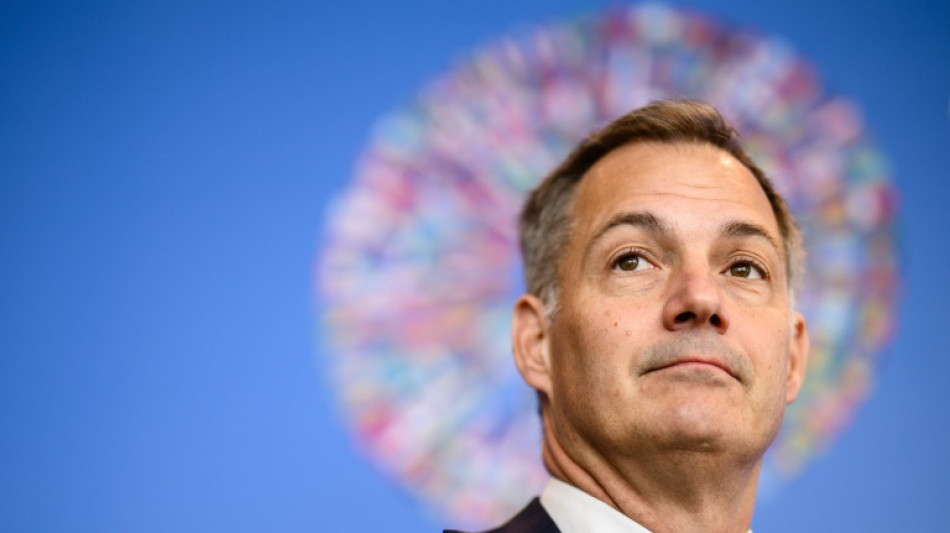
'No time to recover': UNDP chief sounds alarm on growing poverty after Iran war shock / Photo: © AFP

 Palmeiras beat Fluminense 2-1 in Libertadores semi-final first leg
 Brewers blasts leave Dodgers on brink
 Tech stock lead rout after US inflation fuels rate hike bets
 Al-Fayed survivors say UK police missing 'bigger picture'

 Online 'witch hunt' sweeps up Asians misidentified as US rape accused

 Prospect of Bolsonaro win looms large over Brazil's Indigenous

 Freed from Belarus, founder of Lady Gaga's biggest fan site tells his story

 Behind AI's carbon footprint, a potential climate tool

 Trump's new press secretary faces scrutiny over credentials

 PSG 'got lucky' to win Man City thriller, says Luis Enrique

 Real Madrid comeback stuns Roma as Mourinho enjoys happy reunion
 Shakhtar make winning start at new Champions League 'home'

 Hat-trick hero Barcola primed to shine for Liverpool: Iraola

 Villa put six past Fenerbahce in record rout
 US stocks fall after hot inflation report as leading AI shares tumble
 Government buildings torched in violent Albanian protests
 Wall Street grills Bank of America over money laundering fine

 Mekies extends contract as Red Bull team principal until 2031

 Indonesia rescues starved orangutan from fires: officials

 Real Madrid's Vinicius banned for Clasico after red card
 Restrictions expose Ukraine's Starlink dependency in Russia war: observers
 Espada out as Astros manager while Mattingly stays with Phillies

 Houthis say targeted Saudi oil giant Aramco, vow more attacks

 Govt takes control of Turkey's most-watched news channel

 FIFA to offer members $6.35-billion development fund windfall

Millions could be thrown into poverty by surging energy costs, the impact of an intense El Nino phenomenon and higher interest rates, with vulnerable countries being pushed to the brink by repeated crises, the UN's development chief told AFP.
Global fuel prices have soared since the United States launched its war on Iran in late February, with Tehran's retaliations against Washington's Gulf allies curtailing major oil and natural gas supplies.
Fiscal deficits and debt-to-GDP ratios around the world have ballooned since the 2008 global financial crisis, with governments firefighting against a series of shocks including the pandemic and wars in Ukraine and the Middle East.
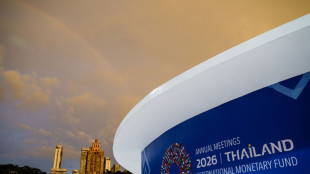
Speaking on the sidelines of the IMF-World Bank Annual Meetings in Bangkok, UN Development Programme (UNDP) head Alexander de Croo said many developing countries had responded to the current spike in energy prices with blanket subsidies, but a succession of crises had left them with limited resources to keep that up.
"You have to repair your roof while at the same time your home is on fire," he told AFP, adding governments in the developing world did not have time to rebuild buffers or resolve previous shocks before being hit by new crises.
The IMF warned this week that while global growth had held up in the face of the energy crisis, that resilience was highly dependent on the boom in AI technology investments, and poorer countries not exposed to that were still struggling.
IMF chief Kristalina Georgieva had warned that "winter is coming" -- an allusion to popular fantasy book series "Game of Thrones" -- implying that a cataclysm was around the corner if the world did not prepare for it.
And De Croo added: "Some countries have a well-insulated house with money in the bank. Other countries have a house without a roof and no money in the bank.
"We're stumbling from one crisis into the other, and what countries need is some space, and some time, and access to financing."
Not getting the response right could be devastating. The UNDP warned in a new report that about 130 million people were at risk of being pushed into poverty this year if energy and food price increases were fully passed on without subsidies.
People in South and East Asia and sub-Saharan Africa are at particular risk, the agency said.
- 'Difficult to manage' -
With advanced economies seeing bond yields surge -- owing to elevated inflation expectations, surging debt ratios and AI capital-raising activities -- global borrowing costs have been rising.
That in turn, de Croo warned, had tightened space for developing countries to access the capital they needed to combat the shocks, with rising interest rates feeding into increasing debt payments.
According to UNDP, the median developing country now spends about 9.5 percent of government revenue on interest payments -- the highest in a quarter of a century, and more than three times that in high-income countries.
"It starts to be a difficult situation to manage, and it takes away all their margin for policy," de Croo said.
The former Belgian prime minister said he would spend the week in Bangkok -- where world economic policy leaders have gathered since Monday -- pushing for advanced economies and multilateral agencies to invest in economic growth, resilience and job creation in the developing world.
He also said recent stark cuts in international aid were having an impact on those countries.
The UNDP warned there was potentially more pain to come, with this year's El Nino climate phenomenon forecast to be the strongest on record.
That is expected to have widespread effects including flooding, droughts and other extreme events that are estimated to peak in early 2027.
De Croo also said private capital needed to step in to help fight some of the worst consequences of climate change.
"We see that the impact of climate has an economic cost. Avoiding that cost has a business case," he said.
M.Odermatt--BTB