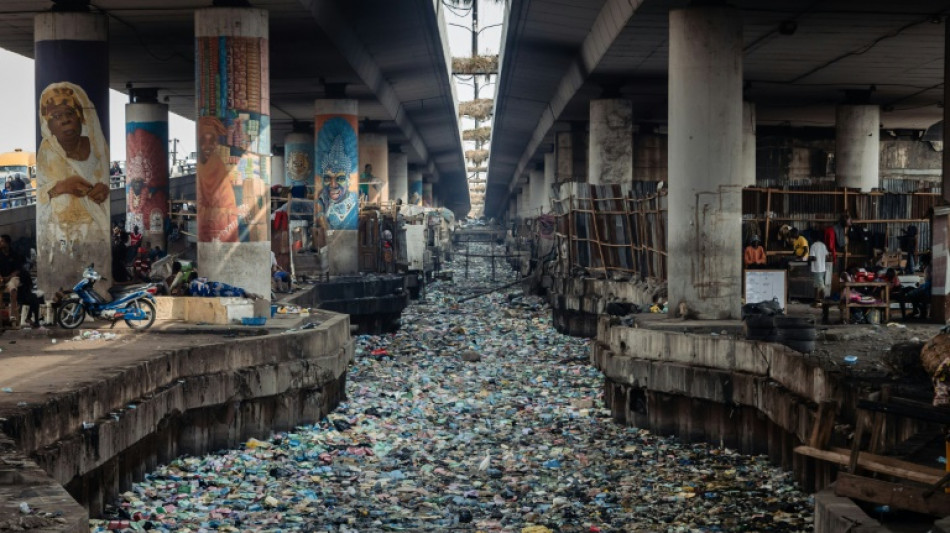
Lagos styrofoam, plastics ban brings applause and concern / Photo: © AFP

 Wallabies back Meredith as playmaker for second New Zealand Test

 Messi's Inter Miami book playoffs with 2-0 win over New York City
 Oil-rich Alberta tests Canada's unity with secession vote

 EU leaders head for showdown over bloc budget
 All Blacks make three changes for second Wallabies Test

 Mourinho blasts 'shameless' timing of Vinicius ban decision

 PSG beat Man City in Champions League thriller, Barcola hits Liverpool hat-trick

 US Treasury chief urges stronger IMF role against 'distortionary policies'

 Giant-killers Bodo sink Dortmund in Champions League

 PSG outgun embattled Man City in six-goal Champions League thriller

 In Chicago, pope's hometown, Catholics express shock and support
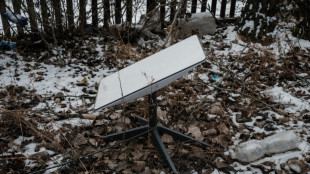 Musk suggests US govt behind any slowdown in Ukraine's Starshield system

 Chiclayo prays for recovery and return of the 'Peruvian pope'
 Barcola scores hat-trick as Liverpool hit LASK for six

 Healthy corals help bleached neighbors regain color: study

 Hope ton helps West Indies level T20 series at 2-2 in India

 Ukraine war reaches shores of Bulgarian fishing village

 Brazil probing 'criminal' origin of forest fires: minister to AFP

 Sally Rooney books cannot be sold in UK amid Palestine Action ban: publisher

 Italian ski stars Goggia and Brignone to miss season opener

 Bournemouth boss Rose urges Cherries to bounce back from Chelsea 'slap'

 Top seed Sabalenka falls at first hurdle in Wuhan
 FX Junction Brings Copy Trading to Everyone, While Their Money Never Leaves With Their Broker
 Brighton defender Struijk's red card overturned
 Saudi league postpones three matches after Houthi attacks

From trash-strewn pavements to street vendors packing meals in polystyrene containers, plastic waste is a constant menace in the urban landscape of Lagos, Nigeria's economic capital and the continent's most populous city.
That image could soon change if the local Lagos State government manages to implement its recent ambitious ban on the use of polystyrene and single-use plastics.
Sunday's announcement of the ban on styrofoam boxes and single-use plastics, "with immediate effect", by Tokunbo Wahab, the Commissioner for Environment of Lagos State, took many Lagosians by surprise, especially those living in the informal sector.
"Styrofoam boxes are cheaper than reusable plastic ones," Cecilia Mathew, 20, who sells dishes of rice, meat and gari -- or cassava flour -- told AFP speaking in the local Yoruba language on the streets of the popular district of Obalende in Lagos.
"It does not make sense to put food inside poly bag (plastic bag)," said another food vendor, Funmilayo Oresanya, 43.
For environmentalists, the Lagos State move was a welcome one that could not only cut down on waste but also reduce carbon emissions.
But other critics questioned the feasibility of an immediate ban on such commonly used products, especially for businesses.
"It’s too sudden," Kehinde Bakare, 61, a polystyrene box seller, told AFP. "There are people that are using it as a means of living so what will they be doing? How about the production people?” she said, asking that they be offered "substitutes".
Nigerian fast-food chain Food Concepts, known for its popular restaurants Chicken Republic, PieXpress and The Chopbox, "applauded" the measure, saying in a statement Monday it was "beginning its transition" to end polystyrene boxes and encouraging its customers "to come with their own containers".
- Action plan -
Folawemi Umunna, co-founder of the NGO Initiative for Climate and Ecological Protection, said the decision to eliminate non-biodegradable materials was positive if Lagos State properly manages its action plan.
On his X account, Tokunbo Wahab published a video on Tuesday showing health workers carrying out checks in the city.
In 2019, Nigerian MPs passed a law banning plastic bags but it hit a dead end because it did not complete its legislative process. Other African countries have also attempted to ban plastic bags with mixed success.
But in the Lagos megacity of more than 20 million inhabitants, the issue of waste management is key as rubbish regularly blocks sewers and evacuation routes, particularly during the rainy season, causing floods and encouraging the proliferation of mosquitoes, vectors of malaria, in stagnant water.
Nigeria is "Africa's second largest importer of plastics", according to the German Heinrich-Boell Foundation, representing "17 percent of the total plastic consumption on the continent" and more than 130,000 tonnes of plastic ends up in Nigerian waters each year.
If nothing is changed, imports and consumption of plastics will exceed 40 million tonnes by 2030, its warned in a 2020 report.
- 'Socio-economic consequences'-
Plastic microparticles are ingested by animals and can be found in human beings, Temitope Olawunmi Sogbanmu, eco-toxicologist at the University of Lagos told AFP, pointing to the "non-degradable" nature of these materials.
But if the ban on polystyrene and single-use plastic is "good news" for climate and sustainability, Sogbanmu says she still worries about "the socio-economic consequences" of this measure on "those whose livelihood depends on this value chain".
Climate benefits may be offset by the social impact on vendors of food and water in plastic bags as well as waste collectors who are part of the informal economy in a country which is already undergoing a economic crisis with a tripling of fuel prices since President Bola Ahmed Tinubu came to power in May.
The annual inflation rate stood at almost 29 percent in December.
"There will be more people impoverished and it will become even harder for people to get the basic things," said Sogbanmu, who recommends the implementation of 'strategic interventions" especially for the poor.
Environmental activist Oluwaseyi Moejho said the Lagos government took a bold step, but agreed that state officials must ask people what they want and how it can support them.
"There was once a Nigeria without plastic, and we survived it. It is very much possible," she said. "I understand the convenience of plastics, it’s quite blinding, but convenience at the cost of our lives and future is too expensive."
T.Bondarenko--BTB