Turkmenistan faces 'parallel reality' media landscape / Photo: © AFP

 School roof collapse kills teacher, 27 children in NW Pakistan
 Haze turns Indonesia skies orange, shuts schools in East Timor
 California puts first US billionaire tax to the vote
 School headscarf ban meets resistance in Austria
 World's top cocoa producer aims for a climate-tough bean
 Why is Shell facing lawsuits over climate disasters in Brazil and the Philippines?

 New four-lane bridge opens between China, North Korea
 Tech stocks lead rout after US inflation fuels rate hike bets

 'No time to recover': UNDP chief sounds alarm on growing poverty after Iran war shock
 Australia says won't let big tech have 'unfettered' access to kids
 Mobile clinics battle Mongolia's childhood dental 'disaster'
 Wallabies back Meredith as playmaker for second New Zealand Test
 Messi's Inter Miami book playoffs with 2-0 win over New York City
 Oil-rich Alberta tests Canada's unity with secession vote
 EU leaders head for showdown over bloc budget
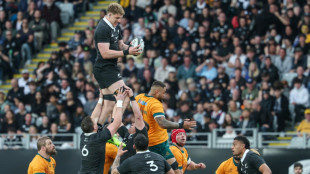 All Blacks make three changes for second Wallabies Test
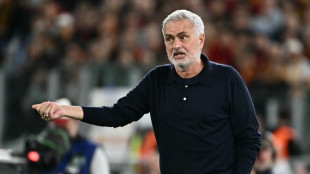 Mourinho blasts 'shameless' timing of Vinicius ban decision
 PSG beat Man City in Champions League thriller, Barcola hits Liverpool hat-trick

 US Treasury chief urges stronger IMF role against 'distortionary policies'
 Giant-killers Bodo sink Dortmund in Champions League

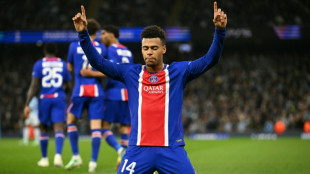 PSG outgun embattled Man City in six-goal Champions League thriller

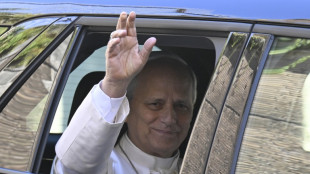 In Chicago, pope's hometown, Catholics express shock and support
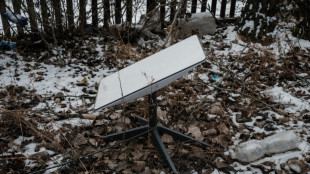 Musk suggests US govt behind any slowdown in Ukraine's Starshield system
 Chiclayo prays for recovery and return of the 'Peruvian pope'
 Barcola scores hat-trick as Liverpool hit LASK for six
"We know about Facebook, Instagram and YouTube. But we can't access them -- everything here is blocked," said Byashim Ishanguliyev, a fruit seller in the Turkmen capital of Ashgabat.
To keep information from the outside world hidden from its citizens, Turkmenistan, one of the world's most closed and isolated countries, exercises almost total control over the internet.
Getting round the ban is no small feat.
"Some people manage to connect to a VPN, but that's only temporary, it will also be blocked," 19-year-old Ishanguliyev told AFP at a market in Ashgabat, referring to a Virtual Private Network.
"Plus the internet is slow. So if somebody manages to download an interesting video, clip or film, we all watch it together," he said.
Despite the effectiveness of the Turkmen firewall, the regime is constantly stepping up measures to prevent outside information seeping into the energy-rich Central Asian nation.
President Serdar Berdymukhamedov last month announced his intention to "strengthen the country's cybersecurity".
Berdymukhamedov, in power since 2022 -- the country's third leader since the fall of the Soviet Union in 1991 -- has followed in his predecessors' footsteps in exerting maximum control.
His father, Gurbanguly Berdymukhamedov, previously ruled the ex-Soviet country for 15 years with an iron fist.
- 'Parallel reality' -
Alongside social media, services like WhatsApp, Viber, Signal and Telegram are also blocked.
Instead, Turkmenistan has Bizbarde, a local messenger under the government's control.
For video, the authorities have launched Belet, a YouTube alternative purged of any content -- both news and entertainment -- that could show what life is like beyond the isolated country's borders.
"There is no media landscape," said Ruslan Myatiev, whose Turkmen.News site is blocked inside the country.
At home, the Turkmen population see nothing but "propaganda to promote the cult of personality of the Berdymukhamedovs -- father and son," the Netherlands-based Myatiev said.
"To prevent this parallel reality created by the media from collapsing, the rulers block the internet," he added.
All media outlets inside the country are state-owned. They only broadcast official news, reporting heavily on people offering their praise and thanks to the Berdymukhamedov regime.
"Turkmen television is very boring, not informative, with the same shows over and over again," said Yusup Bakhshiyev, a 38-year-old civil servant who lives in the capital.
He used to be able to watch some foreign channels via a satellite link. But that is no longer possible.
"Some local officials came to my house and told me to remove the satellite dish, as it was spoiling the architecture of the town," he told AFP.
After that, he subscribed to Turkmen cable TV.
"The state controls the information and it receives income from the subscription," he said.
Some Western channels -- including France 24, BBC and Euronews -- are authorised.
But in a country where English is hardly spoken, their audience is minimal.
- 'Worst of the worst' -
On their TV screens, Turkmens see endless footage of President Berdymukhamedov in action -- reprimanding sheepish government ministers, planting trees in the desert, or receiving rapturous applause.
His father, who has the official title of Hero-Protector -- or "Arkadag" in Turkmen -- maintains immense privileges and is still the subject of an intense personality cult.
He is often filmed at sports events, holding weapons or playing instruments.
Sometimes the absurdity spills toward the extreme.
The Arkadag newspaper recently reported that Gurbanguly travelled to Arkadag -- a town named in his honour -- to congratulate the players of the local football team, named Arkadag.
Behind the carefully controlled headlines lies a country with a bleak human rights record.
The Freedom House NGO ranks Turkmenistan among the "worst of the worst" for political freedoms and civil liberties.
It scores just two of 100 possible points in its rankings -- lower than North Korea.
Turkmenistan is also bottom of the Reporters Without Borders' press freedom index.
But none of this appears to bother Oksana Shumilova, a 40-year-old who works for a construction company in the capital.
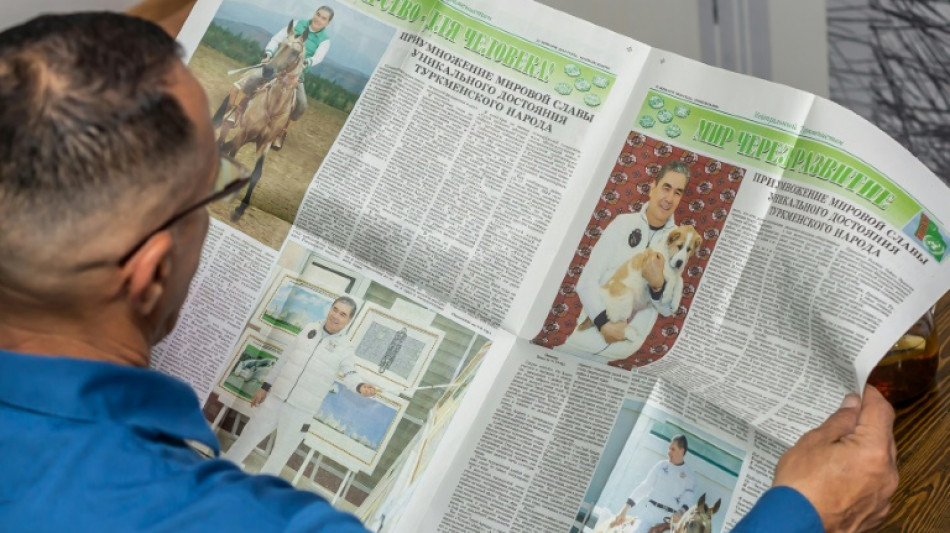
Reading a copy of the "Neutral Turkmenistan" newspaper -- featuring the inevitable photo of the president on its front page -- she is happy that her country is stable.
Reading the state-controlled news gives her a "feeling of stability and tranquillity," she told AFP.
"It contains no critical articles or negative information," she said.
T.Bondarenko--BTB