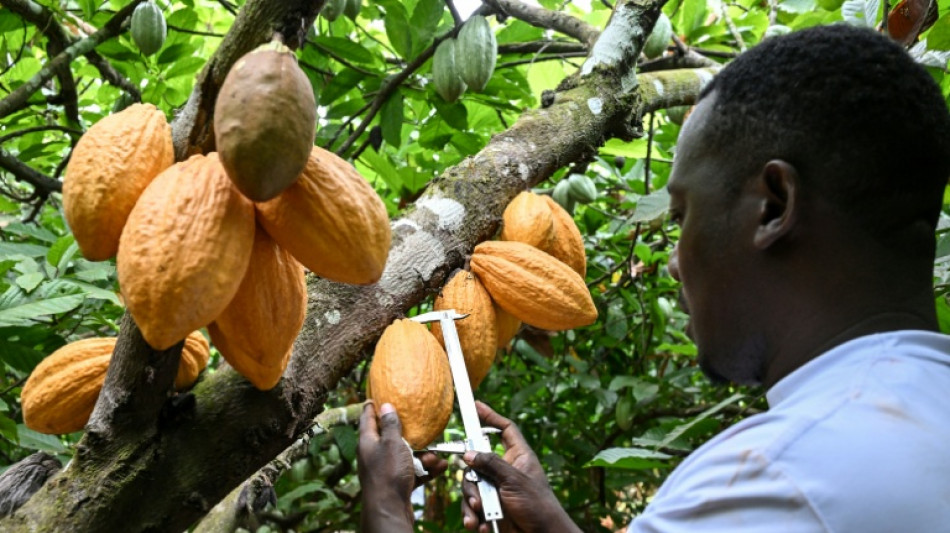
World's top cocoa producer aims for a climate-tough bean / Photo: © AFP

 Same-sex couple takes fight for equality to Slovakian court
 'High hopes' as Indonesian women get a football league, again
 'Expectations high' for Bordeaux-Begles' Champions Cup hat-trick bid, says Depoortere
 Rennie urges All Blacks to stay focused against 'hurting' Wallabies
 Palmeiras beat Fluminense 2-1 in Libertadores semi-final first leg
 Brewers blasts leave Dodgers on brink
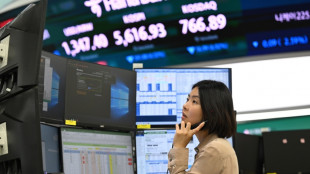 Tech stock lead rout after US inflation fuels rate hike bets
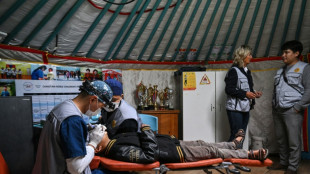
 Al-Fayed survivors say UK police missing 'bigger picture'

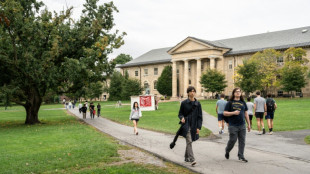 Online 'witch hunt' sweeps up Asians misidentified as US rape accused

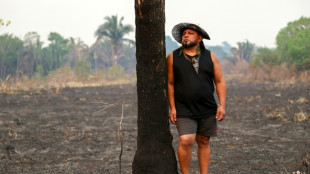 Prospect of Bolsonaro win looms large over Brazil's Indigenous
 Freed from Belarus, founder of Lady Gaga's biggest fan site tells his story

 Behind AI's carbon footprint, a potential climate tool

 Trump's new press secretary faces scrutiny over credentials

 PSG 'got lucky' to win Man City thriller, says Luis Enrique

 Real Madrid comeback stuns Roma as Mourinho enjoys happy reunion
 Shakhtar make winning start at new Champions League 'home'

 Hat-trick hero Barcola primed to shine for Liverpool: Iraola

 Villa put six past Fenerbahce in record rout
 US stocks fall after hot inflation report as leading AI shares tumble
 Government buildings torched in violent Albanian protests
 Wall Street grills Bank of America over money laundering fine

 Mekies extends contract as Red Bull team principal until 2031
 Indonesia rescues starved orangutan from fires: officials

 Real Madrid's Vinicius banned for Clasico after red card
 Restrictions expose Ukraine's Starlink dependency in Russia war: observers
Kofi Alexis Amani has watched the trees on his cocoa plantation wilt and sometimes wither as rains became unpredictable and less abundant in Ivory Coast over the past several decades.
"You can lose everything," he sighed.
The west African country is the world's top cocoa producer, responsible for nearly 40 percent of global output.
Its economy also depends on the crop, which accounts for 15 percent of GDP, supporting roughly five million people in a country of more than 33 million.
So, scientists at the National Center for Agronomic Research (CNRA) have been working to develop a bean tough enough to survive the unpredictable weather events that man-made climate change has unleashed around the globe.
Specifically, the researchers are working on bean varieties that are less sensitive to the availability of water.
"We take the flowers from the male parents, which we then use to pollinate the flowers of the female parents... it's their offspring that we take", then test in the greenhouse and expose to various levels of water stress, geneticist Caudou Trebissou told AFP.
So far, the researchers have come up with 11 "satisfactory" varieties, which they plan to eventually release on the market.
- Drier, hotter -
While rainfall has fluctuated in the country since the 1950s, it has steadily dropped since the 1980s, with the trend continuing over the past few decades, according to a report by the ministry of ecology.
"From 2003 to 2022, we saw that rainfall has declined. We're only at 1,100‑and‑something" millimetres of water on average per year in the region, instead of the 1,200 to 2,000 mm that cocoa trees need, Maryse Assi, a CNRA agronomist, said.
When the plants manage to survive, "we see a drop in flowering or a shift in the flowering period" and "few fruits", she added.
The lack of rain also leads to "declines in soil fertility; some mineral elements will no longer be accessible to the plant", she said.
Farmers see this up close on their land.
"When it doesn't rain, the branches are dry, the leaves curl up" and "the pods are small", said Anselme Kouakou, who grows cocoa a few kilometres from Amani in the centre of the country.
- Future lies 'in research' -
While waiting for science to come up with a super-cocoa bean, Amani and others like him have tried to stem effects of climate change by altering how they plant their cocoa trees.
He used to have just cocoa trees on his land.
Now he intersperses them with cashew, iroko timber and banana -- trees whose leaves shade the precious cocoa pods and whose trunks help irrigate them thanks to their high-water content.
The research cannot come fast enough in Ivory Coast, predicted to be hit by extreme weather events like droughts or torrential rains in the coming decades.
"The future of our orchards lies in research," Yves Brahima Kone, who heads the cocoa industry's regulatory body, said at the start of September.
Temperatures, which have already risen by 1C between 1991 and 2020 according to a government report, could continue to climb by 1.7C to 3.7C by 2080, according to studies.
If nothing is done, "by 2050, Ivory Coast's export agriculture will suffer a decline in cocoa production of 20 percent", the government has warned.
The country is not the only one likely to suffer -- Europe, the world's largest consumer of chocolate products, takes in 70 percent of Ivorian cocoa exports.
O.Lorenz--BTB