Influencer, widow among few Pakistan women standing in elections / Photo: © AFP

 School roof collapse kills teacher, 27 children in NW Pakistan
 Haze turns Indonesia skies orange, shuts schools in East Timor
 California puts first US billionaire tax to the vote
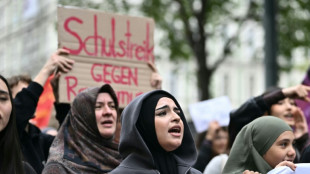 School headscarf ban meets resistance in Austria
 World's top cocoa producer aims for a climate-tough bean
 Why is Shell facing lawsuits over climate disasters in Brazil and the Philippines?
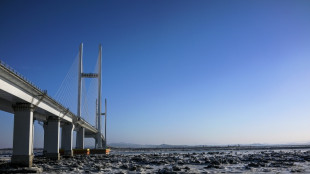 New four-lane bridge opens between China, North Korea
 Tech stocks lead rout after US inflation fuels rate hike bets

 'No time to recover': UNDP chief sounds alarm on growing poverty after Iran war shock
 Australia says won't let big tech have 'unfettered' access to kids

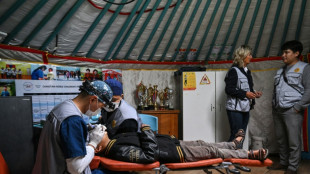 Mobile clinics battle Mongolia's childhood dental 'disaster'
 Wallabies back Meredith as playmaker for second New Zealand Test
 Messi's Inter Miami book playoffs with 2-0 win over New York City
 Oil-rich Alberta tests Canada's unity with secession vote
 EU leaders head for showdown over bloc budget
 All Blacks make three changes for second Wallabies Test
 Mourinho blasts 'shameless' timing of Vinicius ban decision
 PSG beat Man City in Champions League thriller, Barcola hits Liverpool hat-trick

 US Treasury chief urges stronger IMF role against 'distortionary policies'
 Giant-killers Bodo sink Dortmund in Champions League

 PSG outgun embattled Man City in six-goal Champions League thriller

 In Chicago, pope's hometown, Catholics express shock and support
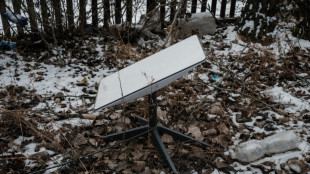 Musk suggests US govt behind any slowdown in Ukraine's Starshield system
 Chiclayo prays for recovery and return of the 'Peruvian pope'
 Barcola scores hat-trick as Liverpool hit LASK for six
Almost 6,500 candidates from 150 parties will stand in Pakistan's election this week but only around five percent of them are women.
The constitution reserves seats for women in the provincial and national assemblies but parties rarely allow women to contest outside that quota.
AFP has interviewed three candidates pushing for change in their communities.
- Islamic influencer -
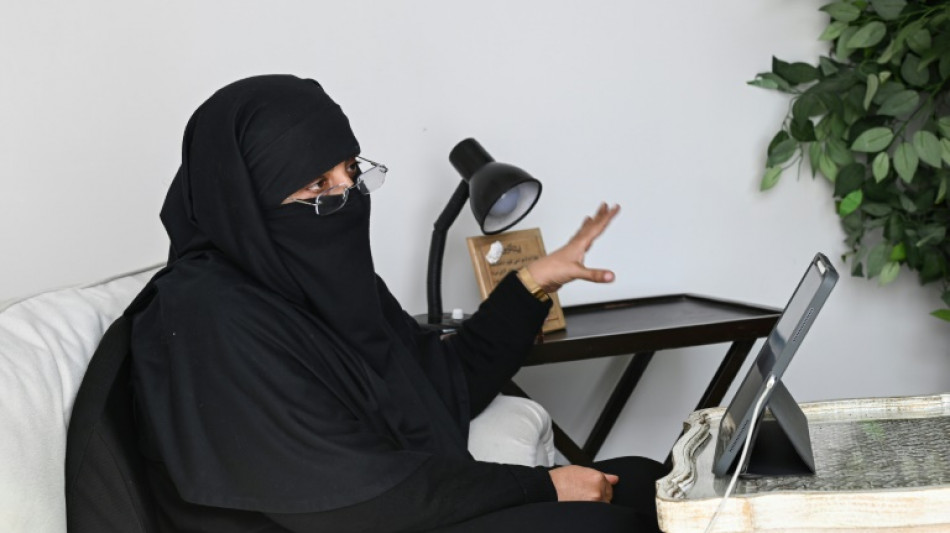
YouTuber Zeba Waqar has built up a loyal following of several hundred thousand women online, but this week will be the first time she puts her popularity to the test in an election.
The first-time national candidate from the outskirts of Lahore, Pakistan's second-largest city, is a member of Jamaat-e-Islami, a right-wing party centred around religion.
Each week women tune in to her broadcasts where she teaches them about their rights according to Islam and shares stories about Islamic history.
"My favourite are the broadcasts I do live on Facebook and YouTube. They feel like a one-on-one session. Sometimes I answer questions that people ask during the broadcasts. I do those from my study, sitting here," she told AFP from her home.
A lot of those she preaches to are middle-class, elite women who are turning to social media for educational content, including absorbing bite-size posts on Instagram.
"We had a desire that the teaching of the Koran should not remain limited... We use Insta, Facebook, Twitter and WhatsApp groups very efficiently," she said.
A doctor by profession, who offers free care from home to women with low incomes, she put her large following down to being educated.
"Unfortunately, with education, a bit of arrogance also sneaks in. If you are a chartered accountant, you are not going to listen to an uneducated person’s lecture," she explained.
The grandmother, who covers her face with a veil, also runs a live-in institute where young women, including graduates from top universities, can learn the Koran.
If elected, she wants to address the economic disadvantages facing women, improve their professional training and introduce stronger laws to reduce harassment.
- From tragedy to triumph -
Samar Haroon Bilour was the only woman in the room as she addressed dozens of men about her party's plans to boost jobs for young people.
Still, it was a far cry from the 2018 election, when banners did not even feature her name or picture for fear it would look inappropriate in the socially conservative district.
"Men do not like a young, vibrant, outspoken, Westernised Pashtun woman," she explained to AFP.
Bilour was propelled into politics under tragic circumstances, taking over her husband's campaign when he was shot dead by militants shortly before the last election.
Violence often mars election campaigns in Pakistan, with two candidates shot dead in January in Khyber Pakhtunkhwa province.
The attack on her husband, Haroon, was claimed by the Pakistan Taliban, she said, the most active group in the region that once controlled some border areas.
"I stepped into his shoes after his murder -- it was one of the hardest things I had ever done, I was mentally not prepared," she said, a picture of him framed beside her.
She became the first woman provincial MP in the provincial capital Peshawar, a city of nearly five million people nestled along the old Silk Road near the Afghan border and home to the Pashtun people -- many of whom follow customs that restrict women's movements in public.
When she stepped forward to continue her husband's campaign for the anti-austerity Awami Workers Party, she faced immediate backlash from her rivals but persevered as a form of "revenge" against her husband's killers.
"If they saw me smile, they would say things like, 'oh, she is happy her husband is dead'," she said.
But, after five years as an elected official, she believes attitudes are softening: "People want someone who gives time to the constituency regardless of what their gender is."
- Finding religious harmony -
Twenty-five-year-old Saveera Parkash makes little of the rarity of her profile in Pakistani politics –- a young, Hindu woman in a deeply conservative area of the country.
Swaira, who recently graduated as a doctor, said she chose the religion for herself -- a decision respected by her Sikh father and Christian mother in the Muslim-majority country.
"No religion in the world teaches a person to do bad deeds; every religion guides a person to do good deeds," she said in a country fraught with religious tensions and which largely views feminism with suspicion.
While her constituency in Khyber Pakhtunkhwa province has long lived in religious harmony, she told AFP, gender-based discrimination persists.
"So my foray into mainstream politics aims to combat such biases and foster inclusivity," she said, mobbed by young voters as she walked through the city of Buner.
Never elected, she has led the women's wing for the Bhutto dynasty's Pakistan Peoples Party in the province.
"Until women play their role in society, stability cannot come to the country or the home," she said.
"I may have to become a feminist because, in Buner, most women are deprived of their basic rights like education and health."
A portion of her father's private hospital has been converted into an election office and young men and women stream in to share their grievances and listen to her solutions.
"Choosing the power corridor is simply about serving the people. Without authority, one cannot serve the people in any way," she said.
bur-ecl-fox/pbt
O.Bulka--BTB