West Bank Palestinians 'exhausted' by omnipresent Israeli surveillance / Photo: © AFP/File

 School roof collapse kills teacher, 27 children in NW Pakistan
 Haze turns Indonesia skies orange, shuts schools in East Timor

 California puts first US billionaire tax to the vote
 School headscarf ban meets resistance in Austria

 World's top cocoa producer aims for a climate-tough bean

 Why is Shell facing lawsuits over climate disasters in Brazil and the Philippines?

 New four-lane bridge opens between China, North Korea

 Tech stocks lead rout after US inflation fuels rate hike bets

 'No time to recover': UNDP chief sounds alarm on growing poverty after Iran war shock

 Australia says won't let big tech have 'unfettered' access to kids

 Mobile clinics battle Mongolia's childhood dental 'disaster'

 Wallabies back Meredith as playmaker for second New Zealand Test

 Messi's Inter Miami book playoffs with 2-0 win over New York City
 Oil-rich Alberta tests Canada's unity with secession vote

 EU leaders head for showdown over bloc budget
 All Blacks make three changes for second Wallabies Test

 Mourinho blasts 'shameless' timing of Vinicius ban decision

 PSG beat Man City in Champions League thriller, Barcola hits Liverpool hat-trick

 US Treasury chief urges stronger IMF role against 'distortionary policies'

 Giant-killers Bodo sink Dortmund in Champions League

 PSG outgun embattled Man City in six-goal Champions League thriller

 In Chicago, pope's hometown, Catholics express shock and support

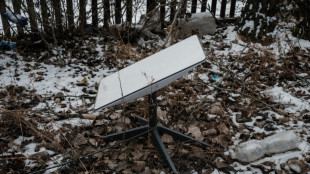 Musk suggests US govt behind any slowdown in Ukraine's Starshield system
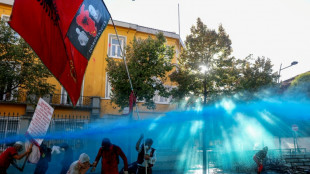
 Chiclayo prays for recovery and return of the 'Peruvian pope'

 Barcola scores hat-trick as Liverpool hit LASK for six

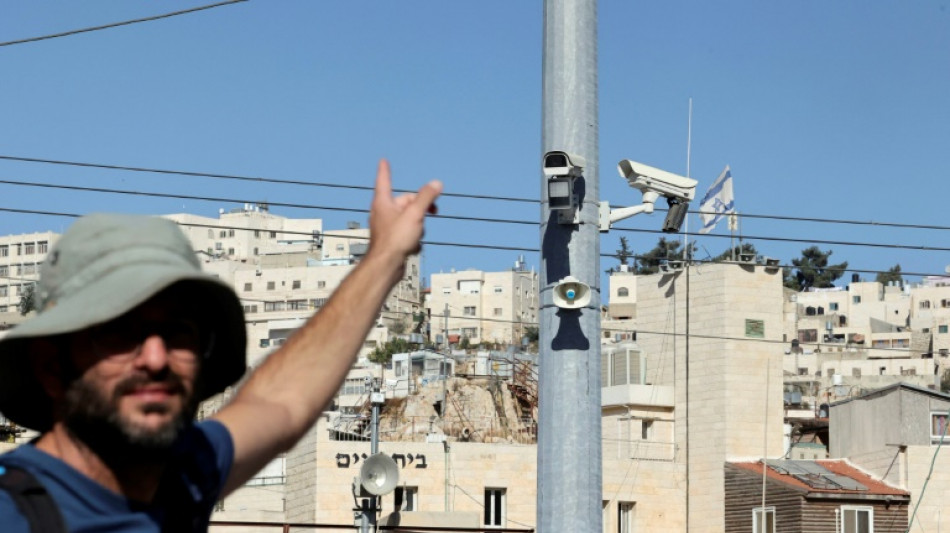
Rotating cameras planted on a rooftop terrace "follow our every move", said Hebron resident Umm Nasser, protesting intensified Israeli surveillance of her occupied West Bank city since the start of the Gaza war.
"Psychologically, I'm exhausted," admitted the 55-year-old Palestinian woman.
She lives above the Abu al-Rish checkpoint, the site of frequent violence at the heart of historical Hebron.
It is one of numerous sentry boxes manned by Israeli forces separating Palestinian streets from Jewish settler enclaves in the old town, which hosts a disputed holy site. Known to Muslims as the Ibrahimi mosque and to Jews as the Cave of the Patriarchs, it is revered by both faiths.
Dozens of heavily armed Israeli soldiers guard the site, assisted by security cameras.
Umm Nasser said that surveillance enhanced by artificial intelligence tools has become "especially difficult during the war" between Israel and Palestinian militant group Hamas in the Gaza Strip.
To Umm Nasser, the use of technology is stifling.
"We've tried putting pieces of wood or fabric over the cameras to maintain our privacy, but every time, the army removes them," she said.
"One day, soldiers took our identity cards and told us they were going to use them for a facial recognition system."
She said she hadn't heard about it since.
Shai Cohen, a 23-year-old Israeli settler, said the surveillance cameras scattered all over the city "very (much) help us" to feel safe.
Israel describes itself as a "start-up nation" and takes pride in its leading cyber industry and cutting-edge surveillance and weapons technology.
Facial recognition technology -- highly regulated in civilian settings -- is used by Israeli forces along with a range of advanced tools in the Palestinian territories they have occupied since 1967.
- 'Automated surveillance' -
"Blue Wolf", for example, is an app soldiers use on their mobile phone. They take face pictures of Palestinians, which are then checked against a database.
Once matched, the system indicates whether the person photographed is wanted for arrest.
This system is part of the Israeli army's "frictionless occupation strategy", said Sophia Goodfriend, a doctoral student specialising in artificial intelligence and human rights.
The app "relies on automated surveillance technology, often based on artificial intelligence and designed to reduce interaction" between soldiers and Palestinians, Goodfriend told AFP.
Another system, "Red Wolf", has been deployed at Israeli checkpoints in Hebron since at least 2022, according to an investigation by human rights group Amnesty International.
Soldiers know "before I approach the checkpoint that I'm 'red' in the system. It means I'm 'a threat'," said Hebron activist Issa Amro, lamenting yet "another layer of humiliation".
He said residents had their photos taken without their consent, and they do not know how Israel uses their images and data that it collects.
The army in late 2022 confirmed it was testing a surveillance system with riot control tools, developed by a private firm, Smart Shooter.
The remote-controlled system can fire shots which, according to the army, are not lethal.
Asked by AFP about the system and the "Wolf" software, the Israeli military did not comment.
- 'Anxiety and fear' -
The automated tools make for "more and more efficient" control over the lives of Palestinians who are further "dehumanised" in the process, according to Israeli anti-occupation group Breaking the Silence.
"The very purpose and essence of the system is to create anxiety and fear," said Adel, a rights defender living in Israeli-annexed east Jerusalem who asked to use a pseudonym because of security concerns.
"Our behaviour and movements are scrutinised."
In east Jerusalem, he said, facial recognition technology is regularly used by Israeli forces during demonstrations.
Adel recalled an inspection at a checkpoint when "many pages of data appeared on the tablet" used by the soldiers.
"They mentioned an arrest that occurred several years earlier and for which I had been cleared by the courts," he said.
Tensions have soared since October 7, when Hamas militants breached the Gaza border and attacked southern Israel, triggering a devastating war.
Hamas fighters began their attack by targeting remote-controlled surveillance and defence systems on the border.
The unprecedented attack resulted in more than 1,160 deaths in Israel, mostly of civilians, according to an AFP tally based on official data.
Israel retaliated with a massive military offensive that has killed more than 27,500 people in the besieged Gaza Strip, also mostly civilians, according to the Hamas-run territory's health ministry.
Footage and media reports from Gaza have raised concerns over the use of facial recognition technology by Israeli forces there, too.
The army said that as part of the war it was conducting "security and intelligence operations".
Online videos from mid-November showed Gazans, fleeing south for safety, passing through gates allegedly equipped with surveillance tech.
And official Palestinian news agency Wafa reported "smart" cameras had been installed at Gaza City's Al-Shifa hospital during a raid by Israeli troops.
R.Adler--BTB