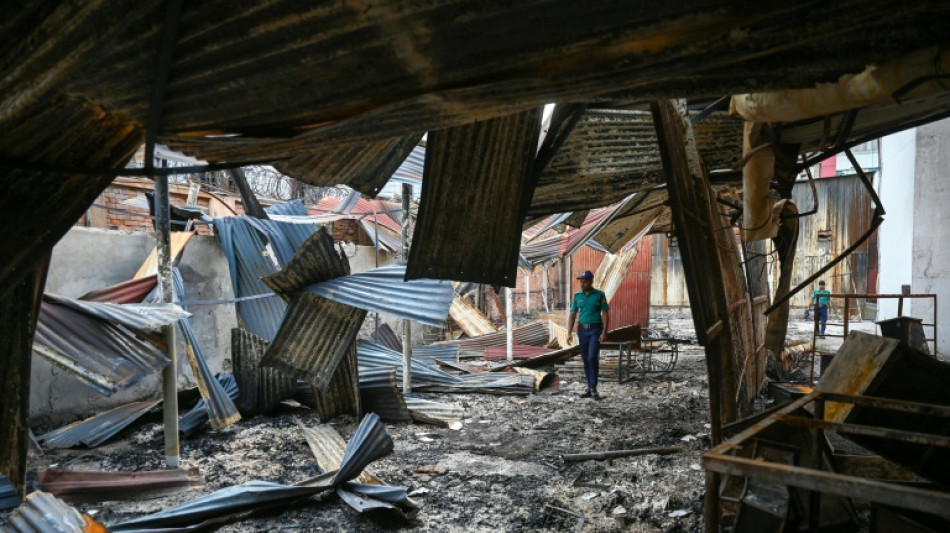
Burned TV station showcases anger at Bangladesh PM / Photo: © AFP

 IUX Announces New Web Client Portal Built for Enhanced Browser-Based Trading
 School roof collapse kills teacher, 32 children in NW Pakistan

 Inter skipper Martinez facing month out with thigh injury

 Spanish prosecutors back abuse probe into Julio Iglesias
 Tech sell-off deepens as US inflation sparks AI jitters
 Southgate does not forsee a return to management
 Two dead as Istanbul endures heaviest rainfall in 80 years
 After latest Nepal flood, survivors fear for future

 EU leaders clash over budget as spectre of French elections looms
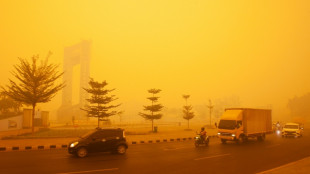 'No place to breathe': life in Indonesia's fire epicentre
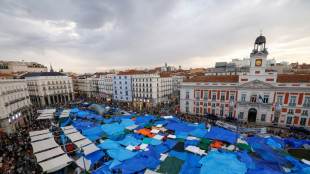 'Can't sleep': Spain's housing crunch upends lives
 Musk calls on Ukraine's Zelensky to 'go' after satellite slowdown row
 Still smiling at 117, Albanian may be world's oldest woman
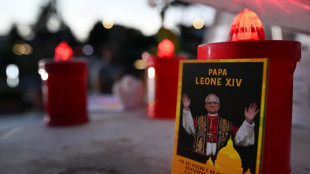 Pope has 'good night' in hospital: Vatican
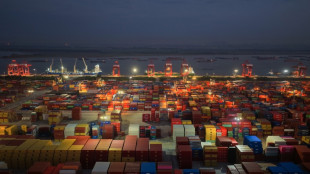 China's economy seen missing target as global shocks bite: AFP poll

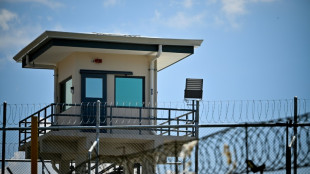 Costa Rica opens jail inspired by El Salvador mega-prison
 Same-sex couple takes fight for equality to Slovakian court

 'High hopes' as Indonesian women get a football league, again

 'Expectations high' for Bordeaux-Begles' Champions Cup hat-trick bid, says Depoortere
 Rennie urges All Blacks to stay focused against 'hurting' Wallabies

 Palmeiras beat Fluminense 2-1 in Libertadores semi-final first leg
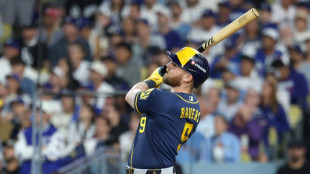 Brewers blasts leave Dodgers on brink
 Tech stock lead rout after US inflation fuels rate hike bets
 Al-Fayed survivors say UK police missing 'bigger picture'
 Online 'witch hunt' sweeps up Asians misidentified as US rape accused

Torn portraits of Bangladesh's independence hero litter a ransacked state television station -- a pointed expression of public fury against his daughter, who just witnessed the worst unrest of her premiership.
Prime Minister Sheikh Hasina addressed the nation on Bangladesh Television (BTV) last week to appeal for calm, just as a police crackdown on student protests was poised to tip into violent disorder.
The next day a mob of hundreds stormed the state broadcaster and set fire to an office building, along with dozens of other government and police posts around the capital Dhaka.
They also attacked a gallery hosting around 150 portraits of the premier's father Sheikh Mujibur Rahman, who led the country after its devastating 1971 liberation war with Pakistan until his assassination four years later.
"This is a war zone," Bangladeshi information minister Mohammad Ali Arafat told reporters invited by the government and BTV to survey the destruction on Wednesday.
He gestured to oil paintings of Rahman strewn on the ground, disfigured by knives used to stab through the leader's face.
"Does this look like a peaceful protest to you?"
Mujib's nationbuilding role has been both lauded and dismissed by successive Bangladesh governments, with memories of the war and famine that birthed the country still polarising its people more than half a century since independence.
But Hasina has foregrounded her father's legacy to such an extent that critics accuse her of establishing a personality cult designed to entrench her rule.
Since she took office a second time in 2009, Mujib's image has appeared on every banknote and in hundreds of public murals across the South Asian nation of 170 million people.
Portraits like those in BTV's Dhaka headquarters are not only commonplace, but a legal requirement: Hasina's government changed the constitution to require that they be hung in every school, government office and diplomatic mission.
During Hasina's speech on BTV last week, given in a failed effort to quell the rising tensions soon to unleash mayhem across Bangladesh, several portraits of her father hung around her office appeared on the broadcast.
- 'Secular blasphemy law' -
The unrest began last week when the youth wing of Hasina's ruling Awami League and police officers attempted to suppress running student demonstrations against job quotas for civil servant hires.
The scheme was introduced by Hasina's father in 1972 and until Sunday reserved nearly a third of all government jobs for the families of veterans from the independence war with Pakistan.
Hasina, 76, inflamed by likening protesters to the Bangladeshis who had collaborated with Pakistan during that conflict.
The premier won her fourth consecutive election in January after a vote without genuine opposition.
Her government is accused by rights groups of misusing state institutions to entrench its hold on power and stamp out dissent, including by the extrajudicial killing of opposition activists.
Hasina's father casts a long shadow over her own leadership: she refers to his assassination in a 1975 coup in almost every speech she gives, her voice often choking with emotion.
The military regime that followed did its best to sideline Mujib's contribution to the country entirely, but even considered at a remove from Bangladesh's deeply polarised politics, his legacy remains complex.
Towards the end of his life, Mujib abolished multi-party democracy and imposed media restrictions that shuttered all but four state-controlled newspapers.
Hasina's critics often evoke autocratic parallels between Mujib and his daughter.
One senior human rights activist in Bangladesh said, on condition of anonymity for fear of retribution, that the now-ubiquitous presence of Mujib's portrait in public spaces made the country resemble "one-party states".
"She has basically introduced a secular blasphemy law in the country for her father," the activist told AFP in January.
L.Dubois--BTB