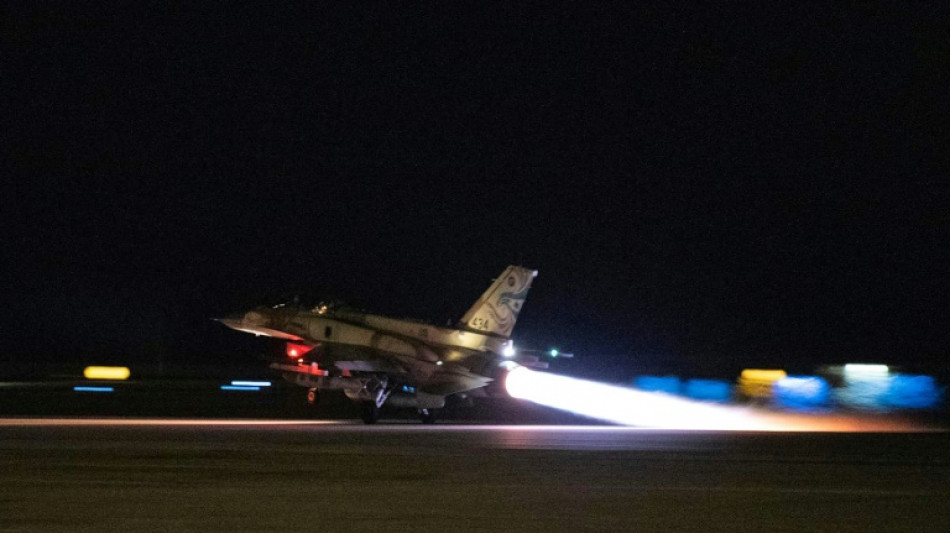
Top Hezbollah commander 'killed' in Israel strike / Photo: © Israel Defense Forces (IDF)/AFP

 Republican senator seeks probe of Trump Jr Russian-funded wedding
 Memoir by Diana's brother goes on sale after rocking UK monarchy
 Newcomers South Korea face holders Italy in Davis Cup finals

 Japan's Kojima sounds Marchand warning with Asian Games gold

 England rugby star Pollock signs new Northampton deal
 STARTRADER Expands Its Chinese Equity CFD Range with CXMT and Unitree Robotics

 MEXC Expands Opportunity Compass with Stock Trading Handbook to Help Crypto Users Build Investment Knowledge

 England paceman Wood retires from international cricket

 Magnificent Mandhana's 79 helps India to Asian Games cricket gold
 Marchand 'stressed' about racing Japanese rivals at LA Olympics
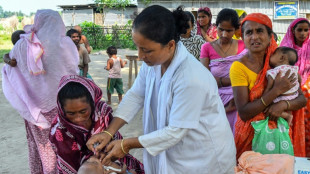 Mobile boat clinics bring healthcare to India's remote islands

 Former India paceman Zaheer Khan named Chennai coach in IPL

 Six-year-old Chinese girl sets world record with Rubik's Cube

 Swimming prodigy Yu, 13, says 'interviews way harder than racing'

 Star coaches make their bows as Nations League returns

 Rams bounce back as Giants reel from Dart injury

 In Bangladesh, Pakistan's Jinnah photo stirs anger

 Two New Zealand naval ships transit Taiwan Strait

 Zidane gets down to work as France start new era

 Inside the Venezuelan prison meant to 'drive you insane'

 UK king braces as memoir by Diana's brother goes on sale

 Akkodis and Hamburg Public Transport Association Showcase hvv mia at InnoTrans 2026, Demonstrating the Future of AI-Powered Mobility

 No green light to lift EU sanctions on Russian oligarchs, talks to resume

 UK agrees support for Saudi in struggle with Houthis: reports

 EU foreign policy chief calls for continued sanctions on Russia

A source close to Hezbollah in Lebanon said an Israel air strike Friday killed one of its top military leaders, with Israel confirming it had carried out a "targeted strike" in Beirut.
Requesting anonymity to discuss sensitive matters, the source said the Israeli strike on Hezbollah's stronghold in south Beirut killed the head of the group's elite Radwan unit, Ibrahim Aqil.
A total of three people were killed and 17 wounded, Lebanon's health ministry said.
Israel said it had conducted a "targeted strike" in Beirut, where a security official said an air strike had hit Hezbollah's stronghold in the south of the city.
The air strike is the third to hit the southern suburbs of Beirut since the start of the Israel-Hamas war on October 7, with the focus of the violence shifting dramatically this week from Gaza to Lebanon.
Strikes blamed on Israel killed a top commander of Hezbollah, Fuad Shukr, in July, and a leader of allied Palestinian militant group Hamas, Saleh al-Aruri, in January.
- Communication device explosions -
Earlier Friday, Israel said Hezbollah had fired dozens of rockets from Lebanon following air strikes which destroyed dozens of the militant group's launchers.
On Thursday, Hezbollah leader Hassan Nasrallah vowed retribution for deadly sabotage attacks on its communications that he blamed on Israel.
Israel has not commented on the communications device explosions, but the intensifying violence comes after it announced it was shifting its war objectives to its northern border with Lebanon.
For nearly a year, Israeli firepower has focused on Palestinian militant group Hamas in Gaza, but its troops have also been engaged in near-daily exchanges with Hezbollah.
The intensifying exchanges came as the UN Security Council prepared to discuss this week's attacks on Hezbollah pagers and two-way radios, which killed 37 people and wounded thousands over two days.
Hezbollah said it targeted at least six Israeli military bases with salvos of rockets after overnight bombardment people in south Lebanon described as among the fiercest so far.
"Some 140 rockets were fired from Lebanon within an hour," an Israeli military spokeswoman said.
The military said that overnight its jets hit infrastructure and "approximately 100 launchers" ready to be fired.
Hezbollah said two of its fighters were killed, without elaborating.
- 'Fear of wider war' -
Residents of Marjayoun, a Lebanese town close to the border, said the overnight bombardment was among the heaviest since the border exchanges began last October.
"We were very scared, especially for my grandchildren," said Nuha Abdo, 62. "We were moving them from one room to another."
Clothing store owner Elie Rmeih, 45, counted more than 50 strikes.
"It was a terrifying scene and unlike anything we have experienced since the escalation began.
"We live in fear of a wider war, you don't know where to go."
International mediators have repeatedly tried to avert a full-blown war between Israel and Hezbollah and staunch the regional fallout of the Gaza war started by Hamas's October 7 attack on Israel.
Speaking for the first time since the device blasts, Nasrallah warned Israel would face retribution for the communications device blasts.
Describing the attacks as a "massacre" and a possible "act of war", Nasrallah said Israel would face "just punishment, where it expects it and where it does not".
Cross-border exchanges between Israel and Hezbollah have killed hundreds in Lebanon, mostly fighters, and dozens in Israel.
Tens of thousands of people on both sides of the border have fled their homes.
Speaking to troops on Wednesday, Israeli Defence Minister Yoav Gallant said: "Hezbollah will pay an increasing price" as Israel tries to "ensure the safe return" of its citizens to border areas.
"We are at the start of a new phase in the war," he said.
- 'Shocking' -
Senior UN officials have expressed concern about the legality of the sabotage of Hezbollah's communication devices.
UN human rights chief Volker Turk called the blasts "shocking", and said their impact on civilians was "unacceptable".
US Secretary of State Antony Blinken, who has been scrambling to salvage efforts for a Gaza ceasefire and hostage release deal, called for restraint on all sides.
"We don't want to see any escalatory actions by any party" that would endanger the goal of a Gaza ceasefire, he said.
Hamas's October 7 attacks that sparked the Gaza war resulted in the deaths of 1,205 people, mostly civilians, on the Israeli side, according to an AFP tally based on Israeli official figures that include hostages killed in captivity.
Israel's retaliatory military offensive has killed at least 41,272 people in Gaza, most of them civilians, according to figures provided by the Hamas-run territory's health ministry. The United Nations has acknowledged the figures as reliable.
In the latest Gaza violence, the territory's civil defence agency said an air strike on a house in Nuseirat refugee camp killed eight people. Another six people, including children, were killed in a separate strike on an apartment in Gaza City, it added.
- 'Sabotaged at source' -
The preliminary findings of a Lebanese investigation found the pagers that exploded had been booby-trapped, a security official said.
Lebanon's UN mission concurred, saying in a letter that the probe showed "the targeted devices were professionally booby-trapped... before arriving in Lebanon, and were detonated by sending emails to the devices".
The New York Times reported Wednesday that the pagers that exploded were produced by the Hungary-based BAC Consulting on behalf of Taiwanese manufacturer Gold Apollo. It cited intelligence officers as saying BAC was part of an Israeli front.
A government spokesman in Budapest said the company was "a trading intermediary, with no manufacturing or operational site in Hungary".
burs/ser/srm
J.Horn--BTB