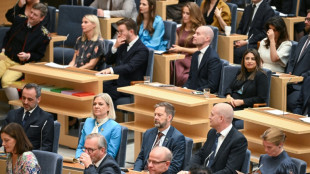
Australia takes step to ban under 16s from social media / Photo: © AFP

 Hazlewood takes six as Australia beat South Africa in 1st Test

 Saudi coalition tells Sanaa residents to flee site before operation
 Zverev defies 'physical issues' to reach Shanghai Masters quarter-finals
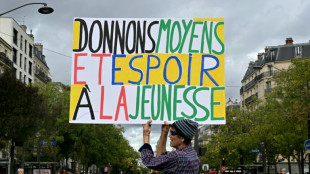 'We're not giving up': Activist Thunberg joins France student protests
 Man City captain Dias defends celebrations after Liverpool win

 B2PRIME Expands Tier-1 Access and Liquidity Architecture for Sophisticated Institutional Flow

 STARTRADER Adds 48 US Stock CFDs with 24-Hour Weekday Trading

 'Ink' director Danny Boyle slams Trump's Truth Social 'lies'

 Coach Kovac extends contract at Dortmund until 2029
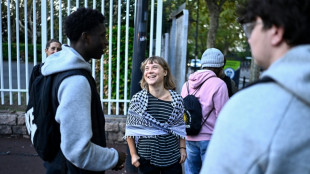 Activist Thunberg joins France student rally after violence at protests

 Archer and Bethell in England squad for Australia ODI series
 Formula One to return to Africa in 'early 2030s' in Rwanda

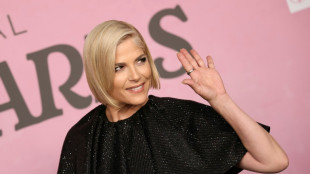 US actor Selma Blair charged with assault after alleged flight altercation
 Hungary cuts anti-LGBTQ legislation from Orban-era law

 'Our future is being robbed': Greta Thunberg joins France student protests

 Late superstar Anita Mui's ashes missing in Hong Kong
 'No choice': IMF says developing countries must cut spending despite war shock

 Boasting South Korea footballers spark rethink of military service exemptions
 Five dead as Hurricane Simon, Rachel pummel Mexico's Pacific coast
 Seoul, Tokyo stocks plunge as Asia suffers fresh tech rout

 Damaged and drained, Indonesia's peatlands go up in smoke
 Dominant Australia wary of Pacific threat at Rugby League World Cup
 Pope to be admitted to hospital for lung operation
 Samoa's McFarland welcomes 'massive' arrival of ex-All Blacks for World Cup run-in

 Brewers beat Dodgers 7-4 to extend MLB playoff lead

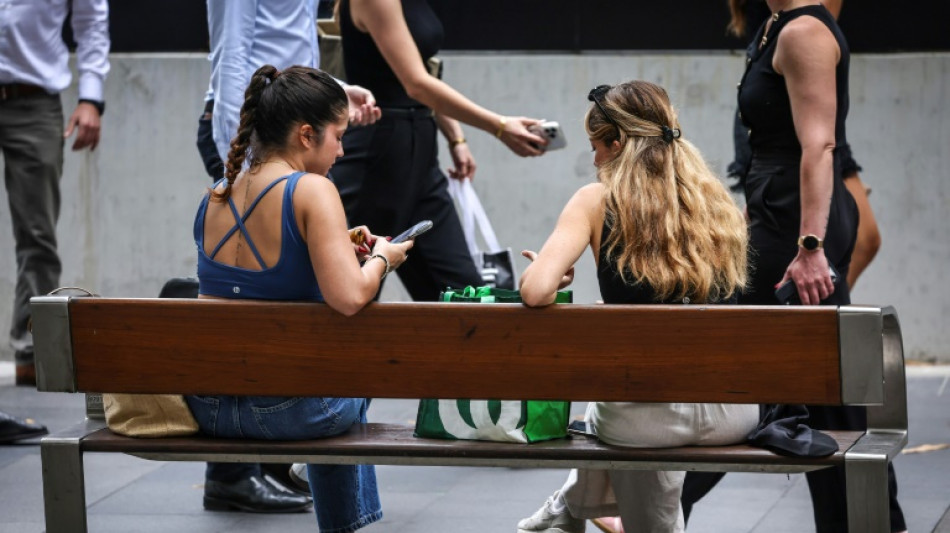
Australian lawmakers moved a step closer to banning under 16s from social media platforms Wednesday, threatening companies that fail to comply with multimillion-dollar fines.
The landmark legislation passed parliament's lower chamber Wednesday and is now set to be debated by the Senate.
The new rules would mean the likes of Facebook, Instagram, TikTok and Snapchat have to take "reasonable steps" to prevent young teens from having accounts.
Social media firms -- who could face fines of up to Aus$50 million (US$32.5 million) for failing to impose the ban -- have described the laws as "vague", "problematic" and "rushed".
Centre-left Prime Minister Anthony Albanese, eyeing an election early next year, has enthusiastically championed the ban and rallied Aussie parents to get behind it.
In the run-up to Wednesday's vote, he painted social media as "a platform for peer pressure, a driver of anxiety, a vehicle for scammers and, worst of all, a tool for online predators".
He wanted, he said, young Australians "off their phones and onto the footy and cricket field, the tennis and netball courts, in the swimming pool".
On paper, the ban is one of the strictest in the world.
However, the current legislation offers almost no details on how the rules will be enforced.
It will be at least 12 months before the details are worked out by regulators and the ban comes into effect.
Many experts are sceptical that the ban can be implemented in any meaningful way, pointing out that many age restrictions can easily be easily circumvented.
Late amendments explicitly bar social media firms from requiring new users to present government-issued ID to prove their age.
University of Sydney digital communication professor Terry Flew said the limited consultation could result in "symbolic policy-making" rather than a lasting legacy.
The ban may well be challenged in court.
Some companies will likely be granted exemptions, such as WhatsApp and YouTube, which teenagers may need to use for recreation, school work or other reasons.
Business networking site LinkedIn is also looking for an exemption, presenting the novel argument that its product is too boring for those under 16 to be interested in joining anyway.
"LinkedIn simply does not have content interesting and appealing to minors," the firm said in a submission to the government.
- 'Knee-jerk reaction' -
Social media expert Susan Grantham said the legislation was a "knee-jerk reaction" and a blanket ban on social media may work in the short term, but it would likely have unintended consequences.
This included isolating young people who rely on online communities, or adults posting more inappropriate content on social media in the belief that children have been removed.
"But young people are going to get in anyways," Grantham told AFP.
"They might create their own versions of these platforms and that becomes an extremely dangerous, unregulated environment."
Instead, Grantham said better educational digital literacy programmes were needed -- similar to Finland's model where five-year-old children learn to think "critically" about what they see online.
The legislation will be closely monitored by other countries, with many weighing whether to implement similar bans.
Lawmakers from Spain to Florida have proposed social media bans for young teens, although none of the measures have been implemented yet.
China has restricted access for minors since 2021, with under-14s not allowed to spend more than 40 minutes a day on Douyin, the Chinese version of TikTok.
Online gaming time for children is also limited in China.
C.Kovalenko--BTB