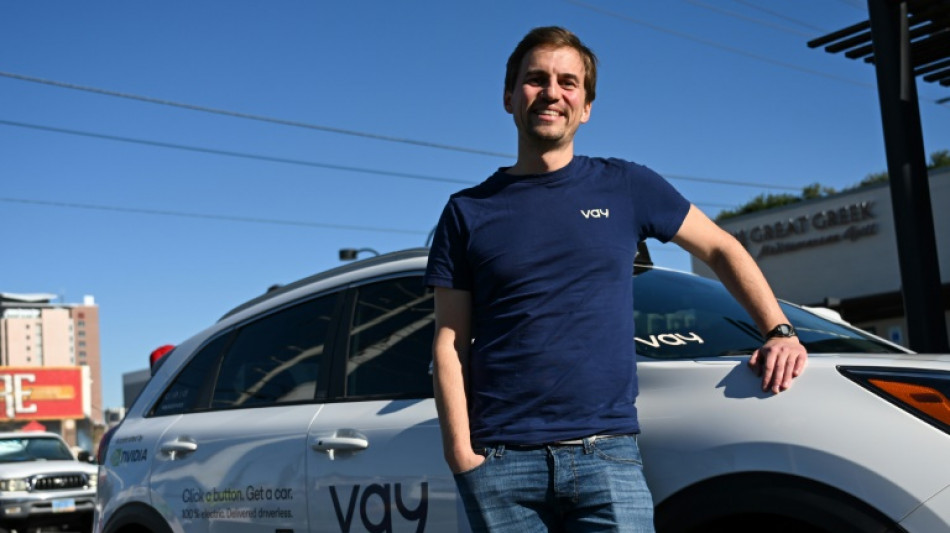
Invisible man: German startup bets on remote driver / Photo: © AFP

 Melbourne imam denies links to suspected flydubai hijacker
 Coventry crush Newcastle to climb out of relegation zone
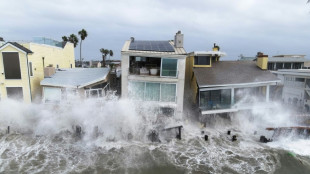 'Devastating' waves leave California beach homes on brink of collapse
 Meta says its new AI models on par with OpenAI, Anthropic

 Talarico rejects mental health conspiracy theory after return from flu
 Brazil presidential candidate Flavio Bolsonaro to visit jailed father
 Brazil's patron saint reappears in polarized election campaign

 US Open champ Zverev to become tennis world number one
 Migrant crisis wounds unhealed in Ceuta as Spanish royals visit

 Brazilian judge allows Flavio Bolsonaro to visit jailed father
 France braces for fresh student demonstrations as Macron calls for 'respect'
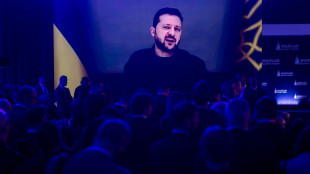 Zelensky doubtful on Russian acceptance of Trump's 'energy ceasefire'

 Federal agents search home of Trump critic Ilhan Omar: government

 Pakistan detains hundreds from ex-PM Khan's party as protests falter
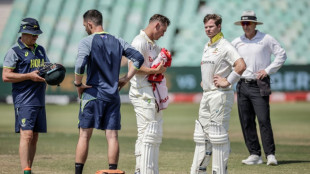 Australia's Smith off field after being struck on helmet

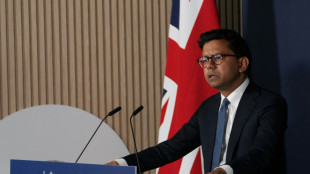 UK retains early access to test latest US AI models
 Top NATO commander warns Russia any attack would be 'futile'

 Stolen Renoir paintings found behind wall in France: prosecutor

 UNHCR sounds alarm on funding crisis

 French supermarket chains say cyberattack forced refrigerator shutdown

 Minister's resignation rocks German coalition
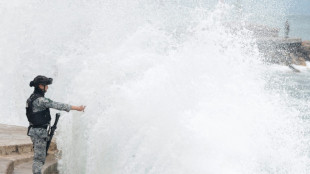 Hurricane Simon lashes Mexico's Pacific coast, threatens landfall

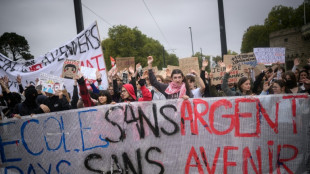 France schools protest rumbles on as Macron urges 'respect'

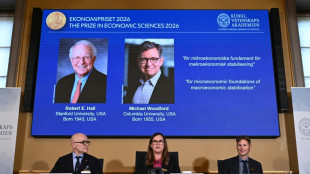 Americans Hall and Woodford win economics Nobel for stabilisation models

 MEXC Brings AI, TradFi and the Future of Trading to Life at TOKEN2049 Singapore

With no one in the driver seat, the SUV pulling up resembles an autonomous robotaxi like those becoming increasingly present in some cities -- but the car from German startup Vay is something else.
One of a number of emerging players aiming to disrupt road transportation, the seven-year-old company is built around remote driving, where a human is very much present, though sitting in an office using TV monitors to guide the car.
Over the last year, riders in Las Vegas have been able to test drive Vay, and the company was demonstrating its technology ahead of the Consumer Electronics Show (CES), the world's most important tech show.
Thomas von der Ohe, chief executive and co-founder of Vay, said his was a lower-cost approach "that has nothing to do with autonomous driving."
Von der Ohe, who previously worked at Zoox, the Amazon-owned autonomous driving company, said that unlike autonomous driving companies, Vay doesn't have to "run massive amounts of simulations" to be safe.
"Our core safety principle is that the (human driver) can make the decision," he said.
And unlike a Tesla or Waymo, there is no dream at Vay of one day shedding the steering wheel, which twists and turns during rides as if maneuvered by the Invisible Man.
The remote driving approach also employs fairly inexpensive camera technology, which costs a fraction of the envelope-pushing Lidar sensing systems favored by leading autonomous companies.
A demonstration of the remote driving technology showed someone watching three screens -- which included live imagery from front, side and rear-view cameras -- as they operated a system similar to at-home racing simulators, with a steering wheel and pedals.
Vay is offering rides for half the price of Uber or Lyft. Von der Ohe hopes to reach profitability in the next year or two, depending on how quickly the company can scale.
Since launching 12 months ago, Vay's Las Vegas fleet has grown from two to 30 vehicles, completing 6,000 rides, von der Ohe said.
But Von der Ohe believes the company's cash cow will not be ride-hailing, but the delivery of autos to consumers who then drive the vehicles.
In this way, Vay resembles a car rental company.
Since the launch in Las Vegas, some customers have ordered up Vay vehicles for home delivery and then driven them themselves.
That flexibility is one reason "we believe this can be a real alternative to private cars," von der Ohe said.
P.Anderson--BTB