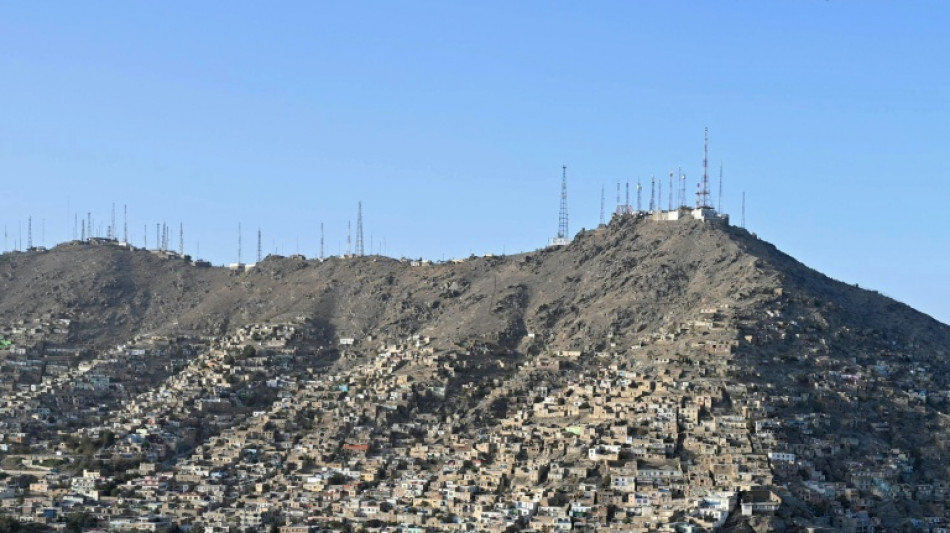
Taliban internet cut sparks Afghanistan telecoms blackout / Photo: © AFP

 WhiteBIT Launches Bitcoin Lightning Network Support, Powered by Voltage

 Oil surges, stocks sink as US reportedly eyes fresh Iran strikes
 Anne Carson: modern takes on Greek classics

 Canada's Anne Carson wins Nobel literature prize

 Ethiopia drones hit Eritrean troops in Tigray

 Russian strike on buses kills 30 in frontline Ukrainian city

 Thailand begins extradition process against Chinese journalist

 Quarantine, unease and rumours: Russian city grapples with plague scare

 Taiwan says exports hit record in September on AI demand
 Marc Marquez vows to 'attack' Martin's lead at Indonesian MotoGP
 Diplomats, schools in Saudi take safety measures after blasts heard: sources to AFP

 In Beijing, EU trade envoy says deficit with China 'unsustainable'

 Sri Lanka's de Silva quits as Test captain

 Alcaraz feeling 'mentally fresh' ahead of Shanghai return

 Israel drastically reduces British diplomatic presence in Jerusalem

 Stocks fall further as oil surge fans fresh inflation worries

 North Korea demands South show 'utmost respect' to restore relations

 Saudi says three dead in airport attacks claimed by Houthis

 'Mad dream': New showcase for African film opens in London

 All Blacks coach Rennie says Wallabies exit 'part of the game'

 The growing protests against India's poll body - and PM Modi

 Stocks fall further as oil spike fans fresh inflation worries

 Bad COP, worse COP? EU tempers hopes for UN climate summit

 Rookie Henry named in Wallabies midfield to face All Blacks

 Housing crisis set to dominate Spain's snap election

Afghanistan faced a second day without internet and mobile phone service on Tuesday, after Taliban authorities cut the fibre optic network.
The government began shutting down high speed internet connections to some provinces earlier in the month to prevent "vice" on the orders of shadowy supreme leader Hibatullah Akhundzada.
On Monday night, mobile phone signal and internet service gradually weakened nationwide until connectivity was less than one percent of ordinary levels, according to internet watchdog NetBlocks.
It is the first time since the Taliban government won their insurgency in 2021 and imposed a strict version of Islamic law that communications have been shut down in the country.
"We are blind without phones and internet," said 42-year-old shopkeeper Najibullah in Kabul.
"All our business relies on mobiles. The deliveries are with mobiles. It's like a holiday, everyone is at home. The market is totally frozen."
In the minutes before it happened, a government official warned AFP that the fibre optic network would be cut, affecting mobile phone services too.
"Eight to nine thousand telecommunications pillars" would be shut down, he said, adding that the blackout would last "until further notice".
"There isn't any other way or system to communicate... the banking sector, customs, everything across the country will be affected," said the official who asked not to be named.
The Taliban leader reportedly ignored warnings from some officials earlier this month about the economic fallout of cutting the internet and ordered authorities to press ahead with a nationwide ban.
- Radio communications -
Diplomatic sources told AFP on Tuesday that mobile networks were mostly shut down.
A UN source meanwhile said "operations are severely impacted, falling back to radio communications and limited satellite links".
Telephone services are often routed over the internet, sharing the same fibre optic lines, especially in countries with limited telecoms infrastructure.
Over the past weeks, internet connections have been extremely slow or intermittent.
On September 16, Balkh provincial spokesman Attaullah Zaid said the ban had come from the Taliban leader's orders.
"This measure was taken to prevent vice, and alternative options will be put in place across the country to meet connectivity needs," he wrote on social media.
At the time, AFP correspondents reported the same restrictions in the northern provinces of Badakhshan and Takhar, as well as in Kandahar, Helmand, Nangarhar and Uruzgan in the south.
Netblocks, a watchdog organisation that monitors cybersecurity and internet governance, said the blackout "appears consistent with the intentional disconnection of service".
AFP lost all contact with its bureau in the capital Kabul at around 5:45 pm (1315 GMT) on Monday.
"Because of the shutdown, I'm totally disconnected with my family in Kabul," a 40-year-old Afghan living in Oman told AFP via text message, asking not to be named.
"I don't know what's happening, I'm really worried."
In 2024, Kabul had touted the 9,350-kilometre (5,800-mile) fibre optic network -- largely built by former US-backed governments -- as a "priority" to bring the country closer to the rest of the world and lift it out of poverty.
Y.Bouchard--BTB