Abbas Warns Against 'Another Nakba' at UN Solidarity Day Address

 Paradise Valley Community College to Host Festival of Tales on Dec. 5

 Worcestershire Residents Invited to Submit Evidence on Unitary Council Plans

 NSEL Ends 14-Year Payment Default with ₹1,950 Crore Settlement

 Marilyn Monroe’s Handwritten Thanksgiving Recipe Sells for $16,000 at Auction

 India Pledges $1.6bn for Nepal Flood Recovery Amid Geopolitical Shift

 NSO Data Confirms Food Inflation Subsides in October
Speaking at the United Nations on the International Day of Solidarity with the Palestinian People, Palestinian President Mahmoud Abbas declared that his people would never accept displacement or abandon their rights, warning against any repetition of the Nakba. Delivered by Permanent Observer Riyad Mansour in New York, the address outlined demands for a permanent ceasefire in Gaza, an end to West Bank attacks, and the immediate release of withheld Palestinian funds.
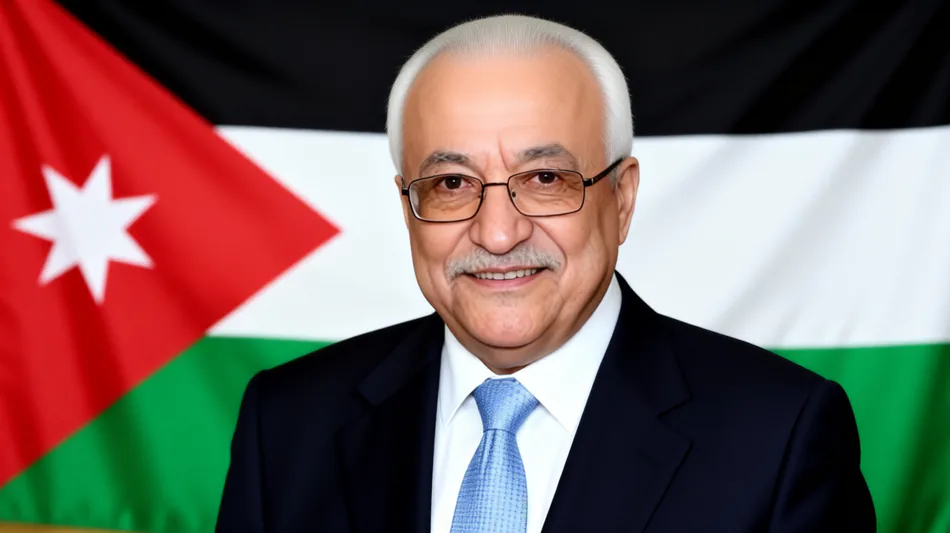
NEW YORK — Palestinian President Mahmoud Abbas has reaffirmed that the Palestinian people will remain in their homeland and will not accept displacement or abandonment of their rights, declaring during a United Nations address that there will be no other Nakba.
The statement was delivered on November 23 by Riyad Mansour, Palestine’s Permanent Observer to the United Nations, on behalf of President Abbas. The address marked the International Day of Solidarity with the Palestinian People and outlined a comprehensive set of demands aimed at ending what the President described as the ongoing catastrophe in Gaza and the continued violation of rights in the West Bank.
Abbas emphasized that the future of the Palestinian people must not be determined without their will or their sole legitimate representative, the Palestine Liberation Organization (PLO). He stressed that the world must not grow accustomed to the suffering caused by the war in Gaza or accept the continued erosion of Palestinian rights.
"Our people will remain in their homeland, and will not accept displacement or abandon their rights. There will be no other Nakba," Abbas said through Mansour. "We will not accept determining the future of our people away from their will and their sole legitimate representative, the Palestine Liberation Organization (PLO)."
The address detailed the severe conditions facing Palestinians in both Gaza and the West Bank. In Gaza, Abbas noted that civilians continue to suffer the catastrophic consequences of what he termed a "war of extermination and destruction," including the loss of shelter, essential services, and basic necessities. Simultaneously, in the West Bank, including East Jerusalem, he cited ongoing attacks, colonial expansion, settler terrorism, land confiscation, forced displacement, and efforts to undermine Palestinian institutions.
Abbas called for immediate international action to secure a complete and permanent ceasefire, ensure the unhindered flow of humanitarian aid, open border crossings, and facilitate the full withdrawal of Israeli forces from Gaza. He insisted that recovery and reconstruction efforts must proceed without displacement and under conditions that allow the State of Palestine to assume its responsibilities.
"Gaza is an integral part of the State of Palestine, and its unity with the West Bank, including East Jerusalem, is an indispensable foundation within the framework of one state, one government, one law, and one legitimate weapon," Abbas stated. He argued that ending the tragedy in Gaza must be accompanied by a halt to attacks in the West Bank.
The President identified specific policies he claimed threaten the viability of a future Palestinian state, including the E1 settlement plan, the isolation of Jerusalem, and the construction of checkpoints. "Colonization, the E1 plan, the isolation of Jerusalem, colonist terrorism, raids, and checkpoints target the unity of our land and the viability of establishing our state," he said.
Abbas called for the protection of Islamic and Christian holy sites in Jerusalem and the preservation of the city's identity. He urged practical measures to halt settlement expansion, annexation, and displacement, while demanding international protection for Palestinians and accountability for those responsible for crimes.
The address referenced specific international legal instruments, calling for the implementation of UN Security Council Resolution 2334 and follow-up on the International Court of Justice’s advisory opinion regarding the illegality of the occupation. Abbas also demanded the immediate and full release of Palestinian tax revenues withheld by Israel, describing them as essential for education, health, and services in both the West Bank and Gaza.
Regarding political developments, Abbas noted that more than a year has passed since the initiation of peace efforts, yet implementation remains stalled. He welcomed U.S. President Donald Trump’s peace plan and Security Council Resolution 2803, as well as mediation efforts by Egypt, Qatar, Turkey, and the United States. However, he argued that declaring a ceasefire is insufficient while attacks continue and that agreeing on reconstruction is meaningless while people live amid rubble.
He called for the deployment of international stabilization forces in accordance with international legitimacy and the enabling of Palestinian police and institutions to carry out their duties. Any transitional arrangements, he stated, must be temporary and lead to the State of Palestine assuming full sovereignty.
Abbas also addressed internal Palestinian political processes, renewing commitment to holding simultaneous, free, and fair legislative and presidential elections in the West Bank, East Jerusalem, and Gaza under international supervision. He noted that election dates had been adjusted to September 2027 due to security obstacles but expressed readiness to bring the date forward to the first half of 2027 if conditions improve.
"Elections are a right of our people and a commitment to which we remain steadfast, and we call on our partners to help us remove the obstacles to holding them," Abbas said. He reaffirmed commitment to comprehensive national dialogue and unity within the framework of the PLO and its international commitments.
The President outlined criteria for engaging with any future Israeli government, stating that cooperation would depend on a commitment to ending the occupation, halting the war, stopping colonial expansion, and respecting international agreements. He expressed readiness to work with any Israeli party accepting a just peace based on mutual recognition and equal rights.
Abbas called on the United States to use its influence to ensure the implementation of peace plans and Resolution 2803, halt unilateral measures, release withheld funds, support the recognition of the State of Palestine, and end the occupation. He argued that regional security depends on upholding rights, respecting state sovereignty, and establishing an independent State of Palestine living in peace alongside Israel.
On domestic reforms, Abbas stated that the Palestinian Authority had completed reforms presented at a Brussels meeting in July, aimed at developing institutions, strengthening the rule of law, and enhancing transparency. He also acknowledged the roles of Saudi Arabia and France in co-chairing the International Conference for the Settlement of the Question of Palestine, as well as efforts by the Arab-Islamic Committee and the Global Alliance.
The address praised recent measures by the United Kingdom and 12 other countries regarding products from settlements and colonial institutions. Abbas thanked countries that have recognized the State of Palestine and called on others to do so and support its full UN membership.
He concluded by outlining a clear track to end the occupation, realize Palestinian independence on the borders of June 4, 1967, with East Jerusalem as its capital, and achieve a just solution for refugees in accordance with Resolution 194. Abbas affirmed the necessity of supporting UNRWA politically and financially until a permanent solution is found.
Saluting millions of individuals, parliaments, universities, and civil society institutions worldwide who have stood in defense of Palestine, Abbas stated that their solidarity has affirmed that the Palestinian people are not alone. He called for strengthening this support with practical steps to protect Palestinian land, rights, and future.
"The people of Palestine want life, freedom, and peace, and will remain committed to their homeland and their right to an independent, sovereign state, with East Jerusalem as its capital," the address concluded.
M.Ouellet--BTB