Diesel shortage raises petroleum share of India’s exports to three-year high

 Kremlin says Ukrainian attacks won't change war aims as Kyiv hits Saint Petersburg

 Martinez starts for Man Utd after outburst

 Alberta separatists rally ahead of independence vote

 Diesel shortage raises petroleum share of India’s exports to three-year high

 France assesses protest damage after 1,800 arrests

 Gord launches four AI tools for sustainability and emissions management

 Doha 2036 bid sets out sport-led social legacy

 Conservation teams rescue orangutans from Indonesian wildfires

 Truck ploughs into Hindu festival crowd in India, killing 13

 Kuwait announces maintenance closures in Nuzha, Surra and Rai

 Moody’s lifts OYO parent Prism outlook to positive before planned IPO

 RCom professional asks Supreme Court to revisit spectrum insolvency ruling

 Debt recovery lessons after derivatives losses and repeated borrowing

 Katie Alexander reportedly leaves flat shared with Eamonn Holmes

 Body found in search for missing Glasgow teenager

 Andi King recounts late-life transition after decades behind an “alpha male” identity

 Bromsgrove Repair Cafe reports nearly 80% repair success rate

 B.C. Lions focus on playoff momentum after Calgary defeat

 Tata Trusts plans network of 40 to 50 not-for-profit hospitals

 Bajaj Finance set to report second-quarter results on October 19

 Messi reaches 936 career goals after Inter Miami brace

 Indian petrol and diesel prices remain unchanged on October 18

 Australia elect to bowl against South Africa in second Test

 Dozens of orangutans saved from Indonesia blazes as region grapples with haze

 Pope addresses crowd in Vatican after cancer surgery

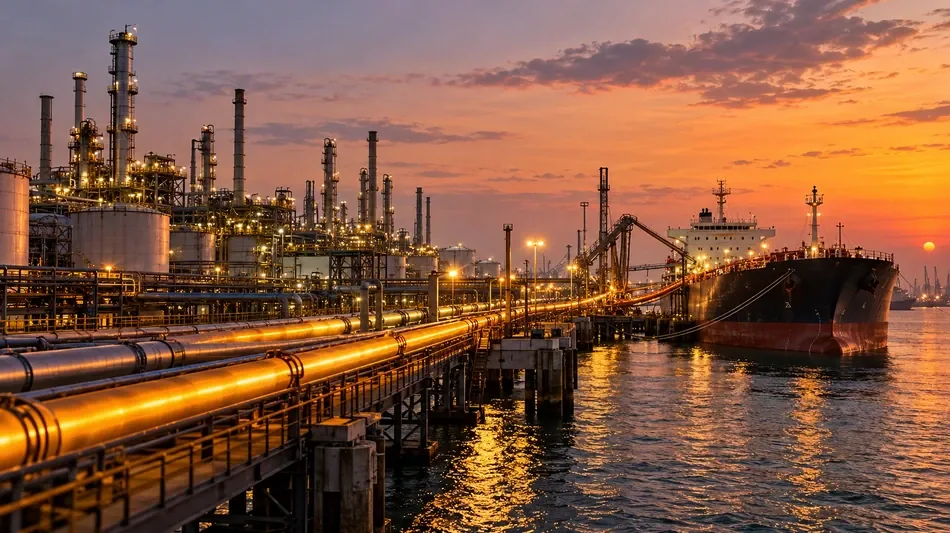
A global diesel shortage helped petroleum products reach their highest share of India’s gross exports in three years during the second quarter of the 2026-27 financial year.
A global diesel shortage helped petroleum products reach their highest share of India’s gross exports in three years during the second quarter of the 2026-27 financial year.
A severe global diesel shortage acted as a tailwind for Indian refiners in raising the share of petroleum products in India’s gross exports (by value) during the July-September quarter in FY27 to its highest in the last 12 quarters.
Based on data from the petroleum planning & analysis cell (PPAC), the share of petroleum products in India’s gross exports (by value) stood at 11.4 per cent in July 2026, 11.3 per cent (August) and 10.9 per cent in September, averaging at 11.2 per cent for Q2 FY27 (on a provisional basis).
This is the highest quarterly share since Q3 FY24. Export share averaged at 11.5 per cent (October 2023: 10.5 per cent; November: 12.9 per cent and December: 11.1 per cent).
Indian refiners exported 15.1 million tonnes (mt) of refined products, such as diesel and jet fuel, during July to September in the current financial year.
It also helped in compensating for high crude oil prices, albeit in a moderate range, considering India imports more than 88 per cent of its domestic crude oil requirement.
While India’s crude oil and refined product import bill stood at $47.4 billion during Q2 FY27, export earnings were at $14.8 billion, helping to compensate for a little over 31 per cent of the import bill.
Analysts, traders and refiners indicated that West Asia refinery outages and drone attacks on Russian refineries impacted roughly 8 million barrels per day (mb/d) of global refining capacity. What has further tightened the market for diesel is curtailed Chinese refining and shipping constraints.
Wholesale diesel prices exceeded $200 a barrel in Singapore in mid-September 2026 and reached all-time highs of around $220 in Europe and the US. Retail prices rose in tandem to record levels in most major economies.
The Federal Bank of Dallas in a recent commentary stated that global refinery capacity declined by as much as 10 per cent, or roughly 8 mb/d, due to closure of the Strait of Hormuz, attacks from Houthi rebels in Yemen on Red Sea shipping, damaged Middle East refineries, Ukrainian drone attacks on Russian refineries, and export restrictions in China and Russia.
Markets under pressure
Meanwhile, the International Energy Agency (IEA) in its latest oil market report pointed out that continued disruptions to West Asia exports, compounded by lower supply from Russia and some Asian countries, cut global diesel/ gasoil availability by 1.5 mb/d in Q2 2026 and 1.7 mb/d in Q3 2026 compared with a year earlier, putting diesel markets under extreme pressure.
“While global diesel prices have eased from the all-time highs of more than $200 per barrel reached in September, benchmarks remain nearly double the price of crude oil and their pre-crisis levels. Record diesel prices are already having broad economic consequences by raising the cost of goods and impacting real incomes, economic activity, and inflation,” it noted.
Global refining shock lifts India’s diesel exports to a 12-month high in September
Moreover, the IEA expects gasoil and diesel market tightness to extend into 2027. Global gasoil markets tightened counter-seasonally in Q3 2026, as prolonged disruptions to West Asian and Russian exports forced stock draws. Combined with much heavier-than-normal inventory declines in Q2 2026, this has deprived global gasoil markets of crucial stock cover ahead of the peak winter demand season.
“However, even with a rapid recovery expected in refinery throughputs into year-end, gasoil supply falls short of meeting demand in Q4 2026, suggesting that the replenishment of lost inventories, outside of typical seasonal fluctuations, is unlikely before H2 2027,” IEA noted.
O.Lorenz--BTB