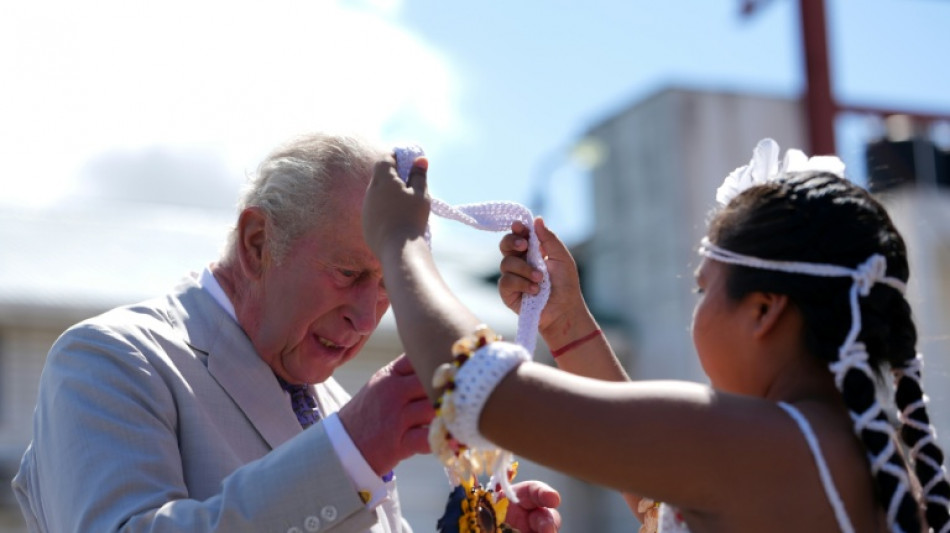
British king reflects on colonial atrocities in Guyana / Photo: © POOL/AFP

 Freshways milk-price cut deepens pressure on UK dairy farms
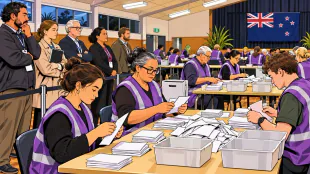 Labour and National remain virtually tied as New Zealand vote count advances
 The Good Daughter adapts Karin Slaughter thriller with Rose Byrne and Meghann Fahy
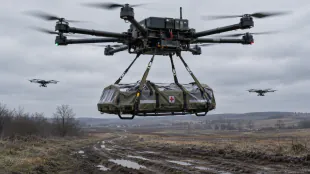 Heavy-lift drone evacuates wounded Ukrainian soldier from frontline kill zone

 Morrison says West Brom recovered after pressure from successive derby losses
 Britain considers 2027 state visit for Ukraine’s Zelensky
 Udinese Falls to Last Place in Serie A After Loss to Venezia

 BSG Chemie Leipzig Defeated by Regionalliga Leaders Rot-Weiß Erfurt

 Trump and Vance Pursue Secret Diplomacy with Iran Amid Military Pressure
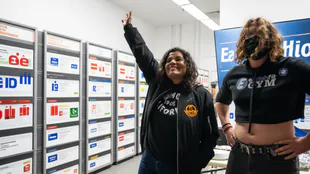
 Inside SFFILM’s Operations: Jordan Menashe on Managing Doc Stories Logistics
Britain's King Charles paid homage to fallen soldiers and reflected on colonial atrocities in Guyana during a whistle-stop tour of the former colony on Friday.
The monarch is looking to draw attention to climate change during his nine-day visit to three Caribbean countries.
But Britain's central role in slavery and mistreatment of its colonial subjects have traced the contours of the trip.
Joined by Guyanese Prime Minister Mark Phillips, Charles laid ceremonial wreaths on the graves of soldiers who fought for Britain before independence in a Georgetown cemetery.
At an execution site of local people during British colonial times, the king paused to reflect in a gesture meant to indicate his awareness of this past injustice.
Several heads of state of ex-colonies have requested an apology for colonization and the transatlantic slave trade, which profited British royals for centuries.
The king has acknowledged this reality but has stopped short of saying sorry. A formal apology must come from the British government.
"A lot of the wealth of the United Kingdom was derived from Guyana," lawmaker Terrence Campbell told AFP at a small demonstration.
"This is an appropriate time and place for the King to maybe have a change of heart and issue that apology for slavery," he said.
The palace instead wants the Caribbean trip to focus on the present and the future, particularly the current threat of climate change.
The King's Foundation funds several environmental projects in oil-rich Guyana, which is a small country mostly covered in forests.
Guyana has "managed to keep an enormous percentage of your forests. That is an incredible achievement," Charles said Friday.
He was speaking at the Global Biodiversity Alliance Conference, where Indigenous communities, governments, the private sector, researchers and financial institutions discuss international conservation efforts.
The faint cry of protesters could be heard in the distance as Charles visited Umana Yana, a thatched hut and traditional Indigenous gathering place.
Following solo stints in the Bahamas and Guyana, the king will be joined by his wife, Queen Camilla, in Antigua and Barbuda, where he will address a Commonwealth Heads of Government (CHOGM) summit.
The summit will include slavery reparations discussions, according to Commonwealth Secretary-General Shirley Ayorkor Botchwey.
F.Pavlenko--BTB