'A question of time': experts fear Balkans measles outbreak / Photo: ©

 'He's here with me': Japan cycle queen dedicates gold to late brother
 Japan Olympic chief says 'lot more' athletes at Games than expected
 Asian carmakers besting US rivals at home, China poised to strike

 Widgets & Web Offers All-Inclusive Investor Relations Websites for Public Companies, IPOs and SPACs
 Adams named new US captain to 2030 World Cup
 China a better influence in Latin America than US: poll
 Judge pauses construction of border project in Texas national park

 Belgium's De Bruyne fires double to sink Turkey, France held by Italy
 US jobs data boosts stocks as oil prices dip
 US Supreme Court to hear high-stakes climate case
 Trump expected to name intel chief Clayton as AI czar: reports
 Argentina unveils passports-for-investment scheme

 Brazil election debate chaos sparks censorship row
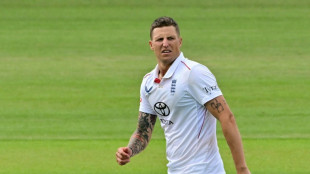 England's Carse charged by cricket body over nightclub incident

 Amazon vows $1 bn for data center towns, decries 'myths'
 Oil prices drop on G7 fuel release, US jobs data boosts stocks

 G7 agrees deal to ease global energy supply concerns
 Spain's government dealt blow as lawmakers reject housing bills
 Food, medicine shortages deepen in Russian-occupied Oleshky
 Man City whistleblower Rui Pinto facing 'dire consequences' - lawyers
 Russia 'tearing Kyiv apart', mayor says, as strikes paralyse traffic
 Taiwan boxer Lin wins Games gold as Japan edge North Korea on penalties

 Japan tame North Korea to win Games gold after shootout drama
 US posts weak job growth data in September
 Ethiopia's conflict: the regional dimension

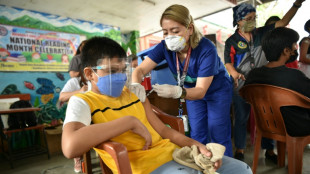
Despite vaccinating her first child, Vanja drew a line when it came time to inoculate her second and decided he would not be receiving the measles shot.
The 44-year-old psychologist living in Montenegro's capital Podgorica gave a host of reasons why she changed her mind, all after binging on a deluge of information shared in an online group she belongs to.
"I don't trust the vaccination system. We lack information and education," Vanja told AFP, asking that her surname be withheld.
"I feel great responsibility and it wasn't a simple and easy decision to make."
Vanja's position is increasingly common in Montenegro which has the lowest measles vaccine uptake globally with just 23.8 percent of infants inoculated in 2020 with the first of two shots, according to World Health Organization data.
The dramatic decline in inoculation rates has public health experts bracing for an imminent measles outbreak in Montenegro and its nearby Balkan neighbours where vaccination uptake has also plummeted, largely due to a rise in misinformation, especially during the Covid-19 pandemic.
"The risk of a measles outbreak is high," Dragan Jankovic, an immunisation official with the WHO, told AFP.
"Importation of the measles virus is only a question of time... as soon as it is imported into a susceptible population, an outbreak will start."
In neighbouring North Macedonia, 63 percent of children were inoculated with the first shot of the combined measles, mumps and rubella (MMR) vaccine, while in Serbia 78 percent have had the jab.
- 'Perfect storm' -
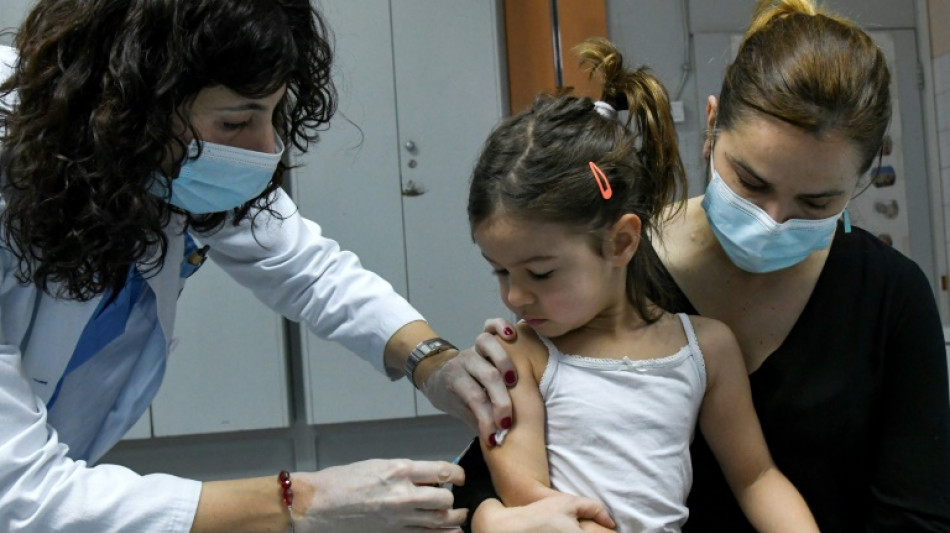
Experts say a uptake of at least 95 percent of the two-dose jab is needed to avoid the spread of measles, a highly contagious airborne disease that can be fatal.
The virus can cause complications that include blindness, brain swelling and pneumonia, and unvaccinated children are at the highest risk of developing serious cases -- including death.
But for decades, there has been an aversion to the MMR shot, rooted in rampant misinformation tied to a widely debunked 1998 study that suggested a link between autism and the vaccine.
The United Nations has repeatedly warned that a "perfect storm" was brewing for new outbreaks of preventable diseases, with the pandemic disrupting routine vaccinations.
And even after the measles killed over 207,000 people worldwide in 2019, vaccination rates still dropped in many parts of the globe.
The first-dose vaccination rate dropped from 86 to 84 percent globally between 2019 and 2020, while only 70 percent received a second dose during the same period, according to WHO data.
In the Balkans, epidemiologists chalk up the growing anti-vax sentiment to several factors, including distrust in the government, a lack of serious enforcement measures, and a deluge of misinformation that overwhelmed social media during the pandemic.
In Montenegro, doctors have called on the government to take the issue more seriously, saying small fines on parents who refuse mandatory vaccine mandates have done little to reverse the country's anti-vax shift.
"The MMR vaccine is currently not a condition for enrolment in schools and kindergartens," Milena Popovic Samardzic, an epidemiologist from Montenegro's Institute of Public Health, told AFP.
Almost one-third of Montenegrins believe a conspiracy theory that alleges doctors and government seek to vaccinate children with shots that cause autism, according to an Ipsos survey published in 2021.
The same report also found that over half of the country's population are convinced that "global elites" created the coronavirus in order to slash the planet's population.
- 'Fed up' -
In Serbia, the vaccine is mandatory for student enrolment but experts say officials often turn a blind eye to the problem until an outbreak forces their hand.
"The state only needs to follow the rules they set out," said Georgios Konstantinidis, the head of Serbia's paediatrics association.
"But nobody does -- neither the parents nor the people in kindergartens who enrol kids through 'connections'."
Serbia was last hit by a measles outbreak in 2017, resulting in 3,800 recorded cases and 12 deaths, including two children.
In wake of the outbreak, state prosecutors launched proceedings against 43 prominent anti-vaxers for "causing panic", but none were convicted, according to Vladimir Cimerman, a Belgrade doctor who helped bring a lawsuit.
Doctors in Serbia are increasingly frustrated that warnings go ignored.
"We lack social responsibility. I'm fed up with everything," said Konstantinidis.
"Basic humanity has vanished from this society, and the whole world for that matter."
O.Bulka--BTB