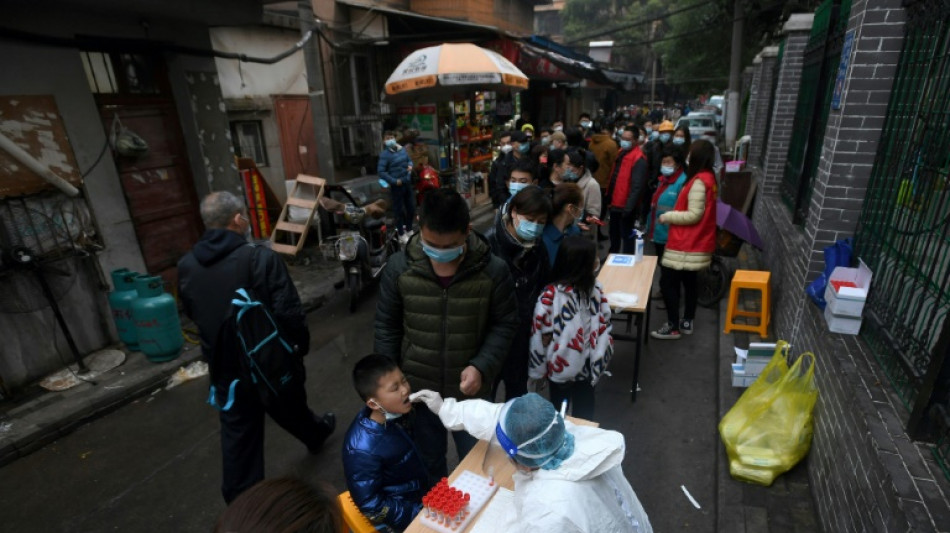
China's zero-Covid policy under pressure as cases rise / Photo: ©

 Prague’s Concert for the Future Kicks Off on Wenceslas Square

 Prince William and Princess of Wales to Announce Earthshot Prize Winners in Mumbai

 Indonesia Forest Fires: Health Crisis, Diplomatic Strains and the Search for Solutions

 BYD Dolphin G Leasing Deal: Plug-in Hybrid Supermini Available from £174 a Month

 JUEL Group Expands from Real Estate to Hospitality with Hyatt Centric Malta Opening

 French Economy Shrinks 0.1% as Consumer Confidence Slumps

 Wall Street Ends Turbulent Week Higher Despite Inflation and AI Jitters

 Kansas City Fed Chief Says Inflation Is Still Running Too Hot

China on Monday reported its highest number of coronavirus cases in two years as clusters emerged in more than a dozen cities, posing a fresh challenge to Beijing's zero-Covid policy.
The country's borders remain mostly closed as policymakers continue to pursue the zero-tolerance approach even as many parts of the world turn to living with the virus.
More than 500 infections were reported across mainland China on Monday, the most since China's initial outbreak in the central city of Wuhan was brought under control in the middle of 2020.
The spike comes as cases spiral out of control across the border in the southern Chinese territory of Hong Kong, where hospitals have been overflowing with patients and locals are panic-buying fearing a lockdown.
Questions have been raised about the sustainability of China's heavy-handed control strategy coupled with concerns about the efficacy of Chinese vaccines.
Covid-19 was first detected in China in late 2019 and since then Beijing has responded to each local outbreak with harsh snap lockdowns and mass testing along with state-mandated tech to track people's movements.
In Hong Kong there has been mixed messaging about whether officials will follow the mainland's lockdown policy and there have also been signs that Beijing is reconsidering zero-Covid.
A top Chinese scientist said last week that the country should aim to co-exist with the virus and could move away from the zero-tolerance strategy "in the near future".
However, National People's Congress spokesman Zhang Yesui poured cold water on that idea Friday ahead of China's annual parliamentary meetings where policies are set for the coming year.
"The path is correct and results are good," Zhang said.
"Any prevention and control measures will have some costs, but compared to protecting people's lives and health, these costs are worth it."
J.Fankhauser--BTB



