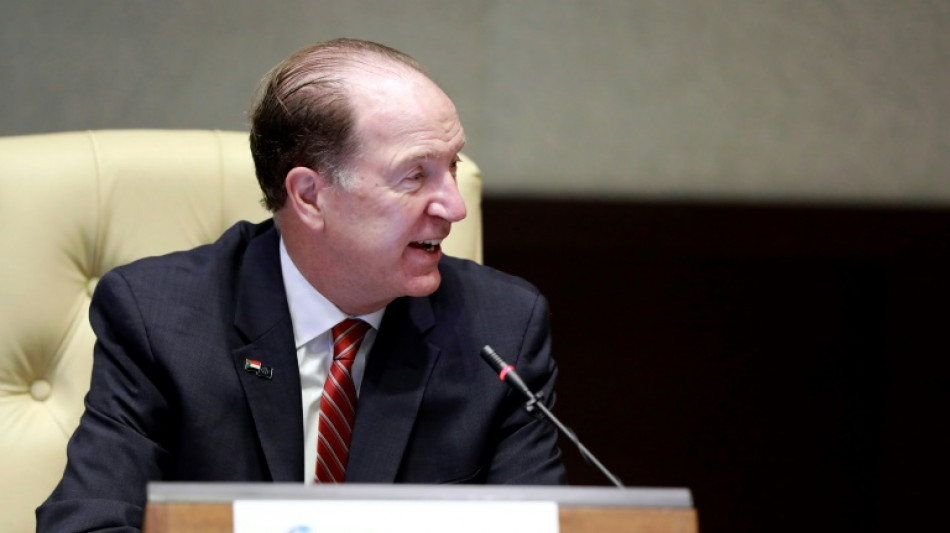
World Bank chief contrasts Microsoft deal with poor countries' debt / Photo: ©

 Prague’s Concert for the Future Kicks Off on Wenceslas Square

 Prince William and Princess of Wales to Announce Earthshot Prize Winners in Mumbai

 Indonesia Forest Fires: Health Crisis, Diplomatic Strains and the Search for Solutions

 BYD Dolphin G Leasing Deal: Plug-in Hybrid Supermini Available from £174 a Month

 JUEL Group Expands from Real Estate to Hospitality with Hyatt Centric Malta Opening

 French Economy Shrinks 0.1% as Consumer Confidence Slumps

 Wall Street Ends Turbulent Week Higher Despite Inflation and AI Jitters

 Kansas City Fed Chief Says Inflation Is Still Running Too Hot

After Microsoft announced it would spend tens of billions of dollars to buy a video game company, World Bank President David Malpass on Wednesday drew a contrast between the deal and the amount of money rich nations have pledged to help poor countries facing higher debt loads.
"I was struck this morning by the Microsoft investment -- $75 billion in a video gaming company" compared to just $24 billion over three years in aid for the poorest countries, Malpass said, referring to donations allocated in December by 48 high- and middle-income governments.
"You have to wonder, is this the best allocation of capital?" he said of the Microsoft deal in a discussion at the Peterson Institute for International Economics.
"There has to be more money and growth flowing into the developing countries."
Microsoft on Tuesday announced the purchase of US gaming giant Activision Blizzard, the firm behind hits like "Call of Duty."
Malpass has called on the richest nations in the Group of 20 to provide more debt relief to the world's least-developed countries that qualify for interest-free loans.
A G20 debt service suspension initiative expired at the end of 2021, and this year alone, those countries must pay $35 billion in debt service.
"The debt payments are staggering," and it has become a "compounding" problem, Malpass said.
J.Bergmann--BTB



