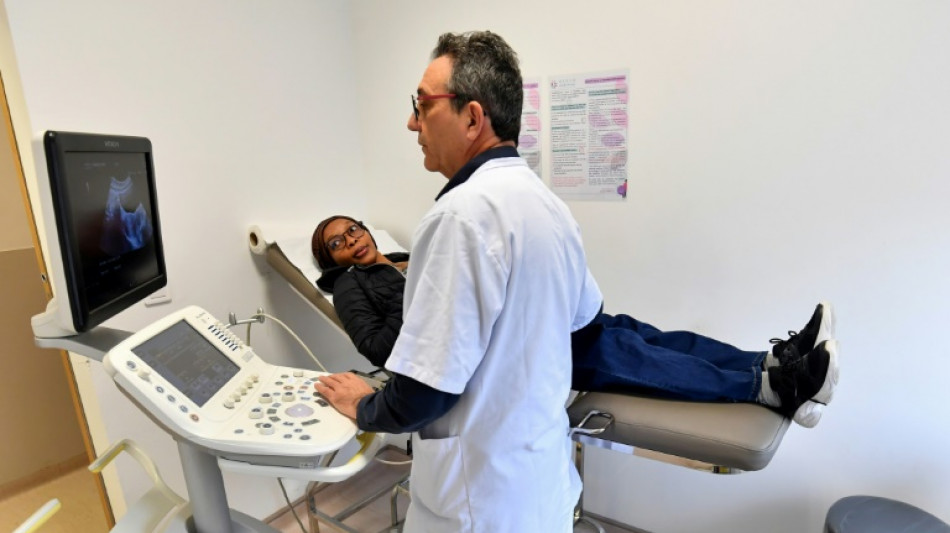
As Tunisia's economy falters, medical tourism flourishes / Photo: © AFP

 Asian Games set to close after records, rancour and rain

 Cry for help as French-Swiss lake dries up

 Sabalenka swept out of China Open in third round

 US urges 'restraint' as Ethiopia's Tigray crisis rocks region

 Teens on target again as USA down Mexico 3-0

 World records prove Asian Games were a hit, says top official

 US prison chief who oversaw botched execution resigns
 'Chaotic' Asian Games threaten Japan hopes of hosting Olympics again
 Finnish town braces for change from Google data centres
 What is fuelling French school protests?

 Without lawyers, migrant children face deportation from the US
 Three-peat seeking Dodgers open playoffs with a win, Rays hold off Yankees

 Brazil votes in nail-biter polls closely watched by Trump

 'Just be you': Kim reveals Tiger text that inspired him to gold

 Myanmar migrants returned to war-torn nation from Malaysia

 ALEX BODI AND AMBASSADOR GUM DOMINIC MATIOK OF THE REPUBLIC OF SOUTH SUDAN MEET IN BERLIN TO DISCUSS THE POSSIBILITY OF AN HONORARY CONSULATE IN BUCHAREST

 Lula, Bolsonaro wrap up campaigns ahead of Brazil's knife-edge vote

 Toulouse edge Castres in Top 14 derby

 Murakami homer propels White Sox to MLB playoff win over Guardians

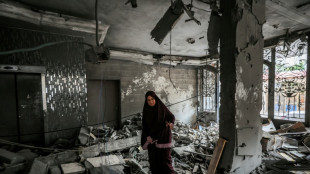 Israel targets top Hamas leader in deadly Gaza strike on anniversary

 Houthis say struck oil facility near Riyadh, as Saudis hit Sanaa

 AI needs safety layers like nuclear plants: ex-OpenAI engineer

 MVP Judge will miss Yankees' MLB playoff series against Rays

 New lizard species discovered in Peru

 Fernandes hails Portugal's 'greatest symbol' Ronaldo, calls for unity
At a fertility clinic in Tunis, Bintou Yunoussa hopes doctors can finally help her conceive -- one of more than two million foreigners who travel to Tunisia annually for medical procedures.
While Tunisians face economic hardships and their government is mired in debt, medical tourism has thrived and authorities are looking to expand the profitable sector even further.
Yunoussa, from Niger, said a relative had recommended the private clinic in the Tunisian capital after three years of unsuccessful treatments.
"My sister-in-law had twins after an insemination carried out in Tunisia," the 25-year-old told AFP. "That's why I chose to come here."
She was accompanied by her sister Khadija, 32, who had her eggs frozen five months ago in the same clinic, which specialises in medically assisted reproduction.
Nadia Fenina, a health ministry official, said Tunisia's highly specialised private clinics and skilled staff make it a leading medical tourism destination.
"Tunisia is number one in Africa in terms of healthcare demand and supply," Fenina told AFP.
Medical tourism has bounced back from a coronavirus-era halt, and the sector generates around 3.5 billion dinars ($1.1 billion) in annual revenues -- about half of Tunisia's overall tourism income last year.
"Medical tourism is linked to the general tourism sector, because a foreign patient is also a tourist who generally does not come alone," said Fenina.
"The promotion of medical tourism depends on the development of the tourism sector" as a whole, she added.
Accounting for nine percent of Tunisia's gross domestic product, tourism is crucial for the debt-stricken country where the economy has slowed down, with a World Bank estimate putting growth for 2023 at a modest 1.2 percent.
Last year, the small Mediterranean country of 12 million people drew nearly nine million tourists, according to official figures.
They included more than 500,000 foreign patients hospitalised in Tunisia and about two million others who had received same-day care, officials say.
- Chance to relax -
The Tunis clinic where Yunoussa was treated received 450 patients for in vitro fertilisation last year, many of whom from sub-Saharan African countries where some treatments may be unavailable or hard to access, said Dr Fethi Zhiwa.
Others came from elsewhere in North Africa as well as Western countries like Britain, Switzerland and Canada, said the doctor, citing affordable rates and Tunisia's "world-renowned fertility specialists" as the main drawing points.
Many European medical tourists come for cosmetic surgery, representing 15 percent of all treatments for foreigners in Tunisia, Fenina said.
Mohamed, a 59-year-old Libyan who gave his first name only, visits Tunisia twice a year to see his cardiologist for regular check-ups following an operation.
"This doctor saved my life, I will never change him," he said.
Travelling with his wife, the couple planned to use the latest trip to also "spend a few days relaxing in Tabarka", a town on Tunisia's northwestern coast, Mohamed said.
Tourism has "strong potential" in Tunisia and can grow "if we overcome some obstacles and limitations", said Fenina.
Direct flights to more African destinations and simpler visa procedures could help, she said, "which is why we are working to implement a medical visa".
The health ministry is also working on better coordination between medical tourism agencies, healthcare providers and other stakeholders, and collaborating with the private sector to set up facilities geared towards an elderly European clientele.
While the country has seen an alarming rise in anti-migrant sentiment, marked by violence and fiery remarks last year by the president painting "hordes" of Africans as a threat, Yunoussa said she felt welcome in Tunisia.
"I feel at home here," she said.
W.Lapointe--BTB



