Princess Catherine cancer: What is preventative chemotherapy? / Photo: © AFP

 'Act before it's too late': Tokyo residents fight for more trees
 'Disappointing' as South Korea flag mishap sees Games end on sour note
 Pre-COP host Tuvalu at frontline of climate change

 Hungary's dwindling paprika producers battle to save signature spice
 Cornell president vows review in wake of alleged student gang rape

 Latvian partial election results suggest pro-European choice

 In Egypt's Sinai, Gazan builds school for children displaced by war

 Trump tariffs a mixed bag for US auto industry

 Yemen government forces say struck Houthi targets

 Music links past, present for Pedro Pascal's cellist in 'Behemoth!'

 ALEX BODI ȘI AMBASADORUL REPUBLICII SUDANUL DE SUD, GUM DOMINIC MATIOK, DISCUTĂ LA BERLIN DESPRE POSIBILITATEA ÎNFIINȚĂRII UNUI CONSULAT ONORIFIC LA BUCUREȘTI

 Dodgers step up World Series three-peat bid with 5-3 win over Braves

 Spain break down Czechs as England outclass Croatia in Nations League

 Yamal on target as Spain hold off Czech Republic

 Latvian exit polls suggest pro-European choice
 Lula, Bolsonaro wrap up campaigns ahead of knife-edge election

 Tuchel hails 'complete' England after Croatia demolition

 Fury to invite Trump to lead ring walk before Joshua showdown

 Fashion industry in 'precarious moment', says Vivienne Westwood supremo
 Seventh heaven for England in Nations League rout of Croatia

 Storms, flooding cause chaos on Greek holiday island of Crete

 #IAmJaneDoe: online support campaign in US university rape case

 Brazil shine on Selecao's first visit to India

 Zverev sets up Djokovic quarter-final at China Open, Rybakina out

 Happier at home, Bordeaux hammer Lyon in Top 14

Catherine, Princess of Wales, announced on Friday that she is undergoing preventative chemotherapy to treat cancer discovered after she had abdominal surgery.
While the exact situation is difficult to determine because the 42-year-old princess did not disclose the nature of the cancer, here is an explanation of preventative chemo.
- What is chemotherapy? -
Chemotherapy is the use of powerful drugs to stop cancerous cells from growing, dividing and creating more cells. There are a large number of kinds of chemotherapy, depending on the cancer, how far it has spread and the treatment regime.
Because these treatments cannot distinguish between different cells, they end up killing some cells that do good, such as white blood cells, causing some side effects.
- Why preventative? -
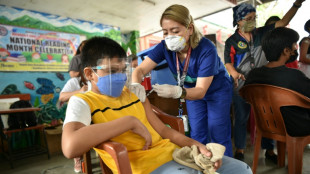
Preventative chemotherapy is often used after surgery to "decrease the likelihood" that cancer will return, Kimmie Ng, an oncologist at Dana-Farber Cancer Institute in the United States told AFP.
Even after successful surgery, "microscopic cancer cells can remain lurking in the body and can't be detected by current tests," said Lawrence Young, molecular oncology professor at the University of Warwick.
It is "a bit like mopping a floor with bleach when you've spilt something on it", Andrew Beggs, a cancer surgeon at the University of Birmingham, told the Science Media Centre.
- Side effects? -
How chemo affects people can vary depending on the particular cancer, treatment and person.
But common side effects include fatigue, nausea, diarrhoea, loss of appetite and an increased risk of getting an infection.
Some rarer, more severe side effects can include sepsis and damage to vital organs.
- How long? -
Treatment schedules again can vary widely, but a traditional chemo regime would be delivered in four to six blocks, said Bob Phillips, paediatric oncology professor at the University of York.
A cycle may last 21 days and "consists of a day or few days of chemo, then time for the body to recover from it," Phillips said.
Regimes of preventative chemo tend to last between three to six months.
It can take people weeks or months to recover from the treatment.
- More cancer among young people? -
Beggs emphasised that "young onset cancer is by no means rare".
"I run a clinic for early-onset cancer in adults and we are seeing more and more people in their 40s with cancer," he said.
Shivan Sivakumar, an oncology expert at the University of Birmingham said "there is an epidemic currently" of people under 50 getting cancer.
"It is unknown the cause of this, but we are seeing more patients getting abdominal cancers," he said.
Ng pointed out that research from the American Cancer Society released this year showed that younger adults were the only age group in which cancer increased between 1995 and 2020.
"There is an urgent need for research into the causes of this uptick," Ng said.
Research published in the BMJ journal last week said that cancer cases among people aged 35-69 in Britain also rose over the last quarter of a century.
But deaths from cancer fell by a significant margin.
"The younger you are, the more likely you are to tolerate chemotherapy well," Sivakumar said.
Younger people also more likely to survive cancer.
A combination of early diagnosis and better treatments has led to "survival rates doubling in the last 50 years", Young said.
"An incidental finding of cancer during surgery for other conditions is often associated with the tumour being detected at an early stage when subsequent chemotherapy is much more effective," he added.
- Check yourself? -
Michelle Mitchell, chief executive of Cancer Research UK, said that such high-profile cancers can serve as a reminder for people to think about their own health.
"If people spot something that's not normal for them or isn't going away, they should check with their GP," she said.
"It probably won't be cancer. But if it is, spotting it at an early stage means treatment is more likely to be successful."
D.Schneider--BTB