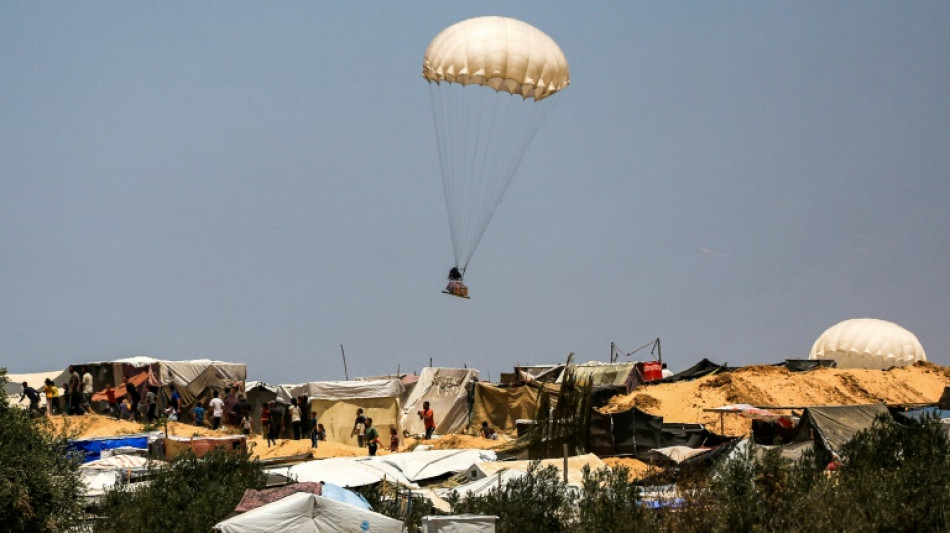
Some Gazans 'drinking sewage water': WHO regional chief / Photo: © AFP/File

 ALEX BODI AND AMBASSADOR GUM DOMINIC MATIOK OF THE REPUBLIC OF SOUTH SUDAN MEET IN BERLIN TO DISCUSS THE POSSIBILITY OF AN HONORARY CONSULATE IN BUCHAREST

 Lula, Bolsonaro wrap up campaigns ahead of Brazil's knife-edge vote

 Toulouse edge Castres in Top 14 derby

 Murakami homer propels White Sox to MLB playoff win over Guardians

 Israel targets top Hamas leader in deadly Gaza strike on anniversary

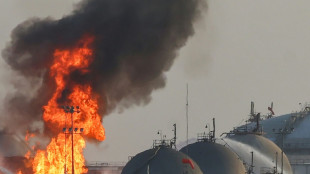 Houthis say struck oil facility near Riyadh, as Saudis hit Sanaa

 AI needs safety layers like nuclear plants: ex-OpenAI engineer

 MVP Judge will miss Yankees' MLB playoff series against Rays

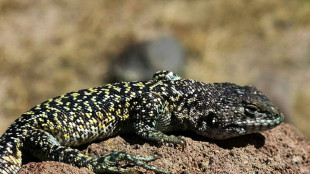 New lizard species discovered in Peru

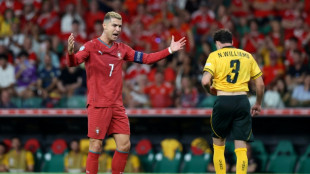 Fernandes hails Portugal's 'greatest symbol' Ronaldo, calls for unity
 Grandidier-Nkanang double takes Pau to Top 14 summit despite Vannes fightback

 Trainer Scott gets perfect Arc boost with top notch double

 Ex-PM says Putin cannot admit 'mistake' over Ukraine

 Houthis say Saudi Arabia launches dozens of strikes on Yemen capital

 Qatar and Abu Dhabi F1 Grand Prix to go ahead - F1 boss

 South Korea lift gloom with smash-and-grab Games football gold
 Ireland news conference before Israel game cut short amid tensions
 Protests over housing flare in Spain after relief measures rejected

 Zverev thrashes Shang to set up Djokovic quarter-final at China Open

 Turkey football ref chief jailed pending trial for graft
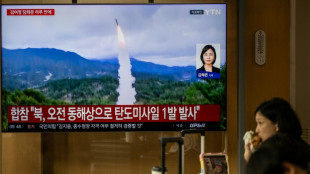 North Korea says test of intermediate-range strategic missile included use of AI

 Rampant Sayers leads Hong Kong to third men's rugby gold in a row

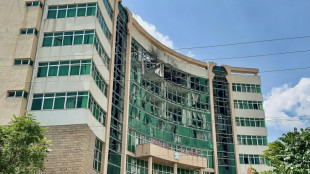 Ethiopia's Tigray rebels abandon regional capital as govt advances

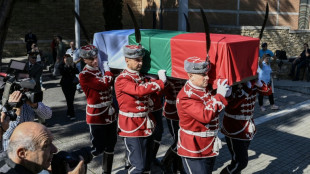 Bulgaria's Tsar Samuel returns 'home' after 1,000 years

 'Glad it's over': Kim powers to Games gold and military exemption

Some Gazans are now reduced to drinking sewage water and eating animal feed, the WHO's regional chief said Tuesday, pleading for increased aid access immediately to the besieged territory.
Hanan Balkhy, the World Health Organization's Eastern Mediterranean regional director, also warned that the war between Israel and Hamas had a knock-on impact on healthcare across the wider region.
And the impact on children will have severe lasting effects, the child health expert told AFP in an interview at the WHO headquarters in Geneva.
Inside Gaza, "there are people who are now eating animal food, eating grass, they're drinking sewage water," she said.
"Children are barely able to eat, while the trucks are standing outside of Rafah."
The bloodiest-ever Gaza war was sparked by Hamas's October 7 attack, which resulted in the deaths of 1,194 people, mostly civilians, according to an AFP tally based on Israeli official figures.
Israel's retaliatory bombardment and ground offensive have killed at least 36,655 people in Gaza, also mostly civilians, according to the Hamas-run territory's health ministry.
- 'Extremely complex traumas' -
The UN has long warned that famine is looming in Gaza, with 1.1 million people -- around half of the population -- facing catastrophic levels of food insecurity.
The UN humanitarian agency OCHA on Tuesday said access constraints "continue to undermine the safe delivery of life-saving humanitarian assistance throughout Gaza", and conditions "further deteriorated" in May.
A trickle of aid goes in mainly through the Kerem Shalom crossing with Israel.
The insecurity linked to the fighting and bombings, and roads often filled with debris, also hinders the distribution of aid.
Balkhy, who took office in February, said Gaza needed "peace, peace, peace", plus vastly increased aid-access by land.
After a recent visit to the Rafah crossing from Egypt into the southern Gaza Strip -- a vital conduit for aid that was closed by Israeli forces early last month -- she urged Israel to "open those borders".
Balkhy said Kerem Shalom was "not enough", and the frantic efforts at maritime corridors and air drops made little sense when far less costly and more effective land routes already existed and "the trucks are lined up" outside them.
Balkhy voiced particular frustration at the blocking of medical equipment deemed "dual use" -- items that Israel says could be used for military purposes.
"We're talking about ventilators, purification chemicals to clean water," the Saudi doctor said.
- Child mental health impact -
Balkhy stressed the dire needs of patients in Gaza, with as many as 11,000 critically ill and wounded people requiring medical evacuation.
"The patients that are coming out are showing some extremely complex traumas: compound fractures, multi-drug resistant organisms, very maimed children," she said.
"To rehabilitate people like this and treat them you need very complex health care," Balkhy said, emphasising the knock-on strain on fragile health systems in neighbouring host countries, notably Egypt.
Last week, WHO warned there has been an "abrupt halt" to medical evacuations since Israel launched its offensive in Rafah in early May, warning more people would die while waiting for care.
An infectious disease paediatrician, Balkhy spoke of the short- and long-term impacts of the conflict on children.
She said the war had had a devastating toll on basic public health measures, such as clean water, healthy food and routine immunisations, leaving children susceptible to measles, chicken pox, diarrhoea and respiratory illnesses.
"It's going to have a huge impact on mental health. It's going to cause huge post-traumatic stress syndromes," she warned.
"I think (for) children who have heard the fire and the destruction, and lived it, it's going to take a lot of effort to pull them out."
Regarding children rescued from the rubble, "I don't even know how you recover from that psychologically", she said.
As for the prospect of rebuilding Gaza's shattered health system one day, Balkhy said "the ambition from donors is high.
"But without peace it's impossible."
G.Schulte--BTB