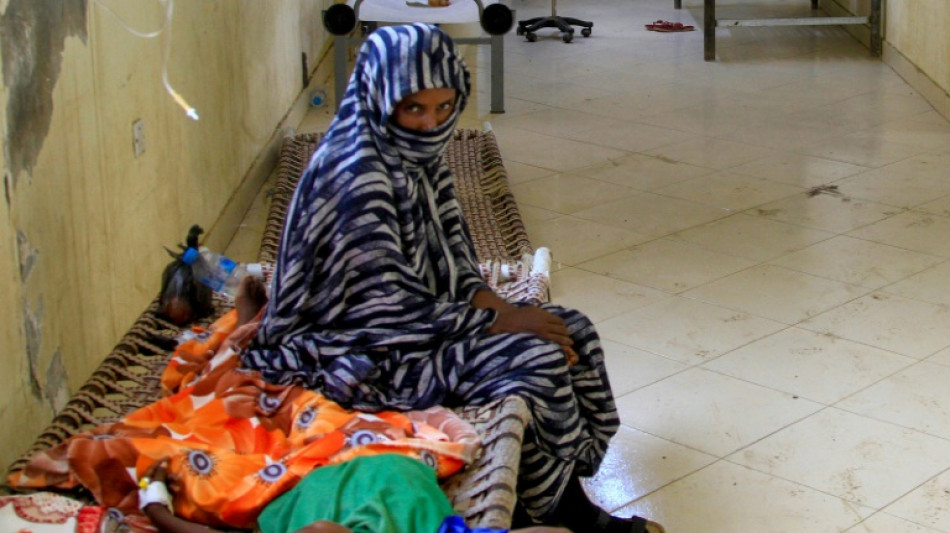
War-ravaged Sudan battles cholera epidemic / Photo: © AFP

 Lula, Bolsonaro wrap up campaigns ahead of Brazil's knife-edge vote

 Toulouse edge Castres in Top 14 derby

 Murakami homer propels White Sox to MLB playoff win over Guardians

 Israel targets top Hamas leader in deadly Gaza strike on anniversary

 Houthis say struck oil facility near Riyadh, as Saudis hit Sanaa

 AI needs safety layers like nuclear plants: ex-OpenAI engineer

 MVP Judge will miss Yankees' MLB playoff series against Rays

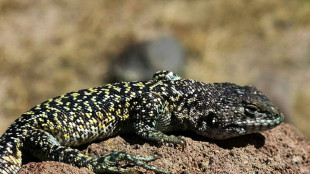 New lizard species discovered in Peru

 Fernandes hails Portugal's 'greatest symbol' Ronaldo, calls for unity
 Grandidier-Nkanang double takes Pau to Top 14 summit despite Vannes fightback

 Trainer Scott gets perfect Arc boost with top notch double

 Ex-PM says Putin cannot admit 'mistake' over Ukraine

 Houthis say Saudi Arabia launches dozens of strikes on Yemen capital

 Qatar and Abu Dhabi F1 Grand Prix to go ahead - F1 boss

 South Korea lift gloom with smash-and-grab Games football gold
 Ireland news conference before Israel game cut short amid tensions
 Protests over housing flare in Spain after relief measures rejected

 Zverev thrashes Shang to set up Djokovic quarter-final at China Open

 Turkey football ref chief jailed pending trial for graft
 North Korea says test of intermediate-range strategic missile included use of AI

 Rampant Sayers leads Hong Kong to third men's rugby gold in a row

 Ethiopia's Tigray rebels abandon regional capital as govt advances

 Bulgaria's Tsar Samuel returns 'home' after 1,000 years

 'Glad it's over': Kim powers to Games gold and military exemption

 After 11 World Cups, football finally comes home for one Indian fan
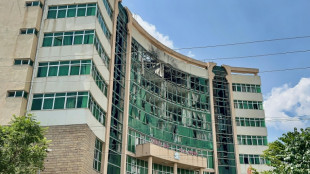
Lying on a hospital bed, Aisha Mohammed said she is "suffering" from cholera symptoms, an increasingly common ailment in Sudan where a prolonged war has ravaged the healthcare system.
Cholera, caused by contaminated water or food, had been common in Sudan particularly during the rainy season even before war broke out in April 2023 between rival generals.
But more than 16 months of fighting have forced most hospitals out of service, leaving the country of 48 million people struggling to control the sometimes deadly but treatable disease.
In the southeastern Sudanese town of Wad al-Hulaywah, 40-year-old Mohammed receives intravenous medicine to ease her crippling symptoms.
"I'm suffering from acute diarrhoea," she whispered.
Sudanese authorities and the United Nations have reported a surge in cholera cases amid several weeks of torrential rains that have battered parts of Sudan and displaced thousands.
Rains and floods have contributed to a resurgence of the largely waterborne disease, which can cause severe dehydration and lead to death within hours if not treated.
The health ministry on Monday declared an epidemic, later reporting 556 cholera cases including 27 deaths, most in Kassala state where Wad al-Hulaywah is located.
Nearby Gedaref state has also been hit particularly hard, the ministry said.
The World Health Organization said Sudan has had at least 11,327 cholera cases, 316 of them deadly, since June 2023.
Sudan's Health Minister Haitham Ibrahim said "climatic conditions and water contamination" were behind the epidemic.
In Wad al-Hulaywah alone, "we've counted 150 cases so far, among them seven dead" since late July, local health official Adam Ali told AFP.
- 'Polluted water' -
Before the start of the war between Sudan's army and paramilitary forces, the UN had said that about 40 percent of Sudanese did not have access to clean water. Conditions have since worsened.
"Our problem is drinking water," said Ali.
Most residents of Wad al-Hulaywah "drink water directly from the river -- polluted water", he said.
During the rainy season, large amounts of silt are washed into the Setit river, which begins in neighbouring Ethiopia, increasing pollution levels, the health official added.
Near the local hospital, workers spray insecticide to fight the proliferation of flies, which Ali said was a symptom of poor sanitation.
Dam construction in 2015 on the Setit river had displaced "entire villages", he said, and their inhabitants "dug makeshift latrines, which attract flies because they are not maintained".
Access to clean water has been hampered across the country, in areas under either the army or the paramilitary Rapid Support Forces, both vying for control of Sudan.
- 'I will have no one' -
The paramilitaries have laid siege to entire areas, preventing the entry of fuel needed to pump clean water, while bureaucratic hurdles and fighting have blocked aid operations, putting key water stations out of service.
The war has killed tens of thousands of people, displaced more than 10 million and shuttered more than 70 percent of Sudan's healthcare facilities, according to the UN.
The rival forces have both been accused of war crimes, including targeting civilians and looting or obstructing humanitarian aid.
With Sudan facing what the UN has called "one of the worst humanitarian crises in recent memory" and aid groups unable to help, many feel they have to fend for themselves.
Sitting outside a hospital in Kassala, 49-year-old Hassan al-Junaid said he has been displaced by the war, and now "we are living in very bad conditions, which caused my sister to get cholera."
"I am the only one with her, but I can't go with her inside because she has been placed in quarantine," he said.
"So I'm staying here, worried for her and afraid that I might be infected myself," added Junaid.
"If that happens, I will have no one to buy me the medicine I would need."
B.Shevchenko--BTB