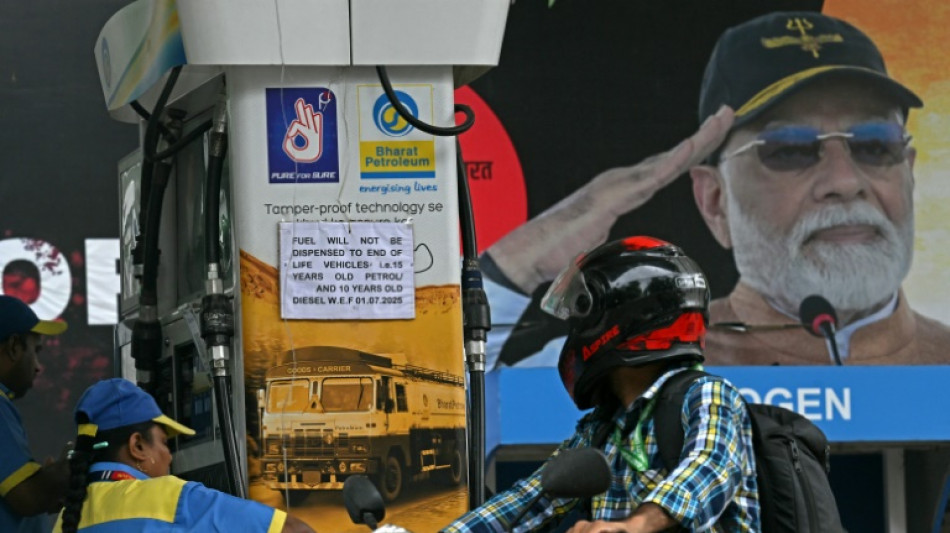
New Delhi says fuel ban on old vehicles not feasible / Photo: © AFP

 Prague’s Concert for the Future Kicks Off on Wenceslas Square

 Prince William and Princess of Wales to Announce Earthshot Prize Winners in Mumbai

 Indonesia Forest Fires: Health Crisis, Diplomatic Strains and the Search for Solutions

 BYD Dolphin G Leasing Deal: Plug-in Hybrid Supermini Available from £174 a Month

 JUEL Group Expands from Real Estate to Hospitality with Hyatt Centric Malta Opening

 French Economy Shrinks 0.1% as Consumer Confidence Slumps

 Wall Street Ends Turbulent Week Higher Despite Inflation and AI Jitters
Two days after India's capital stopped fuel sales to ageing vehicles to tackle the sprawling megacity's hazardous air pollution, authorities on Thursday said the ban was not practical.
New Delhi is regularly ranked as one of the most polluted capitals globally with vehicular emissions being one of the worst offenders, according to several studies.
At the peak of the smog, levels of PM2.5 pollutants -- dangerous cancer-causing microparticles small enough to enter the bloodstream through the lungs -- surge to more than 60 times the World Health Organization's recommended daily maximum.
The fuel restriction was introduced Tuesday to reinforce an already-existing but widely disregarded ban on petrol cars older than 15 years, and diesel vehicles older than 10.
But Delhi's environment minister, Manjinder Singh Sirsa, told reporters the fuel ban was not feasible because of "crucial issues related to technological glitches".
Number plate-recognising cameras and loudspeakers installed at fuelling stations were "malfunctioning", Sirsa said, leading to "fights and arguments".
The ban had resulted in public "discontent", he added.
Sirsa said he had written to the area's pollution control authority, explaining the problems in implementing the ban.
"Unless there is a robust system and the ban is everywhere, it will not work," he added.
The ban was to be extended to satellite cities around the capital, an area home to more than 32 million people, from November.
A study in The Lancet medical journal attributed 1.67 million premature deaths in India to air pollution in 2019.
Each winter, vehicle and factory emissions coupled with farm fires from surrounding states wrap the city in a dystopian haze.
Cooler temperatures and slow-moving winds worsen the situation by trapping deadly pollutants.
Piecemeal government initiatives, such as partial restrictions on fossil fuel-powered transport and water trucks spraying mist to clear particulate matter from the air, have failed to make a noticeable impact.
K.Thomson--BTB



