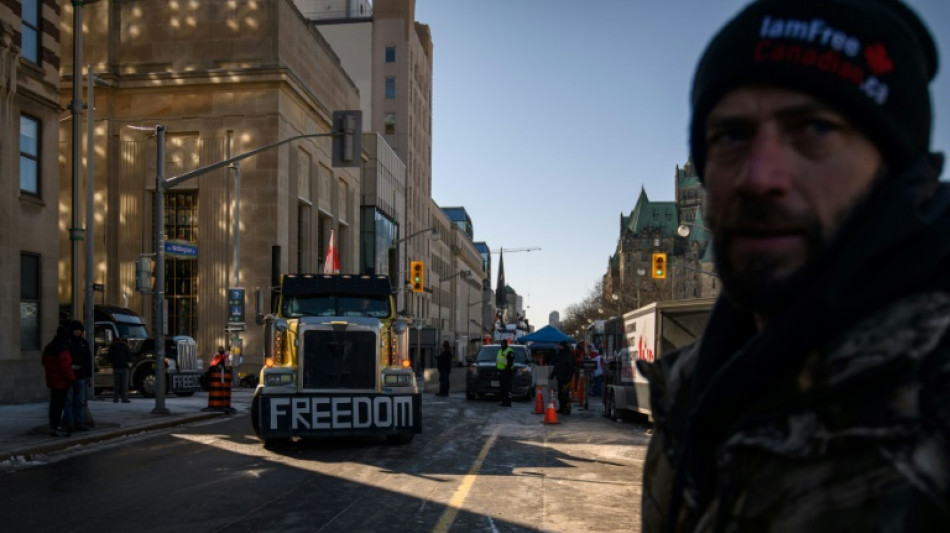
Canada protesters dig in as police set to use new powers / Photo: ©

 Japan Olympic chief says 'lot more' athletes at Games than expected
 Asian carmakers besting US rivals at home, China poised to strike
 Widgets & Web Offers All-Inclusive Investor Relations Websites for Public Companies, IPOs and SPACs

 Adams named new US captain to 2030 World Cup
 China a better influence in Latin America than US: poll
 Judge pauses construction of border project in Texas national park

 Belgium's De Bruyne fires double to sink Turkey, France held by Italy
 US jobs data boosts stocks as oil prices dip

 US Supreme Court to hear high-stakes climate case
 Trump expected to name intel chief Clayton as AI czar: reports
 Argentina unveils passports-for-investment scheme
 Brazil election debate chaos sparks censorship row
 England's Carse charged by cricket body over nightclub incident
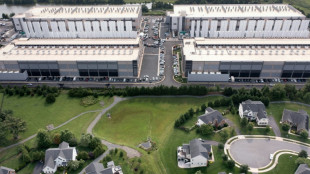 Amazon vows $1 bn for data center towns, decries 'myths'
 Oil prices drop on G7 fuel release, US jobs data boosts stocks
 G7 agrees deal to ease global energy supply concerns
 Spain's government dealt blow as lawmakers reject housing bills
 Food, medicine shortages deepen in Russian-occupied Oleshky

 Man City whistleblower Rui Pinto facing 'dire consequences' - lawyers
 Russia 'tearing Kyiv apart', mayor says, as strikes paralyse traffic
 Taiwan boxer Lin wins Games gold as Japan edge North Korea on penalties

 Japan tame North Korea to win Games gold after shootout drama

 US posts weak job growth data in September

 Ethiopia's conflict: the regional dimension
 Life expectancy almost back to pre-Covid levels, says WHO
Backed by freshly invoked emergency powers, Canadian officials on Tuesday looked to bring an end to weeks of trucker-led protests that have paralyzed the capital Ottawa and snarled vital border crossings with the United States.
In the capital, truckers hardened their stance -- moving big rigs into positions that could be more difficult to dislodge, and posted signs on their vehicles that read: "Hold the line."
Several protesters told AFP they were unruffled by Prime Minister Justin Trudeau's invoking of the Emergencies Act and calls to the protesters to end their "illegal" blockades and "go home."
It marked only the second time in Canadian history such powers have been invoked in peacetime.
"Truckers are not going anywhere," said Tyler, who gave only his first name, sitting at the wheel of his massive truck parked outside parliament.
With authorities poised to act, Ottawa police chief Peter Sloly abruptly resigned, a city councillor said.
Sloly had been facing intense criticism from politicians and residents over a failure to dislodge the protesters. He had said repeatedly that he lacked the resources to do so safely.
Police had already cleared demonstrators from the Ambassador Bridge connecting Windsor, Ontario and Detroit in the US state of Michigan -- arresting 46 people and seizing 37 vehicles.
Meanwhile protesters on Tuesday departed a border checkpoint in Alberta, leaving only one crossing in Manitoba still blocked.
"The (Alberta) blockade is done," RCMP Superintendent Roberta McKale told AFP. "Everybody is voluntarily leaving. They are choosing to go."
As threats of violence lingered, federal police on Monday had swooped in and arrested about a dozen protesters with rifles, handguns, body armor and ammunition at the border between Coutts, Alberta and Sweet Grass, Montana.
"The group was said to have a willingness to use force against the police if any attempts were made to disrupt the blockade," the Royal Canadian Mounted Police said in a statement.
Public Safety Minister Marco Mendicino also expressed concern about a truckload of firearms stolen in Ontario, while describing protest leaders as militants "driven by extremist ideology to overthrow the government."
- Mixed reactions -
Canada's so-called "Freedom Convoy" started with truckers protesting against mandatory vaccines to cross the border with the United States.
But its demands grew to include an end to all Covid-19 health measures and, for many of the protesters pushing a wider anti-establishment agenda, the toppling of Trudeau's Liberal government.
They have also triggered copycat movements from France to New Zealand, with US truckers mulling similar rallies.
The Emergencies Act (formerly called the War Measures Act) was previously used by Trudeau's father, former prime minister Pierre Trudeau, during the October Crisis of 1970.
It saw troops sent to Quebec to restore order after the kidnappings by militant separatists of a British trade attache and a Quebec minister, Pierre Laporte, who was found strangled to death in the trunk of a car.
Justin Trudeau said the military would not be deployed at this time.
Rather, said officials, the law would be used to strengthen police powers to arrest protesters, seize their trucks and freeze their bank accounts, and even compel tow-truck companies to help clear blockades.
Crypto currency exchanges and crowdfunding sites -- used by the truckers to raise millions of dollars in Canada and the United States -- must also now report large and suspicious transactions to the money laundering and terrorism financing watchdog FINTRAC.
Trudeau said these measures would be "time-limited" and "geographically targeted."
Several provincial premiers who have started to ease Covid-19 health restrictions denounced their use, while the Canadian Civil Liberties Association accused the federal government of not having met the threshold for invoking the act.
Ontario Premier Doug Ford was among the standouts, telling a news conference Tuesday that the dire economic impacts of the protests required a strong response.
"I don't care about the politics. I care about making sure we have a vibrant area to do business in and... whatever it takes to get the police the tools to go in there and get these people moving on," he said, four months before Ontario elections.
Trudeau's minority Liberal government also has the support of the small leftist New Democratic Party to push through approval of the measures when parliament weighs in next week.
M.Ouellet--BTB