-
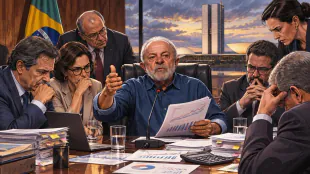 Brazil Faces Debt and Inflation Test as Lula Prepares Fourth Term
-
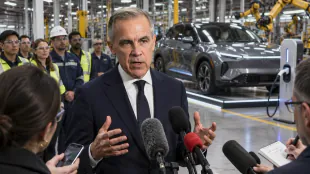
Canada Signals Openness to Chinese Automakers if US Trade Talks Fail
-
 Chinese Drug Ribupatide Shows Greater Weight Loss Than Wegovy in Clinical Trial
-
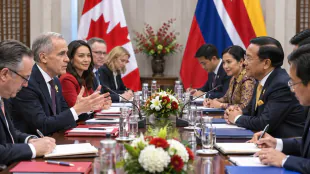
Canada Expands Asian Trade Push as US Negotiations Resume
-
 US Mortgage Rate Falls for Fourth Week but Remains Above 7%
-
US Jobless Claims Rise to 200,000 but Layoffs Remain Historically Low
-
 Italy Raises 2026 Growth View but Warns Energy Will Keep Inflation High
-
Euro-Area Growth Slows to 0.4% While Employment Stalls
-
 UK Economy Grows 0.7% in Third Quarter as Services Lead Expansion
-
US Wholesale Inflation Eases Monthly but Hits a Four-Year Annual High
-
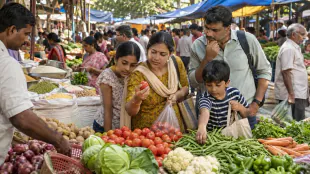 India's Retail Inflation Reaches 6.09% as Food Prices Accelerate
-
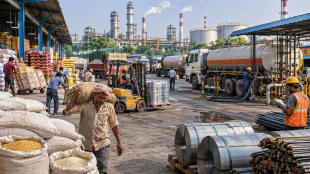
India's Wholesale Inflation Jumps to 12.29% as Fuel Costs Surge
-
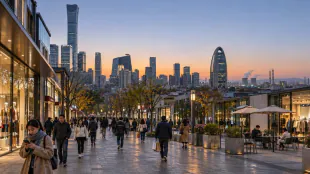 China's October Activity Data Reveal a Weak Start to the Fourth Quarter
-
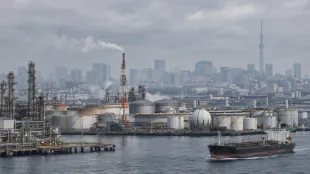
Japan's Economy Edges Into Contraction as Costly Oil Weighs on Demand
-
 Thomas Tuchel Refuses to Name England Number One Goalkeeper After James Trafford's Display
-
Helen Haines Discharged from Hospital Following Attack That Cost Her Both Legs
-
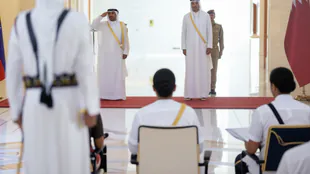 Qatar's Amir and Venezuelan Acting President Discuss Energy Cooperation
-
River Medway Reveals Financial Struggles Before 'Drag Race' Windfall

-
 Russell Brand’s Wife Reads Prison Letter Denying Guilt; Fellow Inmate Questions Faith
-
OBI Pharma Signs Collaboration and License Agreement with Novartis

-
 Alouettes and Elks Set for 113th Grey Cup Showdown
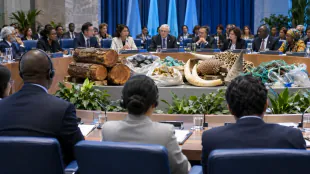
Calls for extension as plastic treaty negotiations falter
Delegates seeking the world's first deal to curb plastic pollution began openly advocating for an extension of talks on Sunday, accusing a handful of nations of obstructing an ambitious agreement.
Nearly 200 nations are in South Korea's Busan for negotiations that are supposed to result in a landmark accord after two years of discussions.
But a week of talks has failed to resolve deep divisions between "high-ambition" countries seeking a globally binding agreement to limit production and phase out harmful chemicals, and "like-minded" nations who want to focus on waste.
A new draft text, released Sunday afternoon after multiple delays, still includes a wide range of options, making clear the ongoing level of disagreement.
German delegate Sebastian Unger told AFP he was "disappointed about lack of progress."
The "text should be preserved to continue negotiations and bring (the) process forward at (a) future meeting."
The prospect of an "INC 5.2" meeting to follow the INC5 talks in Busan was also raised by Senegal's Cheikh Sylla.
"If you ask me... we stop, we adapt the paper as it is and we try to do another session," he told AFP.
That would offer time "to bring the positions closer together, and at this session 5.2, we can reach an agreement that is balanced".
The calls reflect a sense that there is simply too little time left to overcome the opposition from mainly oil-producing nations such as Saudi Arabia and Russia, who have repeatedly refused to comment when approached by AFP.
- 'Break free' -
A French minister at the talks accused the like-minded group of "continuing obstruction," while Rwandan delegate Juliet Kabera said a "small number" of countries "remain unsupportive of the measures necessary to drive real change."
"We still have a few hours left in these negotiations, there is time to find common ground, but Rwanda cannot accept a toothless treaty," said Kabera.
Portuguese delegate Maria Joao Teixeira also said another round of talks might be the best option for a meaningful deal.
"We are really trying to not have a weak treaty," she told AFP.
Environmental groups have pushed ambitious countries to call a vote if progress stalls, and said another round of negotiations was unnecessary.
"We know what we need to do to end plastic pollution... simply adding more meetings is not the solution," said Eirik Lindebjerg, global plastics policy lead at WWF.
"For a strong enough agreement to ever happen, countries must break free from arbitrary habits and be ready to vote or adopt a treaty among the willing," he told AFP.
But observers caution that calling a vote risks alienating even some countries in favour of a strong treaty.
Another option would be for the diplomat chairing the talks to simply gavel through an agreement over the objections of a handful of holdouts, they said.
That too holds risks, potentially embittering the remaining diplomatic process and jeopardising an adoption of a treaty down the road.
- 'Step up or get out' -
Mexico's head of delegation Camila Zepeda said she did not favour calling a vote.
"We have hope in consensus. The multilateral process is slow, but there is a possibility of having critical mass to move forward," she told AFP.
Over 100 countries now support setting a target for production cuts, and dozens also back phasing out some chemicals and unnecessary plastic products.
Left unclear is the position of the world's top two plastics producers, China and the United States. Both were notably absent from the stage at a Sunday press conference by countries urging a strong treaty.
"They are still considering and we are hopeful that there will be some interest on their part," said Mexico's Zepeda.
"This coalition of the willing is an open invitation. And so it's not like it's them against us."
Panama's Juan Carlos Monterrey Gomez meanwhile told colleagues that "history will not forgive us" for leaving Busan without an ambitious treaty.
"This is the time to step up or get out."
B.Shevchenko--BTB