Ladakh declared India’s first fully organic union territory

 Malta Stuns Sweden with Late Penalty Comeback in Rugby Europe Trophy

 BingX: Major Announcement of Far-Reaching Significance

 Élan Opens as Late-Night Wine Bar in Honolulu

 Shiv Sena (UBT) Criticizes NCP Merger Talks as 'Ridiculous Laughing Stock'

 Dell Announces AI-Integrated PC Lineup for 2026 with Wi-Fi 7 Support

 Rocky Fans Break Guinness World Record at Philadelphia Museum Steps

 FAA Grounds All US Flights Amid Nationwide Air Traffic Control Communication Failure

 Argentina vs Uruguay Kick-off Time, TV Channels & Free Streaming Guide

Ladakh has completed its transition to organic agriculture, following a ban on chemical fertilisers and a certification drive covering the Himalayan region’s villages.
Ladakh has become India’s first fully organic union territory, Lieutenant Governor Vinai Kumar Saxena announced on Sunday. The designation advances the region’s effort to remove chemical fertilisers from farming, protect its Himalayan environment and support sustainable agriculture.
In a post on X, Saxena credited farmers’ commitment and work for reaching the milestone. He said the change reflected the administration’s support for Prime Minister Narendra Modi’s goals of chemical-free agriculture, environmental conservation and sustainable livelihoods.
The lieutenant governor said prohibiting chemical fertilisers and continuing organic certification would help protect Ladakh’s fragile ecosystem, improve soil and water health and add value to the region’s produce. He said stronger market connections could also raise farm incomes and establish Ladakh as a model for sustainable high-altitude agriculture.
The union territory administration banned the sale and use of chemical fertilisers in June as part of a wider series of measures to expand organic cultivation.
Before Sunday’s announcement, 207 revenue villages had entered organic certification. Ladakh’s Mission Organic Development Initiative, launched in 2020, is intended to turn all 666 villages into certified organic hubs.
The initiative has a budget of ₹500 crore and provides support for bio-fertiliser production, seed distribution, protected cultivation and the marketing of organic crops.
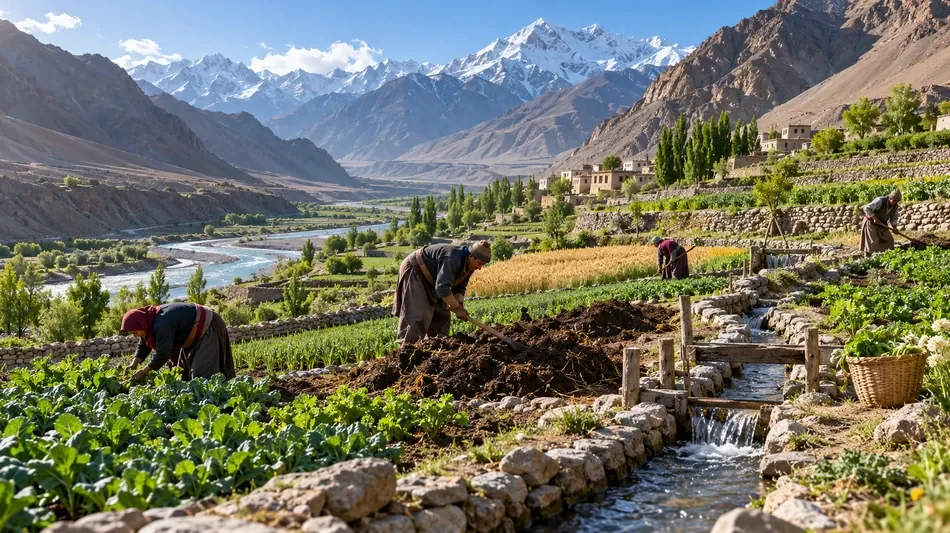
Farming in Ladakh is constrained by the high-altitude cold-desert climate and a short growing season. Local crops include barley, wheat, peas, buckwheat, foxtail millet and mustard seed. Farmers also cultivate cabbage, cauliflower, tomatoes, onions, carrots, potatoes, radishes, turnips and leafy vegetables.
A local farmer identified as Tashi said the next challenge was securing better prices. He said certification would be meaningful if it opened improved markets and raised incomes, noting that the short season and harsh conditions make cultivation difficult.
An official said the transition was designed to combine environmental protection with stronger rural livelihoods. Certification is expected to give Ladakh’s agricultural products better access to markets where demand for organic goods is increasing.
J.Bergmann--BTB