The online activists helping Myanmar troops desert / Photo: ©

 Zhu Rongji, trailblazing ex-premier who transformed China's economy

 China tech giant Tencent's Q2 profit down as AI push builds

 China's C919 jet makes first international commercial flight
 Mideast war impact on travel bookings fading, TUI says

 Bangladesh get Das fitness boost for daunting Australia task

 One dead, 172 rescued as second ferry in days catches fire in Indonesia

 Foxconn posts quarterly profit surge on AI server demand

 Hazlewood gets Australia nod ahead of Boland for Bangladesh Test

 Toyota ex-chief Okuda, pioneer of the Prius, dead at 93

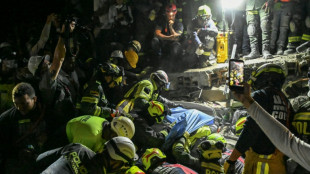
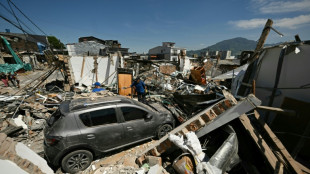
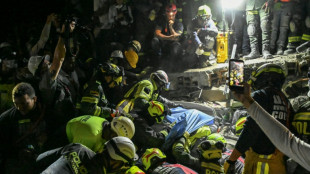 Colombia rescuers find woman alive as quake death toll passes 200

 New Zealand PM survives leadership challenge months from election
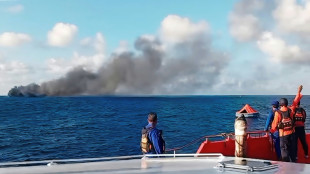 Passengers rescued as second ferry in days catches fire in Indonesia

 Oil prices rise, stocks mixed ahead of crucial US inflation data
 UK 'joke' candidate Binface pushes serious point about politics
 New Zealand PM Luxon survives leadership challenge months from election
 Cuba celebrates Castro's 100th as his revolution faces its toughest test
 Defending champion Shelton rolls into Montreal semis

 What to know about the total solar eclipse

 Tentoglou claims fourth Euro long jump title, injured Jacobs falters

 All Blacks knew Nonu would perform solo Haka - coach Rennie

 Britain's Glave upstages Jacobs to win European 100m gold

 Greece's Tentoglou wins fourth European long jump title

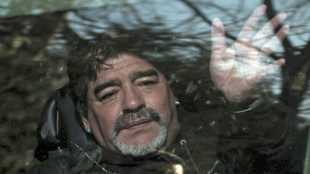 Doctors ignored 'warning signs' before Maradona's death, court hears

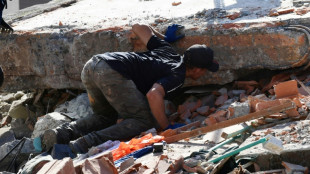 Pereira, the 'zombie city' devastated by Colombia's earthquake

 UN says 2 staff arrested by Afghan intelligence agency

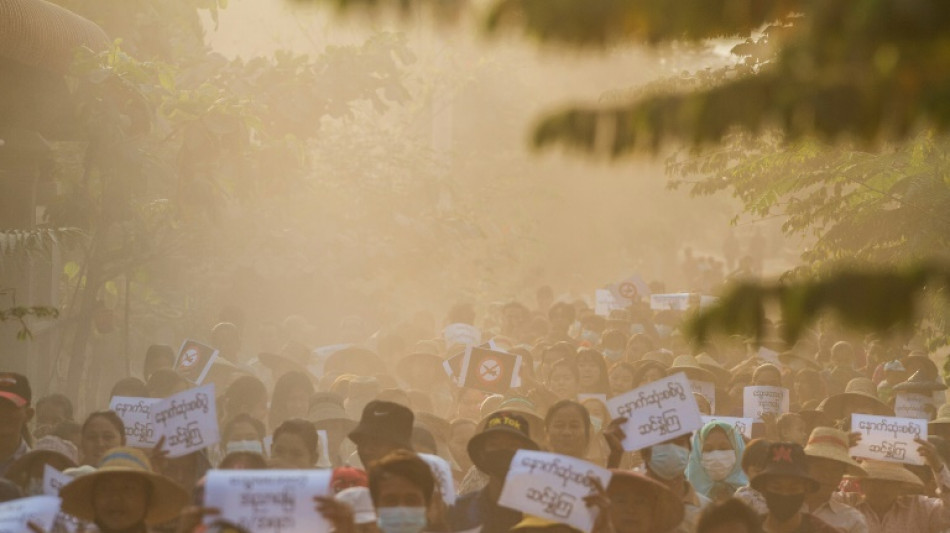
A team of Myanmar activists working in the shadows is using social media and messaging apps to persuade disillusioned junta soldiers to desert their posts and topple the powerful military.
Sergeant Zay Ya heeded the call, slipping away from his base near Yangon to a car waiting to whisk him towards the Thai border, where he found refuge with ethnic fighters who have clashed with the military.
The 29-year-old spent several weeks planning his escape with People's Goal, a group of ex-soldiers and activists who are reaching out to those horrified by a crackdown on dissent that the UN says has killed more than 1,500 people.
"I was sickened to see soldiers brutalising civilians and ransacking houses," said the eight-year air force veteran.
"I felt guilty for being part of all this," he told AFP from an undisclosed location, using a pseudonym for security reasons.
People's Goal -- Pyithu Pandaing in Burmese -- claims to have helped "several hundred" soldiers flee to safety in neighbouring countries or rebel-held areas in Myanmar, according to its spokesperson Ko Saw Lone, also using a pseudonym.
It holds weekly open chats on Facebook or Zoom where military personnel who have already defected speak about their experiences and try to convince potential deserters to take the plunge.
"It's a resistance without bloodshed," said founder Nyi Thuta, a former captain who previously worked in the military-built capital Naypyidaw writing speeches for the head of the armed forces, before deserting shortly after the coup.
"I knew in my heart that there were many inside the military that stood with the people," he told AFP.
AFP could not verify the team's claim that it has helped several hundred soldiers defect, and Myanmar's military does not publish figures for desertions.
But in comments published by state media on Wednesday junta chief Min Aung Hlaing reminded troops to "control themselves with good leadership" and obey orders.
- 'Watermelon soldiers' -
Deserting is a dangerous business -- those who are caught face execution or decades in jail.
After showing interest in open forums on Facebook and Twitter, prospective defectors are asked to switch to encrypted messaging apps where they undergo a long verification process.
"We must be sure that a candidate for desertion is not a spy for the junta," said Emily at Pyithu Yin Kwin -- People's Embrace, another activist group helping troops escape.
Sympathetic soldiers -- who may themselves defect later -- are one source of intelligence, Emily said, and can help verify identities and intentions.
They call them "watermelon soldiers", she added, because the green of their uniforms hides their attachment to democracy and the red flag of the ousted civilian administration led by Aung San Suu Kyi.
Hla Min Kyaw, who deserted after 10 years in the navy, told AFP he had to provide proof of identity in several forms and was subject to a "battery" of questions.
Once he was cleared, he said a "digital identity card" was sent to his smartphone that facilitated access to rebel-held territory.
- Disowned -
The families of deserters can come under pressure from the military.
Zay Ya said his loved ones had been "harassed" by security forces and later they disowned him via a notice in a state-controlled newspaper.
Strengthening the resolve of those with doubts about leaving is an important part of the work at People's Goal, said Nyi Thuta.
"We're here to reassure them, to tell them that we know how hard it is because we've been through it before."
In their new life some soldiers melt away into communities along Myanmar's porous borders, said Emily.
Others pass on their military skills to protesters who have taken up arms against the junta.
Padoh Saw Thamain Tun of the Karen National Union -- which has sheltered several deserters -- said they welcome former enemies "because we are fighting for the freedom of the whole population".
- 'A life saved' -
The effect of desertions on Myanmar's armed forces -- which analysts estimate are around 350,000 to 400,000 strong -- remains limited.
A shadow National Unity Government of ousted lawmakers says about 2,000 soldiers have deserted since the coup, but the figure is impossible to verify.
"In the short term, desertions are an unwanted headache for the regime, but don't meaningfully impact its fighting strength," Richard Horsey of the International Crisis Group told AFP.
But activists say each small success from behind a computer is a step to another win on the battlefield.
"A desertion of even a single cook is a victory because it has an impact on operations," said Emily.
"That's what we're aiming for. A soldier who deserts is a life saved on the ground."
K.Brown--BTB