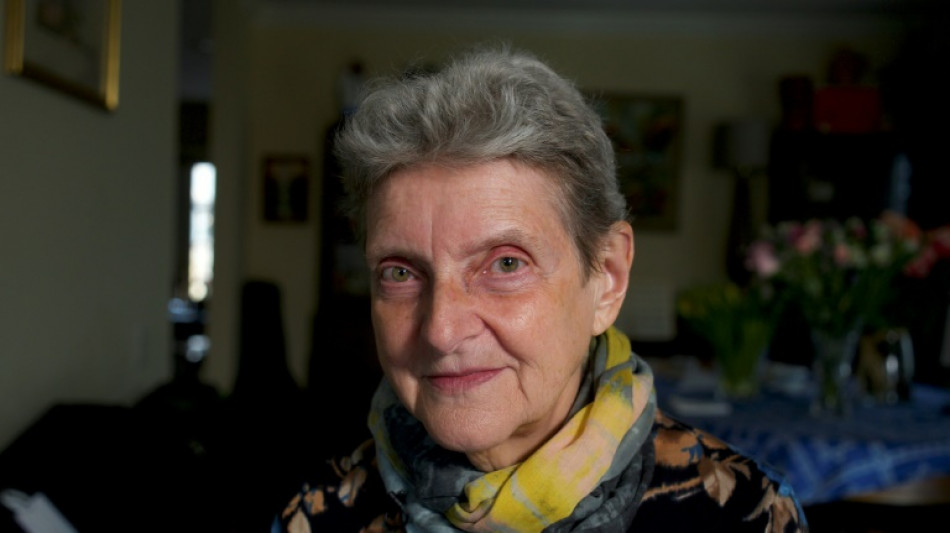
Russian activist, 80, fights on despite crackdown / Photo: © AFP Photo/File

 Medvedev advances without drama at US Open
 Calhanoglu fires Inter to nervy Cagliari win, Como stun Napoli
 Monaco beat Marseille to go top, Rosenior's Paris FC thump Nice
 Pegula shakes off nerves in US Open first-round win

 FIFA president Infantino 'must go', says ex-UEFA boss Platini
 England v Pakistan second Test: Three talking points
 Rashford's return 'fantastic' for Man Utd, says Carrick

 At least 8 die, more missing, as ferry capsizes off Northern Cyprus
 Pegula shakes off nerves, Ruse in US Open first-round win

 Fernandes treble inspires Man Utd rout, Chelsea beat Brighton in thriller

 September smartphone calendar spans Apple, Poco, Vivo and Xiaomi

 Android photo recovery depends on recently deleted folders

 South West Water ranks worst in environmental comparison

 Screen-free fitness bands gain ground as users seek fewer alerts

 Practical boundaries can reduce group-chat overload

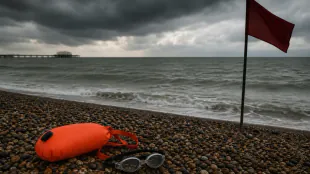 Brighton swimmers adjust routines around sewage alerts
 Beeston pub closes after office fire injures man
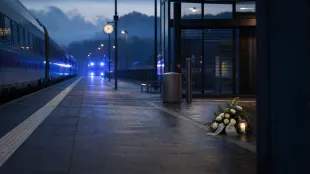 British woman dies after stabbing at German station

 Russell Hobbs dual air fryer discounted to £99
 Eight dead and 23 missing after ferry sinks off Cyprus
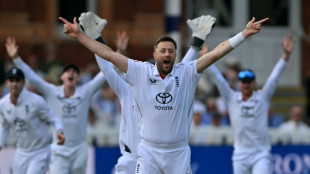 Robinson strikes again as England wrap up Pakistan series win

 Red-hot Chelsea not the finished article says Alonso

 Dortmund's Konstantelias to miss 'several months' with knee injury
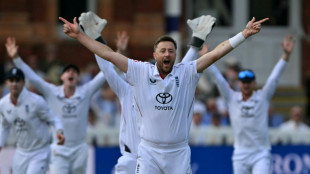
 Chelsea beat Brighton in seven-goal thriller, Leeds hold Brentford

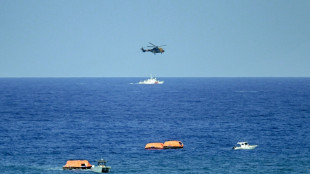 At least seven die in ferry capsize off Northern Cyprus; 23 missing
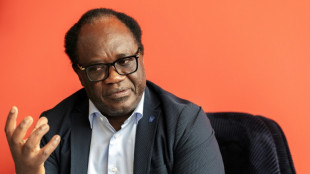
She is 80 years old, the Memorial rights group she co-founded has been shut down, and some of her colleagues have fled Russia fearing arrest under President Vladimir Putin.
But Svetlana Gannushkina is determined to stay.
Gannushkina was attending a conference abroad when Moscow sent troops into Ukraine on February 24 last year.
While many fellow Russians opposing the war decided to leave their country, Gannushkina headed home to step up her decades of refugee work.
After returning to Moscow, she was detained briefly following an anti-war protest and she has faced mounting legal problems, but she is undeterred.
"What I can do by helping people, including from Ukraine, by being on the side of good and by doing something that can have at least some impact... that gives me the right to live," Gannushkina told AFP in a Washington suburb where she recently visited her family.
Memorial, whose human rights branch she helped set up in 1992, won the Nobel Peace Prize in 2022 along with Ukrainian and Belarusian activists.
Some Memorial employees have left Russia after the government shut down the organization in 2021, while Gannushkina has been branded a foreign agent -- a classification seen as a tool to silence critics.
But Memorial's network continues operating.
- 'No forgiveness, no absolution' -
Since the start of the war nearly a year ago, Gannushkina and her colleagues have helped some 22,000 Ukrainian refugees across Russia.
Weary and grief-stricken, they queue at the downtown Moscow office of the Civic Assistance Committee, a sister organization that Gannushkina heads.
They come for legal aid, money, clothes for their children and food, such as apples and buckwheat. And Gannushkina's office is cluttered with pillows, blankets and groceries.
The refugees, Gannushkina said, also come for psychological help and a sympathetic ear.
"The stories are horrible. A woman came whose mother and daughter were killed before her eyes. How can she go on living?" Gannushkina said about a woman who had fled the southern Ukrainian city of Mariupol after a brutal months-long siege by Russian forces.
"There can be no forgiveness, no absolution," Gannushkina said of Russia's war, which has left thousands dead and caused millions to leave their homes.
"This will stay in Russia's history, as a shameful page of Russian history, and nothing will be able to cross it out, nor should it."
Gannushkina called on the West to do more to support Ukraine, including cutting Russian energy imports, which help Moscow fund its military campaign.
She also complained that Western countries were not doing enough to resettle the vulnerable, such as LGBTQ individuals and women fleeing domestic violence.
She recalled being invited to Western embassies in Moscow to celebrate Memorial's Nobel prize, but her pleas to resettle a handful of families at risk went nowhere.
"Not once did someone call and say: we are ready to take one family. Why all the words then? Words of support remain just words."
- 'Fighting against a common evil' -
A mathematician by training, Gannushkina got involved in human rights advocacy in the 1980s when ethnic conflicts erupted in corners of the dying Soviet Union, producing streams of refugees. The first Chechen war of 1994-1996 solidified her commitment.
"Refugees started pouring in and I found my place. Otherwise, I didn't know how to cope with my life and what to do," Gannushkina said.
In 2006, a Russian far-right organization published a kill list with the names of leading liberal figures, which included Gannushkina. She was offered a bodyguard, but refused because she didn't want to be responsible for his death.
The recipient of a host of human rights awards and a repeated Nobel Peace Prize nominee, Gannushkina finally received the good news from Oslo in October when Memorial was awarded the prize -- together with Ukraine's Center for Civil Liberties and jailed Belarusian activist Ales Bialiatski.
But the award irked the government in Kyiv.
"The Nobel Committee clearly has an interesting interpretation of the word 'peace,' if the Nobel prize is awarded to representatives of two countries that attacked a third one," tweeted Ukrainian presidential adviser Mykhaylo Podolyak at the time.
Center for Civil Liberties head Oleksandra Matviichuk, who delivered her Nobel acceptance speech in Oslo in December, said she empathizes with Podolyak's view but disagrees.
"The prize was awarded to human rights activists who had been working together over decades, building horizontal ties, which perhaps were invisible to their own societies, in order to defend human dignity," Matviichuk told AFP in a phone interview.
"We have been fighting against a common evil which is again trying to dominate in our region."
Gannushkina is determined to keep working with her Ukrainian colleagues.
"I am grateful and I bow down before them because we didn't become toxic for them and at least from their perspective we do not represent Vladimir Vladimirovich Putin, we are different people, we are his opponents," Gannushkina said of the Russian president.
"Unfortunately, though, we are weak opponents."
J.Bergmann--BTB