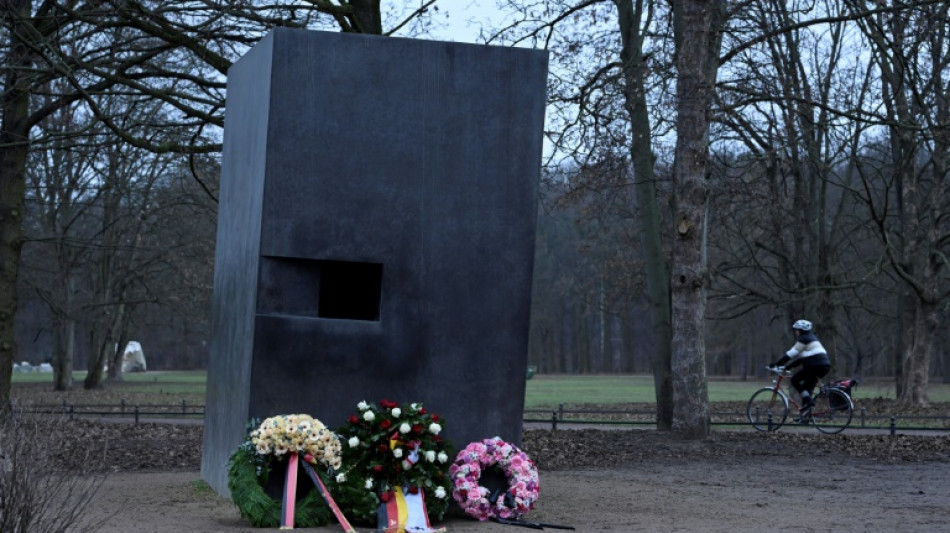
In a first, German parliament spotlights Nazis' LGBTQ victims / Photo: © AFP

 Medvedev advances without drama at US Open

 Calhanoglu fires Inter to nervy Cagliari win, Como stun Napoli
 Monaco beat Marseille to go top, Rosenior's Paris FC thump Nice

 Pegula shakes off nerves in US Open first-round win
 FIFA president Infantino 'must go', says ex-UEFA boss Platini
 England v Pakistan second Test: Three talking points

 Rashford's return 'fantastic' for Man Utd, says Carrick

 At least 8 die, more missing, as ferry capsizes off Northern Cyprus
 Pegula shakes off nerves, Ruse in US Open first-round win
 Fernandes treble inspires Man Utd rout, Chelsea beat Brighton in thriller

 September smartphone calendar spans Apple, Poco, Vivo and Xiaomi

 Android photo recovery depends on recently deleted folders

 South West Water ranks worst in environmental comparison

 Screen-free fitness bands gain ground as users seek fewer alerts

 Practical boundaries can reduce group-chat overload

 Brighton swimmers adjust routines around sewage alerts
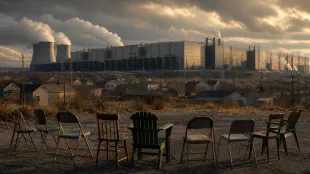
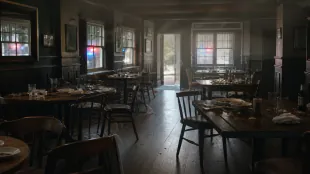 Beeston pub closes after office fire injures man

 British woman dies after stabbing at German station

 Russell Hobbs dual air fryer discounted to £99

 Eight dead and 23 missing after ferry sinks off Cyprus

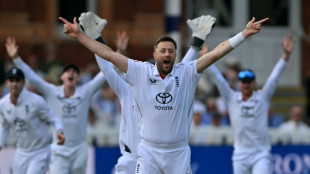 Robinson strikes again as England wrap up Pakistan series win

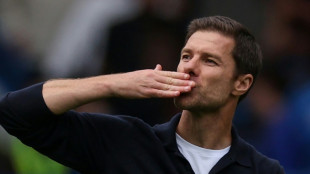 Red-hot Chelsea not the finished article says Alonso

 Dortmund's Konstantelias to miss 'several months' with knee injury
 Chelsea beat Brighton in seven-goal thriller, Leeds hold Brentford

 At least seven die in ferry capsize off Northern Cyprus; 23 missing
The German parliament will for the first time on Friday focus its annual Holocaust memorial commemorations on people persecuted and killed for their sexual or gender identity.
Campaigners worked for two decades to establish an official ceremony for LGBTQ victims of the Nazis, saying their experience had long been forgotten or marginalised.
"This group is important to me because it still suffers from discrimination and hostility," Baerbel Bas, president of the Bundestag lower house, told AFP.
Germany has officially marked International Holocaust Remembrance Day -- the anniversary of Auschwitz's liberation -- since 1996 with a solemn ceremony at the Bundestag and commemorations across the country.
The event traditionally focuses on the Holocaust's six million Jewish victims, although, at the first ceremony, then president Roman Herzog did also pay tribute to gay men and lesbians murdered under Adolf Hitler.
Henny Engels of the German Lesbian and Gay Association rights group called Friday's commemoration an "important symbol of recognition" of "the suffering and the dignity of the imprisoned, tortured and murdered victims".
- Pink triangle -
Section 175 of Germany's penal code outlawed sex between men.
Although it dated from 1871, it was rarely enforced and cities such as Berlin during the Weimar Republic had a thriving LGBTQ scene until the Nazis came to power.
In 1935 the Nazis toughened the law to carry a sentence of 10 years of forced labour.
Some 57,000 men were imprisoned, while between 6,000 and 10,000 were sent to concentration camps and given uniforms emblazoned with a pink triangle designating their sexuality.
Historians say between 3,000 and 10,000 gay men died and many were castrated or subjected to horrific "medical" experiments.
Thousands of lesbians, transgender people and sex workers were branded "degenerates" and also imprisoned at the camps under brutal conditions.
Dani Dayan, chairman of Israel's Yad Vashem Holocaust memorial, said that while Jews were the Nazis' primary target, he welcomed the broadening of Germany's remembrance culture.
"The Holocaust was an onslaught against humanity: LGBTQ individuals, Roma and Sinti, mentally disabled persons, but especially against the Jewish people," he told AFP on a visit to Berlin this week.
"We respect and we honour all the victims."
The head of Germany's Central Council of Jews, Josef Schuster, agreed that while the main group of Holocaust victims were Jews, "they weren't the only ones".
"It shows that the developments seen in the Nazi period can lead to any societal group being targeted," he told AFP.
- 'Very late date' -
Bas will open the ceremony at the glass-domed Reichstag building, followed by a speech from Dutch Jewish survivor Rozette Kats.
Kats, 80, lived out the Holocaust as a toddler in hiding in Amsterdam with adoptive parents while her own mother and father were killed at Auschwitz.
Actors will read texts about two LGBTQ victims who "exemplify" the fate of queer people under Hitler, Bas said.
Klaus Schirdewahn, who was convicted in 1964 over a sexual relationship with another man under a Nazi-era law still on the books, will also tell his story to the chamber.
Bas regretted that there were no LGBTQ survivors of the Nazi period left to address parliament, and noted that gay men, lesbians and transgender people still faced state persecution even decades after the war.
"We will draw attention at the ceremony to the so-called 'gay laws' which were only lifted at a very late date," she said.
"By the time there were reparations, many (victims) were no longer alive."
In 2017, parliament voted to quash the convictions of 50,000 gay men sentenced for homosexuality under Section 175, which remained in force after the war, and offered compensation to victims.
In 2002, a new law overturned their convictions but did not include post-war prosecutions.
Section 175 was finally dropped from the penal code in East Germany in 1968.
In West Germany, it reverted to the pre-Nazi era version in 1969 and was only fully repealed in 1994.
T.Bondarenko--BTB