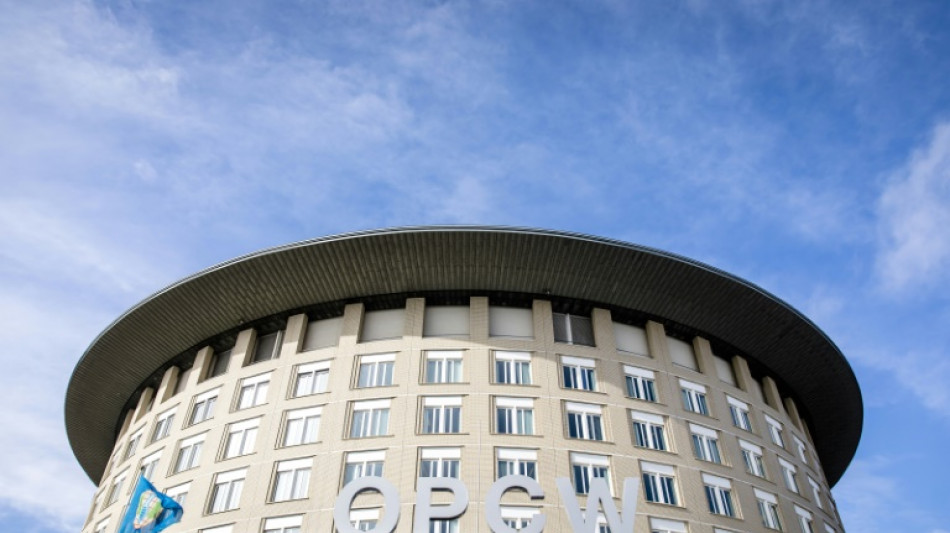
Syria to blame for 2018 chlorine attack: watchdog / Photo: © ANP/AFP

 Medvedev advances without drama at US Open

 Calhanoglu fires Inter to nervy Cagliari win, Como stun Napoli
 Monaco beat Marseille to go top, Rosenior's Paris FC thump Nice
 Pegula shakes off nerves in US Open first-round win

 FIFA president Infantino 'must go', says ex-UEFA boss Platini
 England v Pakistan second Test: Three talking points
 Rashford's return 'fantastic' for Man Utd, says Carrick

 At least 8 die, more missing, as ferry capsizes off Northern Cyprus

 Pegula shakes off nerves, Ruse in US Open first-round win

 Fernandes treble inspires Man Utd rout, Chelsea beat Brighton in thriller

 September smartphone calendar spans Apple, Poco, Vivo and Xiaomi

 Android photo recovery depends on recently deleted folders

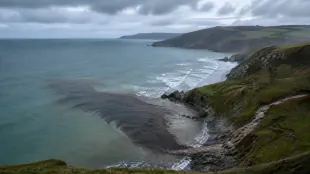 South West Water ranks worst in environmental comparison
 Screen-free fitness bands gain ground as users seek fewer alerts

 Practical boundaries can reduce group-chat overload

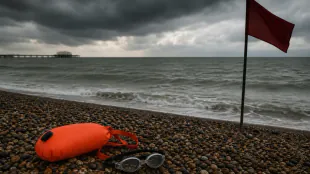 Brighton swimmers adjust routines around sewage alerts
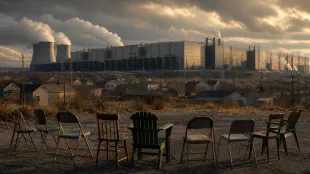
 Beeston pub closes after office fire injures man

 British woman dies after stabbing at German station

 Russell Hobbs dual air fryer discounted to £99

 Eight dead and 23 missing after ferry sinks off Cyprus

 Robinson strikes again as England wrap up Pakistan series win

 Red-hot Chelsea not the finished article says Alonso

 Dortmund's Konstantelias to miss 'several months' with knee injury

 Chelsea beat Brighton in seven-goal thriller, Leeds hold Brentford

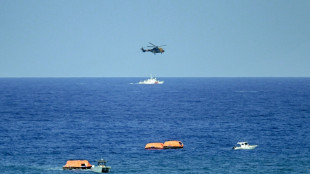 At least seven die in ferry capsize off Northern Cyprus; 23 missing

The global chemical weapons watchdog blamed Syria on Friday for a 2018 chlorine attack that killed 43 people, in a long-awaited report on a case that sparked tensions between Damascus and the West.
Investigators said there were "reasonable grounds to believe" that at least one Syrian air force helicopter had dropped two cylinders of the toxic gas on the rebel-held town of Douma during Syria's civil war.
Damascus and its ally Moscow claimed the attack was staged by rescue workers at the behest of the United States, which launched air strikes on Syria days afterwards along with Britain and France.
The Douma case also caused controversy after leaks from two former employees cast doubt on earlier findings by the Hague-based Organisation for the Prohibition of Chemical Weapons (OPCW).
But the OPCW said its investigators had "considered a range of possible scenarios" and concluded that "the Syrian Arab Air Forces are the perpetrators of this attack."
"The use of chemical weapons in Douma – and anywhere – is unacceptable and a breach of international law," OPCW Director-General Fernando Arias said in a statement.
"The world now knows the facts -- it is up to the international community to take action, at the OPCW and beyond."
- 'Toxic gas' -
The watchdog said that "at least one Mi-8/17 helicopter of the Syrian Arab Air Force, departing from Dumayr airbase and operating under the control of the Tiger Forces, dropped two yellow cylinders" on April 7, 2018.
The cylinders hit two residential buildings in central Douma, it said.
The first "ruptured and rapidly released toxic gas, chlorine, in very high concentrations, which rapidly dispersed within the building, killing 43 named individuals and affecting dozens more," said the report.
The second cylinder smashed into an apartment and slowly released some chlorine "mildly affecting those who first arrived at the scene."
Investigators had examined 70 environmental and biomedical samples, 66 witness statements, and other data including forensic analysis, satellite images, gas dispersion modelling, and trajectory simulations, it said.
Douma was held by rebels at the time of the incident, which came during a major offensive by Syrian government forces to retake the town near the capital Damascus.
Emergency workers said at the time that they had treated people suffering breathing problems, foaming at the mouth and other symptoms.
OPCW inspectors visited the scene after delays and determined that chlorine was used, however they did not have the remit at the time to say who they believed was behind the attack.
But thanks to new rules, which Syria and Russia have opposed, the watchdog is now able to point the finger of blame, and in this case has done so at Damascus.
"There are reasonable grounds to believe that the Syrian Arab Air Forces were the perpetrators of the chemical weapons attack... in Douma," it said.
- 'Standard of proof' -
Syria has accused rebels and emergency workers of staging the attack it by bringing in dead bodies and filming them, or alternatively arguing that an Islamist chemical weapons factory was hit.
But the OPCW said its team "thoroughly pursued lines of inquiry and scenarios suggested by Syrian authorities and other state parties, but was unable to obtain any concrete information supporting them."
It also said it "regrets" that Syria refused to allow it further access to the site to investigate.
The report also dismisses claims by former inspectors who alleged that the watchdog had altered original findings in 2018 to make the evidence of a chemical attack seem more conclusive.
It added that the basis of "reasonable grounds' was the "standard of proof consistently adopted by international fact-finding bodies and commissions of inquiry."
Damascus denies the use of chemical weapons and insists it has handed over its stockpiles under a 2013 agreement, prompted by a suspected sarin gas attack that killed 1,400 in the Damascus suburb of Ghouta.
F.Müller--BTB