
-
 Medvedev advances without drama at US Open
-
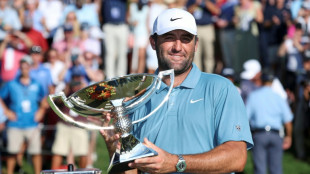
Top-ranked Scheffler storms to PGA Tour Championship win
-
 Calhanoglu fires Inter to nervy Cagliari win, Como stun Napoli
-
Root urges England to be 'grown-ups' after Pakistan series win

-
 Monaco beat Marseille to go top, Rosenior's Paris FC thump Nice
-
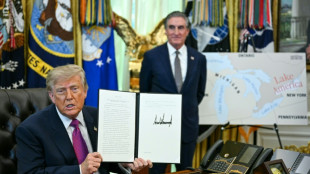
Google Maps renames Lake Ontario 'Lake America' in US -- but not Canada
-
 Pegula shakes off nerves in US Open first-round win
-
Aaron Donald ends retirement to rejoin Rams: team

-
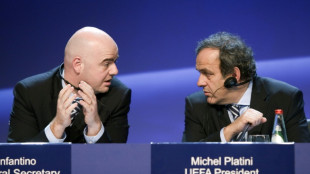 FIFA president Infantino 'must go', says ex-UEFA boss Platini
-
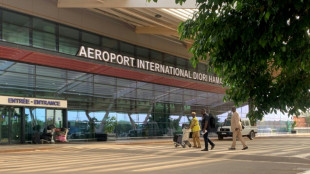
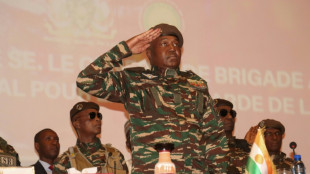
Niamey back to normal after soldiers' mutiny
-
 England v Pakistan second Test: Three talking points
-
Niger mutiny suppressed, but questions remain over junta's cohesion
-
 Rashford's return 'fantastic' for Man Utd, says Carrick
-
Como spoil Allegri's Napoli home debut

-
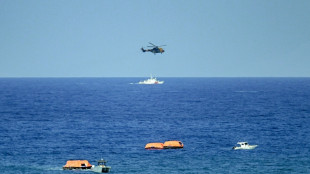 At least 8 die, more missing, as ferry capsizes off Northern Cyprus
-
Cruz Beckham Performs at Leeds Festival Following Family Support at Reading

-
 Pegula shakes off nerves, Ruse in US Open first-round win
-
Fernandes hat-trick inspires Man Utd rout of Ipswich

-
 Fernandes treble inspires Man Utd rout, Chelsea beat Brighton in thriller
-
Suzuki sends 'perfect' Freiburg past Bremen, Schalke lose

-
 September smartphone calendar spans Apple, Poco, Vivo and Xiaomi
-
Realme P4s, iQOO Z11 and Nothing Phone 4b compared

-
 Android photo recovery depends on recently deleted folders
-
Instagram offers three routes to two-factor authentication

-
 South West Water ranks worst in environmental comparison
-
Google Maps adopts Lake America label for US users

-
 Screen-free fitness bands gain ground as users seek fewer alerts
-
WIRED tests label makers for home organisation

-
 Practical boundaries can reduce group-chat overload
-
CERN creates quark-gluon plasma with smaller atomic nuclei

-
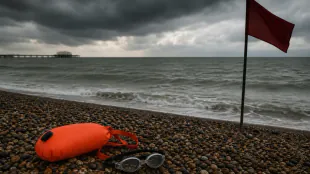 Brighton swimmers adjust routines around sewage alerts
-
Data-centre opposition crosses US party lines
-
 Beeston pub closes after office fire injures man
-
UK clocks return to GMT on October 25

-
 British woman dies after stabbing at German station
-
Former Nottingham hospital chief linked to NHS training firm

-
 Russell Hobbs dual air fryer discounted to £99
-
Forest linked with Liverpool goalkeeper Mamardashvili

-
 Eight dead and 23 missing after ferry sinks off Cyprus
-
Forest defender Tyler Bindon joins Charlton on loan

-
 Robinson strikes again as England wrap up Pakistan series win
-
Bellingham, Mbappe fire as Real Madrid ease to Malaga win

-
 Red-hot Chelsea not the finished article says Alonso
-
Mas wins Vuelta 9th stage to extend lead

-
 Dortmund's Konstantelias to miss 'several months' with knee injury
-
Robinson strikes as England close in on series win over Pakistan

-
 Chelsea beat Brighton in seven-goal thriller, Leeds hold Brentford
-
Chelsea beat Brighton in seven-goal thriller to extend Alonso's perfect start

-
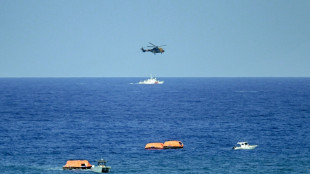 At least seven die in ferry capsize off Northern Cyprus; 23 missing
-
Zambia's opposition leader charged with treason

WHO panel debates Covid's emergency status
The World Health Organization's emergency committee on Covid-19 was meeting Friday to discuss whether the pandemic still merits the highest level of global alert.
WHO chief Tedros Adhanom Ghebreyesus suggested the emergency phase of the pandemic is not over, pointing to surging numbers of deaths and warning that the global response to the crisis "remains hobbled".
"As we enter the fourth year of the pandemic, we are certainly in a much better position now than we were a year ago, when the Omicron wave was at its peak, and more than 70,000 deaths were being reported to WHO each week," he told the committee at the start of the meeting.
Tedros said the weekly death rate had dropped below 10,000 in October but had been rising again since the start of December, while the lifting of Covid restrictions in China had led to a spike in deaths.
Last week, almost 40,000 Covid deaths were reported -- more than half of them in China -- while the true toll "is certainly much higher", he said.
The panel's 14th meeting on the crisis comes nearly three years to the day since it first sounded the WHO's highest emergency alarm, as what was then called the novel coronavirus began to spread outside China.
The independent committee meets every three months to discuss the pandemic and reports to Tedros, who then decides whether it remains an international emergency.
- Concern over variants -
The WHO director-general said vaccines, tests and treatments had been critical in saving lives, preventing severe disease and easing the pressure on health systems and medics.
"But the global response remains hobbled because in too many countries, these powerful, life-saving tools are still not getting to the populations that need them most -- especially older people and health workers," Tedros said.
Public trust in these Covid tools is being undermined by a "continuous torrent" of mis- and disinformation, he said, while health systems are still struggling to cope with the additional Covid burden.
And in terms of monitoring how the virus is evolving, surveillance and genetic sequencing has dropped sharply, making it harder to track the myriad variants and detect new ones in good time.
The emergency committee meeting, chaired by French doctor Didier Houssin, is scheduled to conclude on Friday, with the outcome issued in the following days.
When the committee last met in October 2022, it concluded that the pandemic still constitutes a public health emergency of international concern (PHEIC) -- the WHO's highest level of alert.
Though declaring a PHEIC is the internationally agreed mechanism for triggering a global response to such outbreaks, it was only after Tedros described the worsening Covid situation as a pandemic on March 11, 2020, that many countries woke up to the danger.
Globally, nearly 665 million confirmed cases of Covid-19 have been reported to the WHO, including more than 6.7 million deaths, though the United Nations' health agency always stresses that the true numbers will be much higher.
Meanwhile, more than 13.1 billion vaccine doses have been administered.
In addition to the Covid crisis, two other WHO-declared PHEICs are currently ongoing -- one on poliovirus, first declared in May 2014, and the other on mpox, previously called monkeypox, declared in July last year.
M.Odermatt--BTB