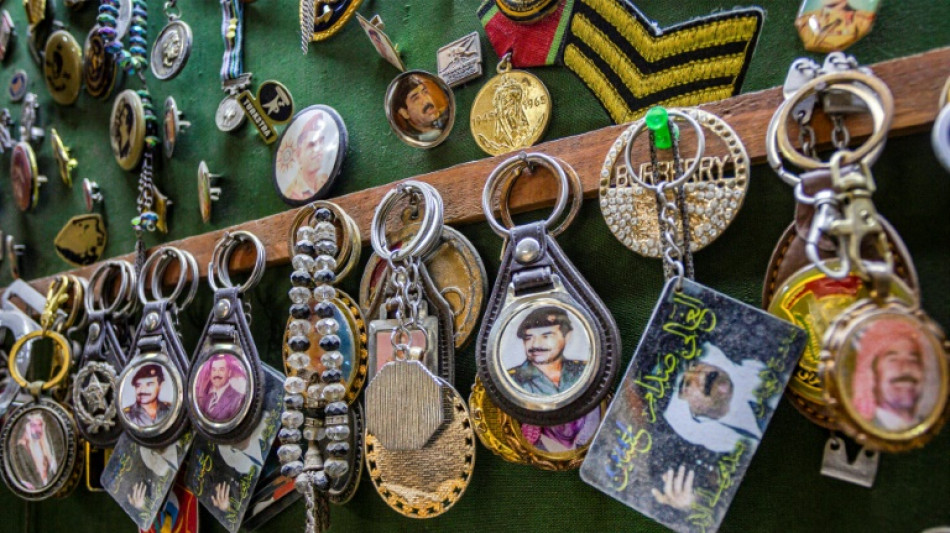
Iraq's Saddam still revered in Jordan 20 years later / Photo: © AFP

 Spanish PM says no 'solid proof' Morocco planned Ceuta migrant rush

 Venezuela's Maduro seek immunity from US drug charges

 Tazapay Now Live on the Borderless.xyz Network For Seamless Money Movement to Asia Pacific and Latin America

 DWF Labs Expands Global Regulatory Footprint with BVI Virtual Asset Service Provider Approval

 Just the beginning of the journey, Broeders-Bol says of 800m adventure
 US trade gap in July hits biggest in over a year on AI buildout

 Study shows plug-in hybrids polluting far more than expected
 Lost tool disrupted Airbus jet deliveries for months

 MEXC Concludes 0808 Stock Season with Over 86,000 Participants and More Than $1M Saved Through 0 Fee Trading

 US feminist icon Gloria Steinem dies at 92: foundation

 All Blacks drop veteran hooker Taylor for third Springboks Test

 British, French leaders hold talks on migrants, EU relations

 Oil prices jump as Iran strikes US targets

 Putin denies plan for new Russia military call up
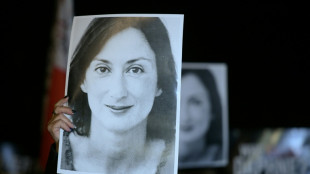
 Caruana Galizia: 'one-woman WikiLeaks' who exposed Malta's shady side
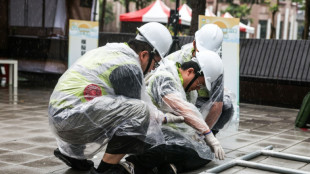
 Kuwait's Iranians under pressure since start of war

 EU lawmakers demand Brussels force Meta to 'protect' European children

 Clooney turns AFP photographer in jokey red carpet switch

 Retirement Income Planning Florida Launches No-Cost 'Income Gap Analysis' Program for Pre-Retirees
 Iraola hails Barcola mentality after blockbuster Liverpool move
 Michelsen shocks Nakashima in US Open clash of rising Americans

 US govt sides with OpenAI in New York Times copyright lawsuit

 WMO Says Powerful El Niño Is Likely to Persist Into February 2027

 Philadelphia Roundup: Museum Closure, Phishing Warning and Gun Violence Data

 Fifth-Generation Mitsubishi Pajero Returns With Ladder Frame and Seven Seats

Twenty years after the fall of his regime, the late Iraqi president Saddam Hussein remains admired and popular in Jordan where his image can still be seen across the country.
The instantly recognisable face peers out from everything from bumper stickers to mobile phone cases in neighbouring Jordan, despite symbols and images associated with his rule being outlawed in Iraq itself.
On March 20, 2003, then US president George W. Bush launched Operation "Iraqi Freedom" with a ground invasion by 150,000 US and 40,000 British troops, under the pretext of destroying Iraq's alleged arsenal of weapons of mass destruction.
Saddam appeared for the last time in public on April 9, just hours before the announcement of the fall of Baghdad.
Having ruled Iraq with an iron fist since 1979, Saddam went to ground until his hiding place was discovered by US troops eight months afterwards.
He was later tried, convicted and hanged on the morning of December 30, 2006.
In Iraq, it is an offence to display photographs or slogans of the toppled dicator and arrests are still sometimes made.
Last October, four people were detained in Anbar province, between Baghdad and the Jordanian border, for "glorifying the defunct regime during National Day celebrations".
But in Jordan, many people fondly remember Saddam for his support for the Palestinian cause, Arab nationalism and resistance to Western intervention in the Middle East.
"Tens of thousands of Jordanians graduated from Iraqi universities in various fields during Saddam's era with free scholarships," MP Khalil Attiyeh told AFP.
He said Saddam supported the Palestinian uprising, or intifada, and gave money "to the families of the Palestinian martyrs and rebuilt the houses of those who had them demolished by the enemy".
Attiyeh believes it is normal for "Jordanians to adore him and not to forget him, and to keep his photos, showing loyalty to this heroic leader".
Salameh Blewi, 67, a Jordanian contractor who visited Baghdad in the 1980s, called Saddam "an honourable and honest Arab leader, with honourable positions".
- 'We all love him' -
"Despite the (1980-1988) war with Iran, Iraq was a country of riches, but after Saddam, it was plundered by the corrupt," Blewi said.
Iraq's former premier Mustafa al-Kadhemi said in a March television interview: "Since 2003, the money that has been wasted exceeds $600 billion."
It went to "the corrupt and parties in power", Kadhemi charged.
Graft watchdog Transparency International ranks Iraq as one of the 25 most corrupt states in the world.
Saddam's brutal legacy has done little to sway many Jordanians, and its aftermath only reinforces their views.
"Jordanians know that Saddam Hussein is a brave and nationalist Arab leader who defended Arab causes valiantly. We all love him," said Shaher Abu Sharkh, 67, who sells mobile phone accessories in Amman.
"What happened was not the fall of Saddam's regime, but rather the fall of Iraq. Unfortunately, Iraq ended after Saddam and was systematically destroyed."
Zuhair Amleh, 70, sells vintage books in Amman's Hashemite Plaza square.
"Unfortunately, Iraq cannot return to what it was like before, he said.
"Those ruling Iraq now are sectarian and agents of Iran," he added.
The 2003 invasion sparked years of the worst violence in Iraq's history.
Most of the Shiite militias involved in the violence had been Saddam's opponents in exile, members of radical Islamist parties or armed groups who had taken refuge in neighbouring Iran and even sided with Tehran in the 1980s war.
- 'Hero and saviour' -
By the time US troops left Iraq in 2011, the conflict had claimed the lives of more than 100,000 Iraqi civilians, according to the Iraq Body Count group. US losses totalled nearly 4,500.
"The main reason Jordanians love Saddam is that they saw him as a hero and a saviour who had a mission to boost the Arab nation at all levels," Attiyeh told AFP.
He said Saddam was "the only Arab leader who established a military manufacturing base, from bullets to missiles, and bombed the Zionist entity (Israel) with 39 missiles made by Iraq".
After the US-led Operation Desert Storm against Iraq began in 1991, Iraq bombarded Israel with Scud missiles.
In a shop in Amman Anas Nahas, 19, arranged mobile phone covers bearing Saddam's likeness.
"If he was still alive many things would not have happened," Nahas said.
He cited "the Israeli occupation's crimes against our people in Palestine... the fall of Arab regimes, the wars in Syria and in Yemen, and the humiliation that Arabs are currently experiencing".
O.Lorenz--BTB