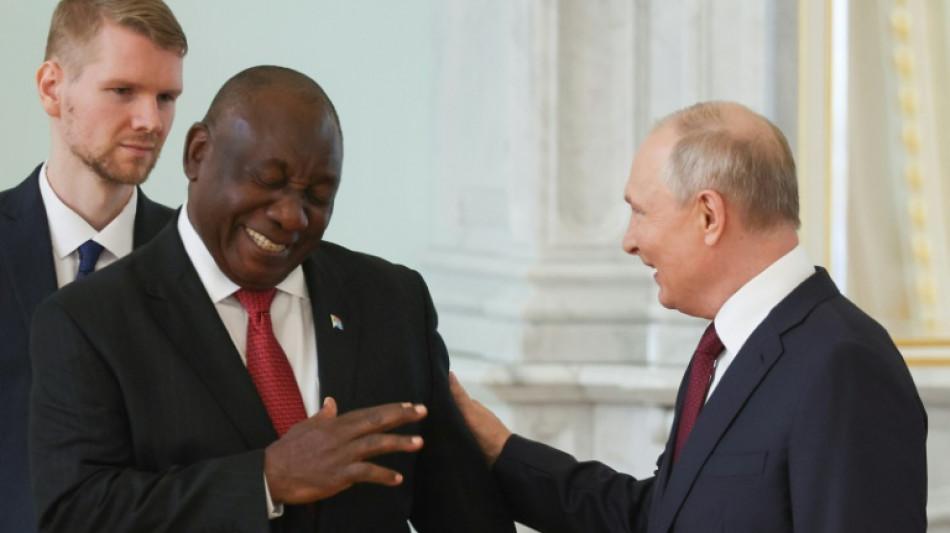
South Africa and Russia, the 'strange bedfellows' / Photo: © TASS Host Photo Agency/AFP

 Yemen's Houthis seize key city on Red Sea: military source

 Oil prices extend gains as markets await ECB rate outlook
 Wars pose a test as India hosts BRICS summit with China, Russia, Iran leaders
 Messi to buy second Spanish lower league club
 Pochettino calls for Chelsea to lose 2016-17 Premier League title
 North Korea leader's daughter believed to have younger sibling: Seoul
 Wars pose a test as India hosts BRICS summit with Russia, Iran leaders
 Alessio Vinassa Unveils an Emerging Technology Investment Approach Shaped by Financial Challenges
 Stocks drop as oil spike fans inflation and interest rate fears
 Portugal harvests grapes at night to beat the heat
 Philippine ferry fire kills 5, dozens missing
 Oil prices flare as Iran tightens grip on Hormuz
 Japan gymnasts under injury cloud for home Asian Games
 India trailblazer won't 'let go' of chance for Asian weightlifting glory
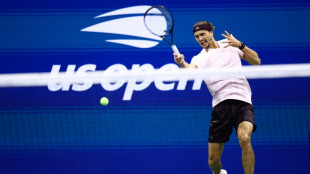 Zverev cruises past van de Zandschulp into US Open semis
 Myanmar tin mega-mine restarts operations: think tank
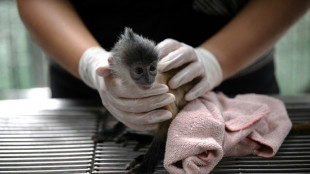 Online and undercover: saving trafficked wildlife in Thailand
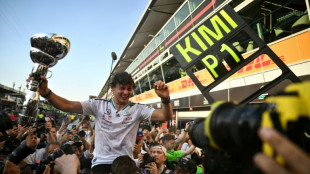 Antonelli faces new challenge after stirring triumph in Monza

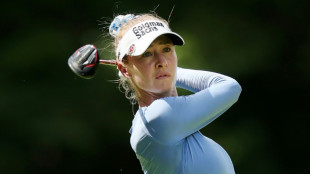 Korda leads US bid to win first away Solheim Cup since 2015
 Eurozone rate-setters to hike borrowing costs as energy prices jump

 As oceans warm, Florida scientists hunt for heat-resistant coral
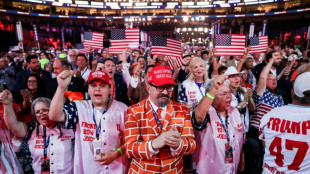 Trump takes center stage as Republicans fight midterm tide
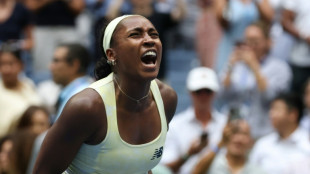 Gauff takes inspiration from Tiafoe in US Open fightback win
 Ralph Lauren opens fur-free New York Fashion Week
 Arteta lauds in-form Odegaard as 'remarkable' Arsenal edge Napoli

South Africa's hosting of a BRICS summit next week has turned a spotlight on ties between Pretoria and the Kremlin that are cosy and, for some, a puzzle.
Moscow and South Africa's African National Congress forged relations during the Cold War, when the Soviet Union backed the ANC's fight against apartheid.
Those ties remain steely strong despite historical and ideological shifts that -- logically -- should have caused them to part company long ago.
In 1991, the Soviet Union collapsed, sowing the seeds for nationalism in its core member Russia under Vladimir Putin.
In South Africa, though, the victory over apartheid brought in democracy and Africa's most liberal constitution, bequeathing the ANC with a worldwide image as a liberator.
Analysts seeking to understand the odd-couple relationship suggest ideological cracks are cemented through historic and personal bonds -- but there are likely to be less-stated needs on both sides, too.
"You could say their alliance is a friendship that was built on blood... and bullets," said political analyst Sandile Swana.
Politically, they make for "some strange bedfellows", said Steven Gruzd, at the South African Institute of International Affairs (SAIIA).
- Ambivalence -
The ANC-Kremlin relationship came under close scrutiny last year when Pretoria chose not to condemn Russia's invasion of Ukraine -- a stance that critics read as an implicit backing of Moscow.
Criticism flared anew as the August 22-24 summit in Johannesburg loomed of the five big emerging economies, Brazil, Russia, India, China and South Africa.
Pressure mounted on South Africa to say it would arrest President Putin, who is sought by the International Criminal Court over the war.
Struggling to find the right response, President Cyril Ramaphosa struck an ambivalent stance before eventually announcing that Putin had decided not to attend.
In June, Ramaphosa led an African peace mission to Ukraine and Russia which while unsuccessful helped him to redress accusations of partiality.
The mission allowed for Ramaphosa and other African leaders "to speak directly to Ukrainian people" and evaluate the situation for themselves, said Dzvinka Kachur, of the Ukrainian Association of South Africa.
- 'Emotional bond' -
Economically it makes little sense for Pretoria to side with Moscow so visibly, say specialists.
The US is South Africa's second-largest trade partner after China, accounting for $4.2 billion in exports in the first half of 2023.
Trade with Russia on the other hand is "very low," to use the words of South Africa's envoy to Moscow, with exports worth only $132 million from January to June.
Accusations that Pretoria secretly supplied weapons to the Kremlin spurred calls by some US lawmakers for Washington to kick it out of a major trade pact, to the worry of some businesses and opposition parties.
Political analyst William Gumede said it was time for Pretoria to realise that the union no longer served the country.
It is based on an "emotional bond" that "we can't afford," he said.
- Mutual needs? -
Putin sees South Africa in terms of strategic interest, noting its status in a continent that is increasingly a diplomatic battlefield between the major powers, say some analysts.
But there is less consensus about why the ANC remains so interested in maintaining the close relationship with Putin.
Some critics suggest that the party is adrift -- despite the ideological disconnect, it turns to Moscow, its historic partner, for insights on its own future.
The ANC has been in power since the advent of democracy in 1994 but its once-stellar standing been mauled by allegations of corruption and mismanagement.
It faces general elections next year that could see its vote drop below 50 percent.
"The ANC clearly sees something else in Putin's Russia -– something aspirational," Richard Poplak, a columnist at newspaper Daily Maverick wrote last month.
"Russia is the beacon on the hill, a shining autocracy that lights the way to eternal governance."
Others suggest money is an issue.
Last year the party received more than $800,000 from a manganese mining firm linked to a US-sanctioned Russian tycoon to help fund a party conference.
"The ANC is siding with Russia for one reason alone: because the Russian Federation is funding the ANC, and thus infiltrating and destabilising South African democracy," opposition leader John Steenhuisen said in May.
Such insinuations are angrily dismissed by the party.
The party has also received donations from "American businesspeople," said Tokologo Ngoasheng, an ANC official in Johannesburg,
"It is only a problem when the Russians support the ANC," he said. "It is unfair".
T.Bondarenko--BTB