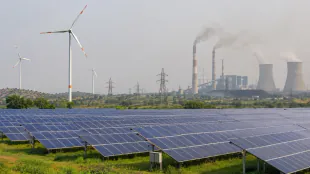
August hottest month ever recorded globally: EU monitor / Photo: © AFP

 Japanese-Born Professor Attributes Rise in Korea-Japan Marriages to K-Drama Influence and Affectionate Behavior

 Economist Testifies Canada Has Limited Power to Alter Global Climate

 Dublin Band Aslan Headlines Our Lady’s Hospice Light Up A Life Ceremony

 UAE Cabinet Approves Up to Dh350,000 in Disaster Relief for Citizens

 Korea's Severe Asthma Patients Blocked from Biologics by Restrictive Reimbursement Rules

 COP31: Ana Toni Outlines Fossil Fuel Transition Roadmap Ahead of Climate Talks

 Securitas Healthcare Introduces a New Era of RTLS Built for the Future of Healthcare Operations

 First-time boat buyers advised to assess full ownership costs

 Planning and preparation can reduce stress of interstate relocation

 Two more arrested in Carrie Mullane suspected murder investigation

 Mayo school appeals for information after convent and chapel vandalism

 Virginia overwhelms Arkansas 91-72 behind balanced scoring

 Second major storm brings destructive winds and outages to British Columbia

 Godzilla Minus Zero leads North American box office with $31.6m

 Doug Burgum's Security Interferes With TMZ Reporter at Reagan Airport

The EU's climate monitor said Thursday that August was the hottest single month ever recorded globally, with ocean temperatures also reaching unprecedented highs as western Europe capped its warmest summer.
In response to the assessment by the Copernicus Climate Change Service, the UN warned that until humanity weaned off fossil fuels, the planet would only push deeper into uncharted territory.
Copernicus observations go back to 1940 but other evidence -- such as ice cores, tree rings and coral skeletons -- allow scientists to place today's climate against a much longer historical context.
"Humans haven't seen temperatures as hot as today for, arguably, at least the last 100,000 years," Samantha Burgess from the European Centre for Medium-Range Weather Forecasts, which oversees Copernicus, told AFP.
Global average air temperatures in August were 16.96C, Copernicus said -- surpassing by 0.01C the previous all-time monthly record set in July 2023. Copernicus said it considered the two months joint-highest given the narrow difference.
Scientists say that human activity -- primarily the burning of coal, oil and gas -- has warmed the planet by roughly 1.4C since pre-industrial times and increased the severity and likelihood of extreme weather.
Yet heat-trapping greenhouse gas emissions rose to new highs in 2025.
"The evidence is irrefutable: this is the spiralling price of humanity's fossil fuel addiction, and the global climate crisis it is fuelling," United Nations climate chief Simon Stiell said of the Copernicus report.
- More ahead -
Global sea surface temperatures also set a new daily high and tied equal-hottest for August, extending a three-month streak of record-breaking warmth across the world's oceans.
More than 90 percent of excess heat trapped by greenhouse gas emissions has been absorbed by the oceans, sparing land from warming but at severe cost to marine life, reefs and coastal communities.
Records tumbled in overheated basins like the Atlantic and Mediterranean and also the tropical Pacific, where the strongest El Nino weather pattern in the modern era is fast accumulating strength.
These events are marked by unusually warm Pacific waters but raise the odds of wild weather thousands of miles away, from floods in Peru to droughts in Africa and wildfires in Australia.
The warmer phase of a natural climate cycle, El Nino episodes usually deliver a temporary spike in global temperatures already elevated by long-term background warming.
Scientists expect records to keep falling in the months ahead as this "super" El Nino approaches peak intensity around December and for 2027 -- and maybe even 2026 -- to become the hottest years ever observed.
"Climate change makes every El Nino hotter, and until we stop burning coal, oil, and gas these record-shattering months will simply keep on coming," said Friederike Otto, a climate scientist from Imperial College London.
- Sizzling summer -
Copernicus also said that August "marked the end of western Europe's warmest summer" that surpassed the long-standing record set in 2003.
The June to August season was defined by severe, back-to-back heatwaves that shut schools, dried up rivers and primed the land for devastating wildfires.
Between mid-July and mid-August, the continent's EuroMomo monitoring platform estimated that Europe saw more than 32,000 excess deaths.
Scientists from the World Weather Attribution network concluded that a particularly strong heatwave in June would have been "virtually impossible" without the influence of climate change.
But extraordinary heat was felt around the globe.
On Wednesday, the National Oceanic and Atmospheric Administration said the contiguous United States has endured its hottest summer on record.
And regions home to around 900 million people lived through the hottest July ever observed, according to AFP analysis of Copernicus data.
"We've had an exceptional summer -- not only in Europe, but other parts of the world where records that have existed for close to a century have fallen," said Burgess, an ocean scientist and strategic lead for at ECMWF.
The climate would "continue to get more extreme unless we turn off the tap to global emissions", she added.
C.Kovalenko--BTB