-
 USA and France ease into women's Basketball World Cup semis
-
Diana's 'revenge dress' to go up for auction in New York
-
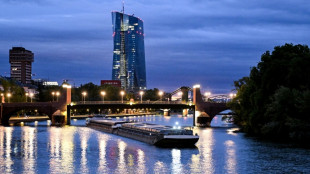
 ECB lifts borrowing costs amid energy shock, opens door for more hikes
-
England dominate Pakistan, close in on Test series sweep
-
 France defeat China to reach women's basketball World Cup semis
-
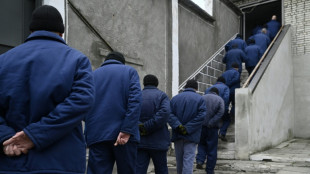
Russia trafficking foreigners to fight in Ukraine, Amnesty says
-
 Tribal Launches Campfire, Letting Business and Technical Teams Build on Salesforce Together
-
Global Tokenized Real Estate Market to Hit up to $3 Trillion by 2030, ScienceSoft Predicts

-
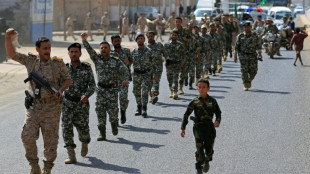 Yemen's Houthis seize key city on Red Sea
-
Stocks fall as fresh oil surge fans inflation fears
-
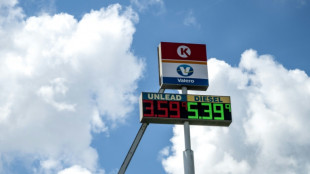 US producer inflation tops expectations as diesel costs jump
-
August hottest month ever recorded globally as huge El Nino emerges
-
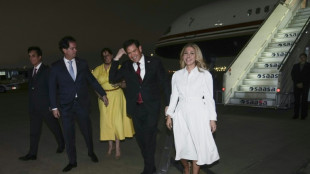 Rubio ends South America swing with Peru security talks
-
'Bragging rights' up for grabs at game-changing Ultimate Championship, says Coe

-
 Defiant Iran seeks to bruise Trump ahead of midterms
-
ECB hikes borrowing costs to combat Mideast energy shock

-
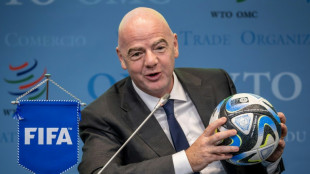 France withdraws support for Infantino in FIFA presidential election
-
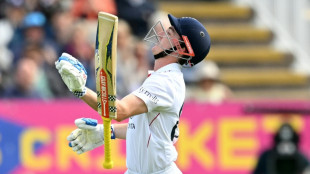
England turn screw in 3rd Test against Pakistan
-
 Evolution Metals & Technologies Provides Initial Revenue Guidance of $400-460mm for Fiscal Year 2027
-
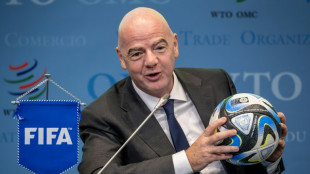
France will not support Infantino in FIFA election: federation chief
-
 Clark-led USA thrash Hungary to move into women's World Cup semi-finals
-
In their words: Israeli forces describe AI-backed Gaza killing in new film

-
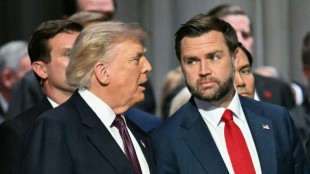 Vance takes spotlight as Republicans close Trump-heavy convention
-
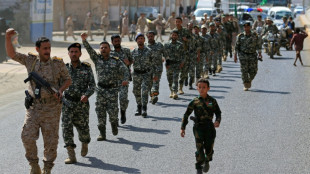
Yemen's Houthis seize key city on Red Sea: military source
-
 Russian skater Valieva loses neutral status
-
Oil prices extend gains as markets await ECB rate outlook
-
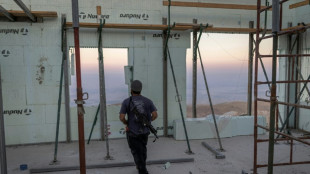 Will Israel's right exploit sanctions in run-up to vote?
-
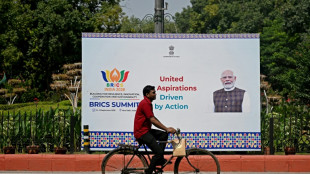
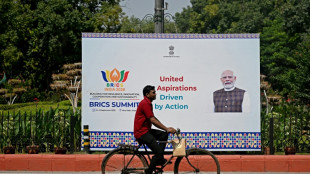
Wars pose a test as India hosts BRICS summit with China, Russia, Iran leaders
-
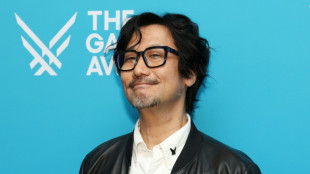 'Metal Gear' creator moves to Xbox after Playstation cancellation
-
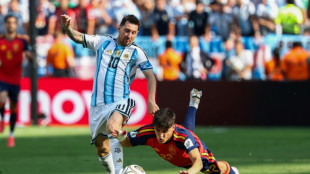
Messi to buy second Spanish lower league club
-
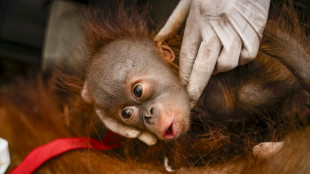 Indonesia rescues six orangutans from fires in a week
-
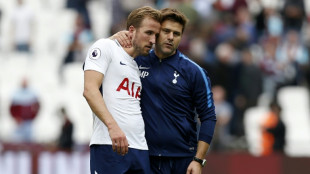
Pochettino calls for Chelsea to lose 2016-17 Premier League title
-
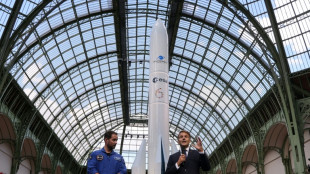 Macron urges Europe to develop 'crewed spaceflight' programme
-
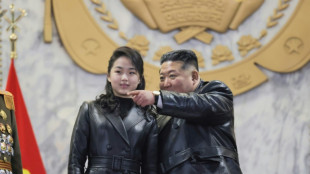
North Korea leader's daughter believed to have younger sibling: Seoul
-
 Deals worth billions to be signed as UAE leader visits Germany
-
Wars pose a test as India hosts BRICS summit with Russia, Iran leaders
-
 Alessio Vinassa Unveils an Emerging Technology Investment Approach Shaped by Financial Challenges
-
Zamanat Targets GCC’s $250 Billion SME Financing Gap With Up to $100 Million Tokenized Private Credit Fund

-
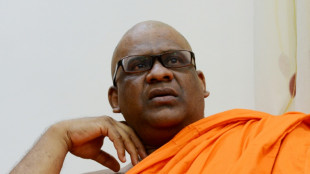 Sri Lanka court revokes monk's pardon, orders return to prison
-
Stocks drop as oil spike fans inflation and interest rate fears
-
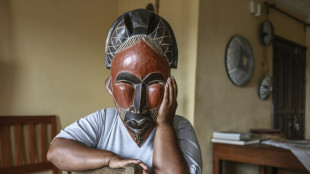 'Hopeless, stuck, afraid': US deportees in limbo in Cameroon
-
Portugal harvests grapes at night to beat the heat

-
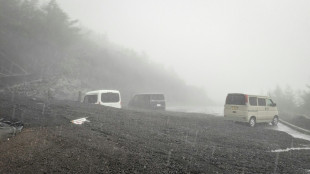 Mount Fuji ends hiking season with landslide, two rescues
-
Philippine ferry fire kills 5, dozens missing
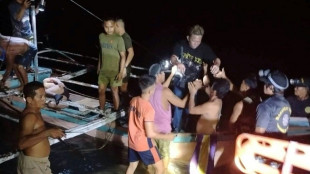
-
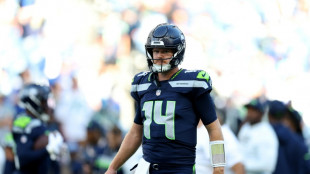 Seahawks beat Patriots again in NFL opener
-
Oil prices flare as Iran tightens grip on Hormuz
-
 Asian Games begin with Qatar basketball win, nine days before opening ceremony
-
Japan gymnasts under injury cloud for home Asian Games

-
 Stocks sink as oil rally fans inflation and rate hike fears
-
India trailblazer won't 'let go' of chance for Asian weightlifting glory
NYSE - LSE
Zimbabwean opposition leader alleges rigging in high stakes vote
Zimbabwe's opposition leader on Wednesday accused the ruling ZANU-PF government of "rigging" and "voter suppression" as long delays marred the start of balloting in key districts in Zimbabwe's high stakes elections.
As polling began to close in some voting stations, it was only starting in others prompting opposition accusations of vote manipulation after a campaign marked by tension and a clampdown.
Less than a quarter of polling stations in Harare -- an opposition stronghold -- opened on time, according to electoral authorities, who blamed the problem on delays in the printing of ballot papers.
"This is a clear case of voter suppression, a classic case of Stone Age, antiquated, analog rigging," Nelson Chamisa, 45, the head of the leading opposition party, the Citizens Coalition for Change (CCC) told a press conference in the capital.
Chamisa is the main challenger to President Emmerson Mnangagwa, 80, who came to power after a coup that deposed late ruler Robert Mugabe in 2017.
Mnangagwa is seeking a second term in an election that came to a backdrop of widespread discontent at the southern African country's economic troubles.
The poll is being watched across southern Africa as a test of support for the ZANU-PF party, whose 43-year rule has been battered by an economic slump and charges of authoritarianism.
Chamisa blamed the governing ZANU-PF party, which has ruled the country since independence, for the delays, saying it said was "desperate" to cling to power and risking plunging the country into a "crisis".
The electoral commission blamed the problem on delays in the printing of ballot papers "arising from numerous court challenges".
Polling in Harare's oldest suburb of Mbare started closing around seven pm (1700 GMT), while opening at another station in a suburb west of Harare.
"This is a way to frustrate Harare voters. A way to manipulate the election results," voter Tafadzwa Dhlodhlo said at a Warren Park polling station. "This is an embarrassment".
Ballots at a school serving as a polling station in a poor neighbourhood arrived only after 2:30 pm (1230 GMT) whereas polling had been scheduled to start at seven am.
"I have been here since six am. I am so disappointed," said Linda Phiri, 53, a mother of three. "I'm sleeping here,... I want to cast that vote so that we are liberated," said Phiri.
Chamisa lashed out at the problems, saying it was a "classic of voter suppression" targeting CCC strongholds.
"The fact they have targeted Harare... is an indication that they are scared of people in the urban areas."
At least 6.6 million people were registered to vote, with more than a million found in Harare. Publication of results is legally required within five days.
To clinch re-election Mnangagwa must win an absolute majority or face a runoff.
Casting his ballot in his home town of Kwekwe in central Zimbabwe, a confident Mnangagwa -- nicknamed the "Crocodile" for his determination said: "If I think I'm not going to take it, then I will be foolish."
"Everyone who contests should go into the race to win," he added, sporting his trademark multicoloured scarf.
- Graft and economy -
The opposition has been hoping to ride a wave of discontent over corruption, high inflation, unemployment and entrenched poverty.
In Kwekwe, unemployed voter Freddy Kondowe hoped the election would deliver him "a good job" and that "my president is going to give us good governance."
In Harare's upscale Borrowdale Brooke, retired lawyer Brian Crozier, 79, said he wants "an honest government, less corruption, more tolerance of other views. Not this idea of 'you're the enemy if you don't agree with everything I say'".
- Chamisa's struggle -
A lawyer and pastor, Chamisa has promised to renew the country by rooting out graft, relaunching the economy and ending Zimbabwe's long international isolation.
Yet in a nation with a history of tainted elections, few believe he will emerge the outright winner.
His party had complained about being unfairly targeted by authorities, its members have been arrested, dozens of its events blocked, and little or no airtime has been allotted to it on national television.
Chamisa narrowly lost to Mnangagwa in 2018, a poll that he condemned as fraudulent and was followed by a deadly crackdown on protests.
The former British colony, then named Rhodesia, broke away from London in 1965 under white-minority rule.
After a long guerrilla war, it gained independence in 1980 and was renamed Zimbabwe.
ub-fj-str-sn/bp
O.Bulka--BTB