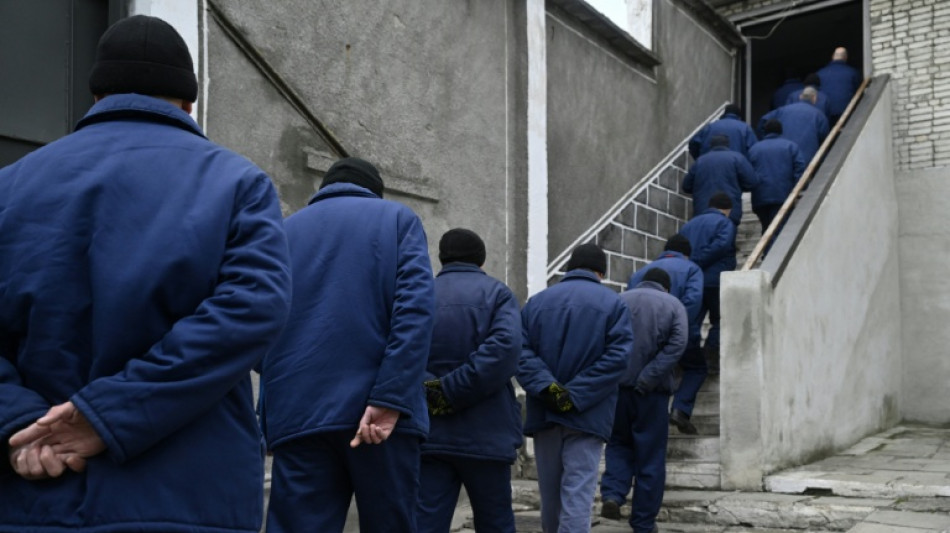
Russia trafficking foreigners to fight in Ukraine, Amnesty says / Photo: © AFP

 USA and France ease into women's Basketball World Cup semis

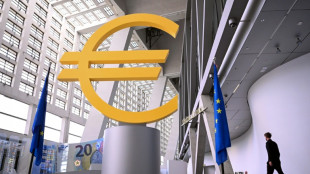
 ECB lifts borrowing costs amid energy shock, opens door for more hikes

 France defeat China to reach women's basketball World Cup semis
 Tribal Launches Campfire, Letting Business and Technical Teams Build on Salesforce Together

 Yemen's Houthis seize key city on Red Sea
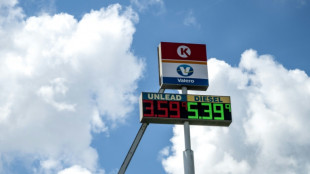 US producer inflation tops expectations as diesel costs jump

 Rubio ends South America swing with Peru security talks

 Defiant Iran seeks to bruise Trump ahead of midterms
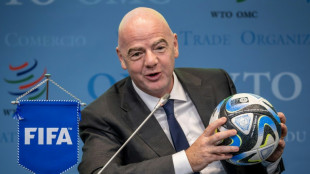 France withdraws support for Infantino in FIFA presidential election

 Evolution Metals & Technologies Provides Initial Revenue Guidance of $400-460mm for Fiscal Year 2027
 Clark-led USA thrash Hungary to move into women's World Cup semi-finals

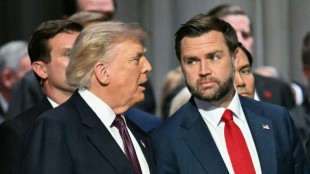 Vance takes spotlight as Republicans close Trump-heavy convention
 Russian skater Valieva loses neutral status
 Will Israel's right exploit sanctions in run-up to vote?
 'Metal Gear' creator moves to Xbox after Playstation cancellation

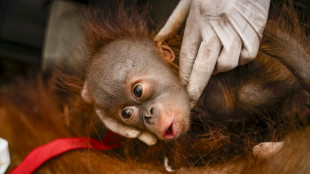 Indonesia rescues six orangutans from fires in a week

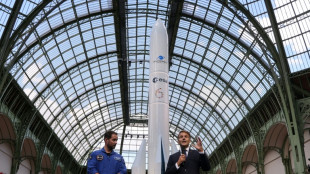 Macron urges Europe to develop 'crewed spaceflight' programme
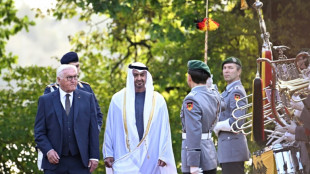 Deals worth billions to be signed as UAE leader visits Germany
 Alessio Vinassa Unveils an Emerging Technology Investment Approach Shaped by Financial Challenges

 Sri Lanka court revokes monk's pardon, orders return to prison
 'Hopeless, stuck, afraid': US deportees in limbo in Cameroon

 Mount Fuji ends hiking season with landslide, two rescues
 Seahawks beat Patriots again in NFL opener
 Asian Games begin with Qatar basketball win, nine days before opening ceremony

 Stocks sink as oil rally fans inflation and rate hike fears
Russia is illegally trafficking foreigners to fight in Ukraine, Amnesty International said in a report Thursday, citing interviews with prisoners of war whom it said had been deceived into signing Russian military contracts.
Among the victims were citizens of Brazil, Colombia, Sri Lanka and South Africa, some of whom were lured to Russia through fake job advertisements and made to join the army upon arrival, the London-based rights group said. In June, an AFP investigation likewise revealed how Moscow was using promises of well-paid civilian jobs to lure Kenyans into fighting at the front.
"The suffering linked... to the internationalisation of the war is affecting highly vulnerable communities and individuals around the world," Amnesty's Secretary-General Agnes Callamard told AFP in an interview coinciding with the publication of the report.
Russia made no immediate public comment on Amnesty's allegations.
Both Moscow and Kyiv have recruited thousands of foreign nationals into their armies since Russia launched its invasion of Ukraine four-and-a-half years ago.
Ukraine estimated in April that more than 28,000 foreigners from 136 countries were fighting in the Russian army, while officials believe Russia deployed some 14,000 North Korean troops to battle Ukraine's 2024 incursion into the Kursk region.
Ukraine also uses foreign fighters, although Amnesty says it cannot conduct inquiries among those held in Russia due to the group's status as a "foreign agent" in the country.
Neither Moscow nor Kyiv discloses the total number of foreign soldiers in their ranks.
"Obviously, there are many individuals who work for the Russian state who know that the people they recruit to go to the front line are victims of trafficking," Callamard said.
"They are complicit in this phenomenon and they should be held accountable," she said.
The average foreigner targeted by recruiters working for Russia is under 40, living in a poorer country and lured by the "promise of a job", she said.
Russia has previously dismissed accusations of coercing foreigners into joining its army.
- 'Cannon fodder' -
Among the main pathways recruiters use to exploit foreigners are job advertisements online, often with the promise of false civilian work, Amnesty said.
"Then it's coercion. Their passports are taken away. They are made to sign documents they don't understand. They are given training they don't understand" and used as "cannon fodder", Callamard said.
In one example, a truck driver from South Africa was told to fly to Moscow for a driving job and had "everything" confiscated from him upon arrival, Amnesty's report said.
Recruiters have also targeted foreigners living in Russia without legal status, promising them residency or a passport in exchange for enlisting, Amnesty said.
During a supervised visit to a Ukrainian detention centre in February, AFP collected similar testimonies from foreign prisoners of war who had fought for Russia.
Several said they had been made to sign contracts that they did not understand, were poorly equipped and found communication with their superiors difficult due to the language barrier.
The crime of human trafficking, as defined by the United Nations, involves the illegal recruitment, transportation or harbouring of people through fraud, deception or abuse of power.
Callamard said the crime was characterised by the "transfer of persons", the use of "coercive means, false promises and violence", as well as a "situation of exploitation".
She called on Ukraine and the leaders of other countries whose citizens were trafficked to provide evidence of this "human trafficking" to prosecute those responsible.
While she acknowledged Ukraine would likely not prioritise those investigations, she advised investing in them.
It "would also demonstrate that Ukraine has very different values and an approach from those of Russia", she said.
K.Brown--BTB