China's allies lead Pacific criticism of Fukushima water release / Photo: © AFP

 F1 drivers expecting crashes, chaos at new Spanish GP circuit

 NGO chief sees 'hypocrisy' in Afghan women's rights calls amid aid cuts

 Latin America could see fresh disinformation after Meta changes

 UAE to invest 40 billion euros in Germany, including for data centres: Berlin

 2030 Winter Olympics chief Grospiron quits

 AI Risks to Enter 60–80% of Liability and Cyber Insurance Underwriting by 2028, ScienceSoft Predicts

 Ultimate Championship as big as Olympics - and more lucrative, says Bolt

 Diana's 'revenge dress' to go up for auction in New York

 England dominate Pakistan, close in on Test series sweep

 Russia trafficking foreigners to fight in Ukraine, Amnesty says

 Global Tokenized Real Estate Market to Hit up to $3 Trillion by 2030, ScienceSoft Predicts

 Stocks fall as fresh oil surge fans inflation fears
 August hottest month ever recorded globally as huge El Nino emerges
 'Bragging rights' up for grabs at game-changing Ultimate Championship, says Coe
 ECB hikes borrowing costs to combat Mideast energy shock

 England turn screw in 3rd Test against Pakistan

 France will not support Infantino in FIFA election: federation chief

 In their words: Israeli forces describe AI-backed Gaza killing in new film
 Yemen's Houthis seize key city on Red Sea: military source

 Oil prices extend gains as markets await ECB rate outlook

 Wars pose a test as India hosts BRICS summit with China, Russia, Iran leaders

 Messi to buy second Spanish lower league club

 Pochettino calls for Chelsea to lose 2016-17 Premier League title
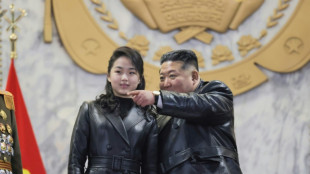 North Korea leader's daughter believed to have younger sibling: Seoul

 Wars pose a test as India hosts BRICS summit with Russia, Iran leaders

China's Pacific allies -- from Solomon Islands' government to Fiji's opposition -- on Friday echoed Beijing's criticism of Japan releasing wastewater from its disaster-hit Fukushima nuclear plant.
More than 500 Olympic swimming pools' worth of treated wastewater will be released into the Pacific over decades in a plan endorsed by the International Atomic Energy Agency.
But China has issued a furious response, and its allies in the Pacific have backed that criticism despite safety assurances from Japan and the IAEA.
Solomons' Prime Minister Manasseh Sogavare -- who has delayed elections and scolded Western powers while embracing Beijing's chequebook diplomacy -- issued a "strong statement against Japan's decision".
The water release, he said, "has an impact on our people, ocean, economy and livelihood."
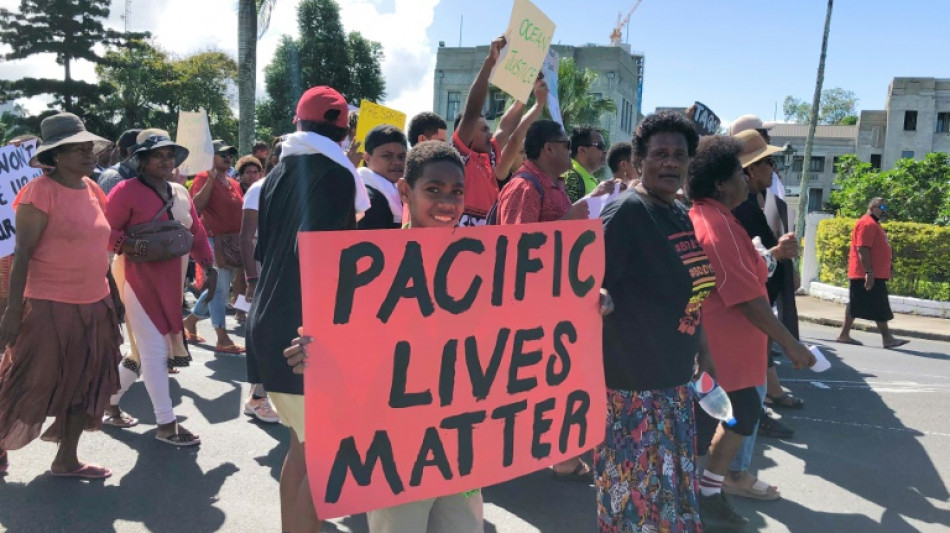
There was a similar message in the Fijian capital Suva on Friday, where a rare protest attracted hundreds.
Demonstrators carried placards saying "Nuclear-free sea!" and "Pacific Lives Matter".
The protest was promoted by FijiFirst, an opposition party whose leader, ousted prime minister Frank Bainimarama, courted closer ties with China while in office.
The party accused Fiji's government of "failing future generations by allowing Japan to dump its nuclear waste into our ocean".
Other leaders appeared convinced by the safety assessments.
"Japan has reassured the region that the water has been treated," said Cook Islands Prime Minister Mark Brown, who is currently chair of the Pacific Islands Forum, a regional bloc.
"I believe that the discharge meets international safety standards."
- An opening for Beijing -
China has repeatedly and strongly criticised the release plan, banned Japanese seafood imports and cast doubt on the expert assessments that concluded the operation poses no harm to the environment.
Nigel Marks, a physics professor at Australia's Curtin University, said the released water contains negligible amounts of radioactive tritium.
"The Pacific Ocean contains 8,400 grams of pure tritium, while Japan will release 0.06 grams of tritium every year," he said.
"The minuscule amount of extra radiation won't make the tiniest jot of difference."
Regardless of the science, the Fukushima release has created a political opening for Beijing, according to Mihai Sora, a former Australian diplomat who is now with the Lowy Institute in Sydney.
Japan has "done a lot of diplomacy to win over as many Pacific leaders as they can", he said, but "almost universally this will be an unpopular decision among Pacific communities".
"You can imagine Beijing using its diplomatic access to encourage some of its partners to speak out about this strongly, because it serves Beijing's interests."
As well as fears about damaging vital fish supplies and sensitive marine ecosystems, the Fukushima water release has caused disquiet in a region where nuclear issues are highly sensitive.
For decades, major powers including the United States, Britain and France used the sparsely populated South Pacific to test atomic weapons -- with consequences that linger to this day.
H.Seidel--BTB