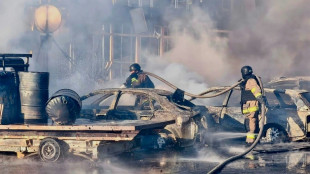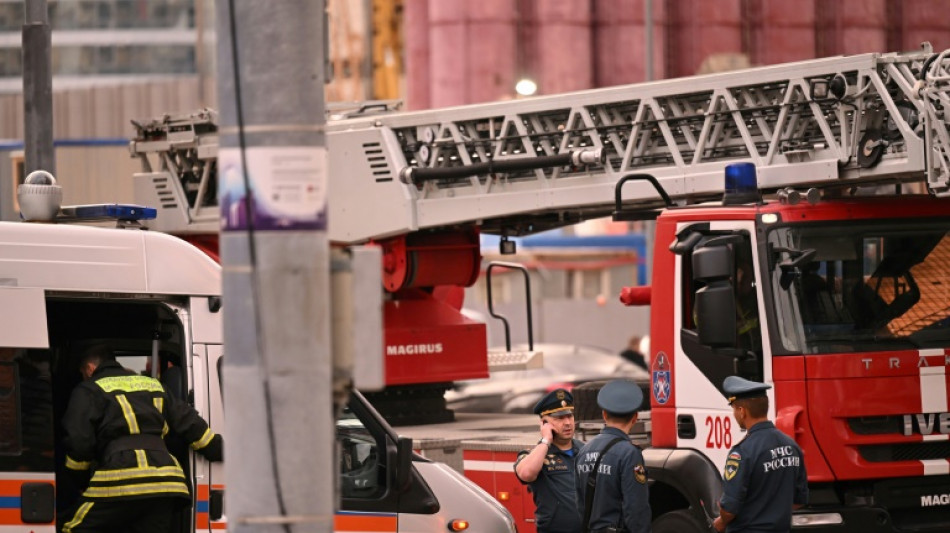
Moscow residents learn to live with drone strikes / Photo: © AFP

 Carney says in touch with Trump, Canada ready for 'fair' trade deal

 Morocco says not involved in Ceuta migrant influx

 Tag Markets Names Craig Lund Chief Executive Officer

 Ex-president Bush remembers 9/11 through exhibit of his art

 F1 drivers expecting crashes, chaos at new Spanish GP circuit

 NGO chief sees 'hypocrisy' in Afghan women's rights calls amid aid cuts

 Latin America could see fresh disinformation after Meta changes
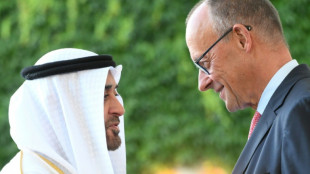 UAE to invest 40 billion euros in Germany, including for data centres: Berlin
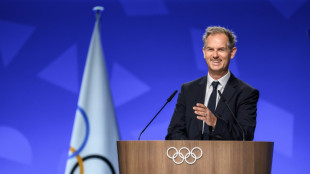 2030 Winter Olympics chief Grospiron quits

 AI Risks to Enter 60–80% of Liability and Cyber Insurance Underwriting by 2028, ScienceSoft Predicts

 Ultimate Championship as big as Olympics - and more lucrative, says Bolt

 Diana's 'revenge dress' to go up for auction in New York
 England dominate Pakistan, close in on Test series sweep

 Russia trafficking foreigners to fight in Ukraine, Amnesty says

 Global Tokenized Real Estate Market to Hit up to $3 Trillion by 2030, ScienceSoft Predicts
 Stocks fall as fresh oil surge fans inflation fears
 August hottest month ever recorded globally as huge El Nino emerges
 'Bragging rights' up for grabs at game-changing Ultimate Championship, says Coe
 ECB hikes borrowing costs to combat Mideast energy shock
 England turn screw in 3rd Test against Pakistan

 France will not support Infantino in FIFA election: federation chief

 In their words: Israeli forces describe AI-backed Gaza killing in new film
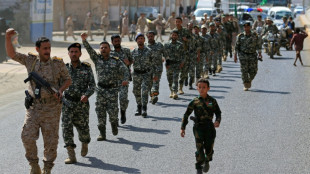 Yemen's Houthis seize key city on Red Sea: military source

 Oil prices extend gains as markets await ECB rate outlook
 Wars pose a test as India hosts BRICS summit with China, Russia, Iran leaders

Strolling in Moscow on a summer's day as pop music blared from a cafe, Tigran is one of the capital's residents who say they have come to terms with a surge in Ukrainian drone attacks.
Day-to-day life in the city of some 12 million people has changed little since the Kremlin launched large-scale hostilities in Ukraine last February, upending the lives of millions of Ukrainians.
But a recent uptick in aerial assaults have hit the capital's financial district, ripped holes in commercial buildings and even struck the Kremlin, a reminder of hostilities playing out hundreds of kilometres away.
Still, some residents have accepted with a shrug the ripple effect of the conflict in Ukraine.
"Living in Moscow isn't scary," Tigran, a sunglass-wearing 40-year-old who declined to give his last name, told AFP. "I feel safe."
- 'Stay alert' -
The attacks point to a broader phenomenon of how crucial drones have become for both sides, being deployed on an unprecedented scale for reconnaissance and precision artillery targeting.
Ukrainian President Volodymyr Zelensky, whose country has weathered waves of assaults from Iran-made attack drones, warned late last month that "war" was coming Russia.
In the weeks since, Moscow has suffered at least eight aerial attacks that Russian authorities have blamed on Kyiv.
Residents voiced confidence in the military's ability to intercept them.
Konstantin, a 70-year-old retiree who also declined to give his last name, told AFP he felt "absolutely calm", citing his trust in the army.
"There are enough personnel and equipment," he said, referring to air defence systems around Moscow.
Authorities have reported those systems increasing ability to repel the wave of assaults, and have claimed the drones have caused relatively little damage.
Since the Kremlin strike in May, the Russian defence ministry has said most attacks have been foiled by electronic air defence systems.
"The most important thing is that they stay alert. The rest doesn't matter," Konstantin said, referring to Russian forces.
He however did complain that the electronic jamming techniques used to down Ukrainian drones were interfering with his car's navigation system.
"It's hard without a navigator in Moscow," he said.
- Sabotage? -
Apart from minor inconveniences, like difficulties getting around the city or repair work at drone crash sites, analysts also said the Ukrainian aerial attacks were having little impact.
"The scale of these events is not at all at a point where it would seriously worry the residents of a megacity like Moscow," said pro-Kremlin military expert Alexander Khramchikhin.
"These attacks have a microscopic effect on a city of at least 12 million people," he said.
He acknowledged that some businesses had relocated from the financial district, which had been hit several times, and that the attacks had disrupted work at Moscow's three airports.
"The biggest effect is bewilderment, and the question is, what do they want to achieve by this?" he added, referring to Ukrainian authorities.
Vassily Kashin, a political analyst and professor at the Higher School of Economics in Moscow, agreed that the attacks' impact was limited.
Compared to the damage Russian forces were bringing to Ukrainian cities, he said, Kyiv's aerial assaults on Kyiv were negligible.
"This probably helps to maintain their morale. That's all," he said.
"Drones in Moscow either do not affect people's attitude towards the war, or lead to calls for a tougher conduct," he added.
The strikes have nonetheless raised questions about Russian air defence systems and how vehicles launched from Ukraine can fly undetected for hundreds of kilometres.
Venera, the manager of an orthopaedics store in Moscow, had her own theory.
"I think that our Russian compatriots are going against Russia, they are launching these drones," she said.
C.Kovalenko--BTB