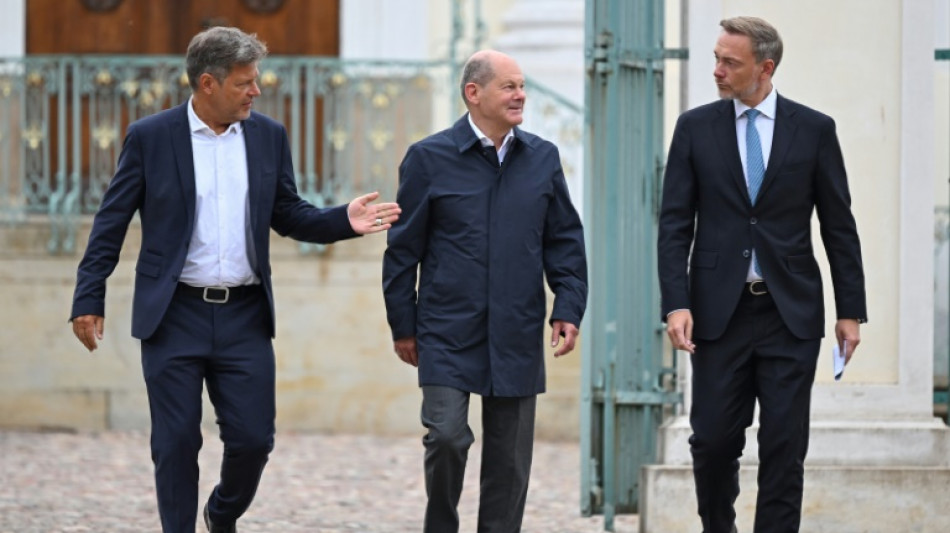
Germany bets on tax cuts to boost ailing economy / Photo: © AFP

 Carney says in touch with Trump, Canada ready for 'fair' trade deal

 Morocco says not involved in Ceuta migrant influx

 Tag Markets Names Craig Lund Chief Executive Officer

 Ex-president Bush remembers 9/11 through exhibit of his art

 F1 drivers expecting crashes, chaos at new Spanish GP circuit

 NGO chief sees 'hypocrisy' in Afghan women's rights calls amid aid cuts

 Latin America could see fresh disinformation after Meta changes

 UAE to invest 40 billion euros in Germany, including for data centres: Berlin

 2030 Winter Olympics chief Grospiron quits

 AI Risks to Enter 60–80% of Liability and Cyber Insurance Underwriting by 2028, ScienceSoft Predicts

 Ultimate Championship as big as Olympics - and more lucrative, says Bolt

 Diana's 'revenge dress' to go up for auction in New York
 England dominate Pakistan, close in on Test series sweep

 Russia trafficking foreigners to fight in Ukraine, Amnesty says

 Global Tokenized Real Estate Market to Hit up to $3 Trillion by 2030, ScienceSoft Predicts

 Stocks fall as fresh oil surge fans inflation fears
 August hottest month ever recorded globally as huge El Nino emerges

 'Bragging rights' up for grabs at game-changing Ultimate Championship, says Coe

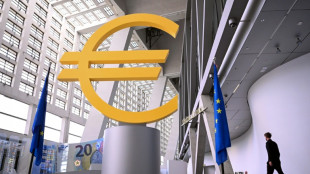 ECB hikes borrowing costs to combat Mideast energy shock

 England turn screw in 3rd Test against Pakistan

 France will not support Infantino in FIFA election: federation chief

 In their words: Israeli forces describe AI-backed Gaza killing in new film
 Yemen's Houthis seize key city on Red Sea: military source

 Oil prices extend gains as markets await ECB rate outlook

 Wars pose a test as India hosts BRICS summit with China, Russia, Iran leaders

Chancellor Olaf Scholz's government on Tuesday agreed a huge tax relief programme for companies in a bid to revive Germany's sputtering economy.
The package would ease the burden on "small and medium-sized enterprises by around seven billion euros ($7.6 billion) per year", the government said in a statement.
While coalition parties have haggled over the extent of the tax cuts in recent months, Germany's economy has flatlined.
Europe's largest economy stagnated in the second quarter of 2023, having dipped into recession around the turn of the year.
The slowdown has come as Germany struggled to cope with the impact of the Russian invasion of Ukraine last year, which sent prices for energy and food soaring.
The sluggish growth figures were reason for the German government to go on the "offensive", Scholz said at a press conference on the first day of a ministerial retreat outside Berlin.
The tax cuts -- part of a 10-point plan put forward by the government -- were intended to "stimulate growth for our country" and make sure companies made the decision to invest in Germany, Scholz said.
Among the measures agreed were a premium for energy-saving investments, and rule changes to make it easier for companies to write off losses.
- 'Turnaround potential' -
Recent disappointing data have added to concerns that Germany will drag down the eurozone's economic performance this year, with the International Monetary Fund predicting it will be the only major advanced economy to shrink in 2023.
"We take it seriously that Germany is growing less dynamically than others," Finance Minister Christian Lindner said at the press conference.
The country however had a "huge turnaround potential", which would be unlocked via the targeted relief package, Lindner said.
The pain has been felt particularly acutely in recent months in Germany's key industrial sector, as exports have plummeted against a backdrop of high inflation and subdued global activity.
Consumer prices rose at a 6.2-percent pace in July -- down from last year's peak but still very elevated.
The post-coronavirus recovery in key trading partner China has meanwhile lost much of its momentum.
With the outlook still gloomy, the government has come under pressure to carry out more thorough reforms to breathe new life into the economy.
The recent crisis had "deepened structural problems that have existed for a long time", the influential BDI industry lobby said recently.
Among the concerns raised by business are continuing high energy costs, cumbersome regulations, a lack of skilled labour and a slow shift to a digital economy.
The government sought to address some of these issues in its 10-point plan, which noted efforts to speed up the expansion of renewable energy capacity and steps to reduce bureaucracy.
In June, Germany passed a law easing immigration rules for skilled workers in a bid to counter industry-wide shortages.
F.Pavlenko--BTB