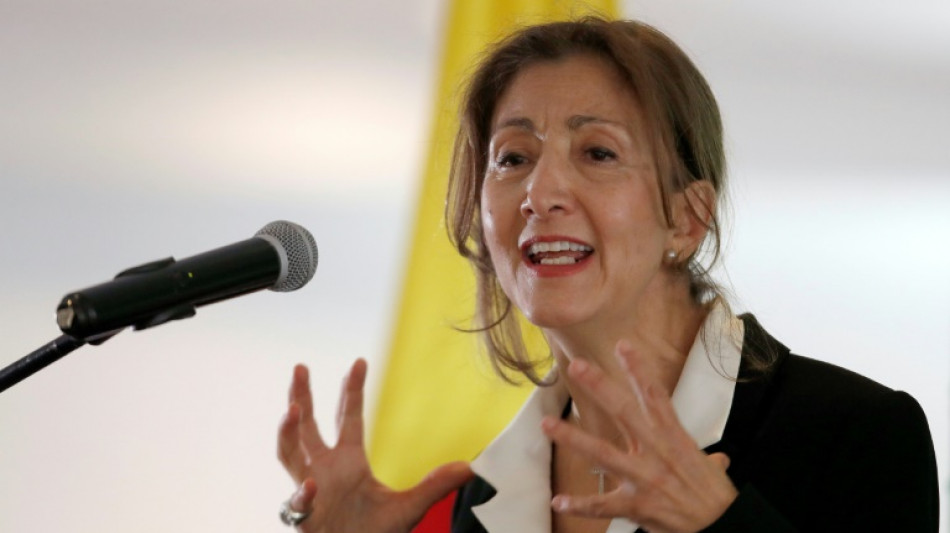
Former FARC hostage Betancourt announces fresh presidential bid / Photo: ©

 Prague’s Concert for the Future Kicks Off on Wenceslas Square

 Prince William and Princess of Wales to Announce Earthshot Prize Winners in Mumbai

 Indonesia Forest Fires: Health Crisis, Diplomatic Strains and the Search for Solutions

 BYD Dolphin G Leasing Deal: Plug-in Hybrid Supermini Available from £174 a Month

 JUEL Group Expands from Real Estate to Hospitality with Hyatt Centric Malta Opening

 French Economy Shrinks 0.1% as Consumer Confidence Slumps

 Wall Street Ends Turbulent Week Higher Despite Inflation and AI Jitters

 Kansas City Fed Chief Says Inflation Is Still Running Too Hot

Ingrid Betancourt -- who was abducted 20 years ago while campaigning for Colombia's presidency, and held captive by FARC rebels in the jungle for more than six years -- on Tuesday announced a new bid for the country's top job.
The Franco-Colombian leader of the Oxygen Green Party told reporters in Bogota she would vie to become the nominee to represent centrist parties in the race.
If she wins the nomination, she will contest the first round presidential election on May 29.
"I will work tirelessly from this moment... to be your president," she said.
Betancourt, 60, was captured by the FARC guerilla group in 2002 while campaigning for the presidency, and was rescued in a military operation six-and-a-half years later, in 2008.
She was chained for much of her captivity after she tried to escape.
The Revolutionary Armed Forced of Colombia (FARC) has been disarmed and disbanded under a 2016 peace pact that ended Colombia's decades-long internal war, and has since converted itself into a minority political party.
"I am here today to finish what I started with many of you in 2002," said Betancourt, who has mostly lived abroad since her liberation.
She added she was convinced "Colombia is ready to change course."
Betancourt presented herself as a centrist alternative to the right in power and the left led by former M-19 guerrilla and former Bogota mayor Gustavo Petro, a favorite in the polls.
"For decades, we have had only bad options: extreme right, extreme left," she said.
"The moment has come to have a centrist option."
She listed as objectives environmental protection and combating insecurity in a country with high rates of violence, and said she believed "in a world with a woman's vision."
Betancourt returned to public life in support of the peace process, confronting her captors last June for the first time since her ordeal in a meeting between victims and perpetrators arranged by Colombia's Truth Commission.
Colombia established the Special Jurisdiction for Peace (JEP), a tribunal to try the worst atrocities committed during the conflict.
Since 2017, it has charged former FARC commanders with the kidnapping of at least 21,000 people and the recruitment of 18,000 minors.
The JEP hopes to deliver its first verdicts this year. It has the authority to offer alternatives to jail time to people who confess their crimes and make reparations.
G.Schulte--BTB