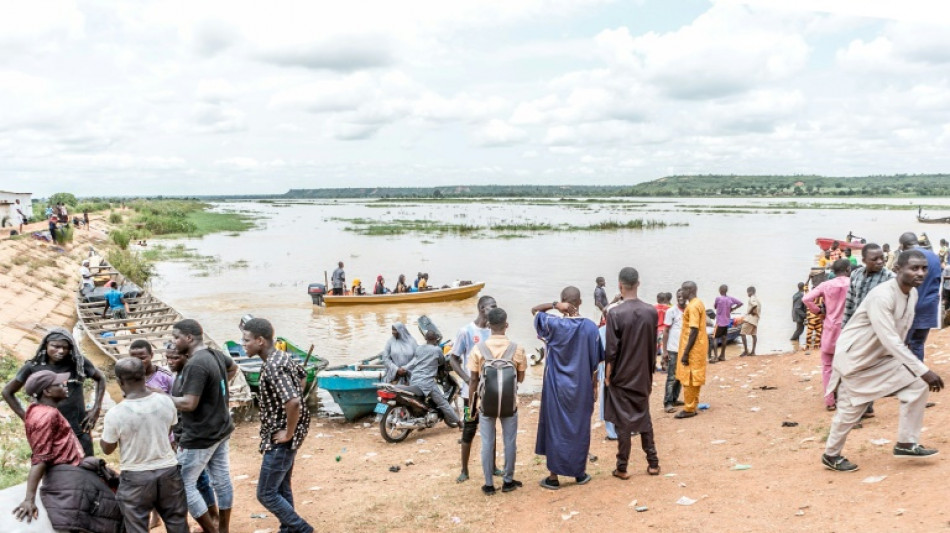
What's behind the dispute between Benin and Niger? / Photo: © AFP

 Typhoon Dujuan leaves four dead in Japan, 45,000 houses without power

 G7 leaders condemn Houthi strikes on Saudi Arabia

 Google data centre sparks protests in Austria

 Shin Ohashi: Junk food-loving teen and Japan's next big swimming hope

 Stocks rise on AI buzz, drop in oil prices

 China's robot dancers limber up for America's Got Talent final

 Despite military might, Saudi struggles to crush the Houthis

 Trump to tout deals, defend Iran war in UN speech

 Sri Lanka to issue verdict in landmark Easter attack trial

 No green light to lift EU sanctions on Russian oligarchs, talks to resume

 UK agrees support for Saudi in struggle with Houthis: reports

 EU foreign policy chief calls for continued sanctions on Russia

 Flights scrapped, evacuations urged as Typhoon Dujuan wallops Japan

 Fonseca to take break from tennis

 A Cuban zoo, and its animals, in epic battle for survival

 Infantino proposes consulting federations to reform FIFA

 El Nino weather pattern enters record territory: scientist

 OpenAI calls for US to lead global effort on AI standards

 South African ostriches plucked alive for luxury fashion: report

 US networks halt Trump coverage in revolt over White House ban

 Paramount settles with US states to clear Warner Bros. mega-merger

 Climate crisis a job for world leaders, not just activists: UK FM

 US networks halt Trump coverage over White House ban
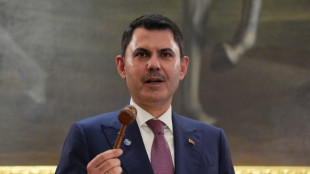
 French singer accuses Miley Cyrus of plagiarism

 EU fines Google 403 mn euros for location data breach

Benin and Niger are locked in a growing diplomatic row that has damaged their economies and seen Niger's military rulers switch off a key oil pipeline.
Tensions rose after a coup in Niamey last year and the two countries are now in a tug of war over landlocked Niger's export of oil via the Beninese coast and the opening of their shared border.
As relations sour further and West African leaders prepare to discuss the fallout at a regional summit next weekend, AFP looks at the background to the dispute.
- How did it begin? -
Ties have been strained since the overthrow of Niger's President Mohamed Bazoum in a coup in July 2023. Since then, he has been imprisoned at the presidency.
The Economic Community of West African States (ECOWAS) regional bloc imposed sanctions on Niger and Benin took a hard line -- not least because of the close relationship between Bazoum and Benin's President Patrice Talon.
Talon "got involved in the crisis in Niger with a great deal of zeal," said Emmanuel Koukoubou, a political scientist at the Beninese think tank Civic Academy for Africa's Future.
Under sanctions imposed on Niger, Benin closed the border but has since reopened it. Niger's military rulers, though, have refused to reopen their side.
- Why the escalation? -
In February, ECOWAS decided to lift the sanctions, paving the way for a normalisation of trade with Niamey.
But relations with Benin have been under increasing strain since May.
Niger refuses to reopen its border with Benin, accusing it of harbouring French bases aimed at "destabilising" Niger -- claims Benin and France deny.
In response, Benin suspended its authorisation to load oil from Niger at Seme-Kpodji port. That ran against a 2019 agreement between the two countries and WAPCO, the Chinese company that manages the pipeline from oil fields in northeast Niger to Benin.
The 2,000-kilometre (1,240-mile) pipeline is vital to both Niger's and Benin's economies.
The dispute came to a head in June, when a court in Benin handed three Nigeriens 18-month suspended prison sentences for falsely trying to enter the port.
Niamey says they are employees of WAPCO in Niger whose presence was legitimate. The military rulers in Niger turned off the pipeline's taps.
- What are the consequences? -
The economic fallout of the dispute is hurting both sides.
Border communities are unable to trade or access certain goods, particularly grains.
"We have the same communities on both sides of the border," said Ali Idrissa, executive secretary of Rotab, a group of Nigerien NGOs.
"Seeking to separate these people through an unnecessary social and economic crisis is very damaging," he said. "Neither country can do without the other."
Trade at the Beninese port of Cotonou, which was the main import and export route for landlocked Niger, is also slowing.
Companies are struggling and so is the Beninese government, which has seen a drop in the collection of customs duties.
The port has also been affected by junta-led Mali and Burkina Faso's preference for trade via the port of Lome in Togo, in solidarity with Niger.
Niamey is turning to Lome too, but the route is longer and riskier because the goods have to pass through Burkina Faso.
- What's the solution? -
"The two parties have broken off discussions and have no desire to continue trading," said political scientist Koukoubou. "The key issue today is to determine who is going to lose face."
He said a mediator would likely be needed to reach a solution.
WAPCO, a subsidiary of the Chinese state oil company CNPC, has tried without success to reestablish dialogue between the two countries.
But in a possible sign of thawing, two former Benin presidents visited Niamey last month for talks with Niger's military leader General Abdourahamane Tiani.
In a communique read on Nigerien radio on Tuesday, Tiani repeated claims about foreign troops on the border, but said he was open to "frank and fraternal" dialogue.
"The head of state accepted in principle to the establishment of a tripartite commission aimed at restoring normal relations," the statement said.
A regional diplomatic source told AFP that the current crisis will be on the table at the ECOWAS heads of government meeting on July 7.
"The current crisis impacts on the economy of both countries," the source said.
"A crisis between countries and ECOWAS is easier to solve than one between countries."
R.Adler--BTB