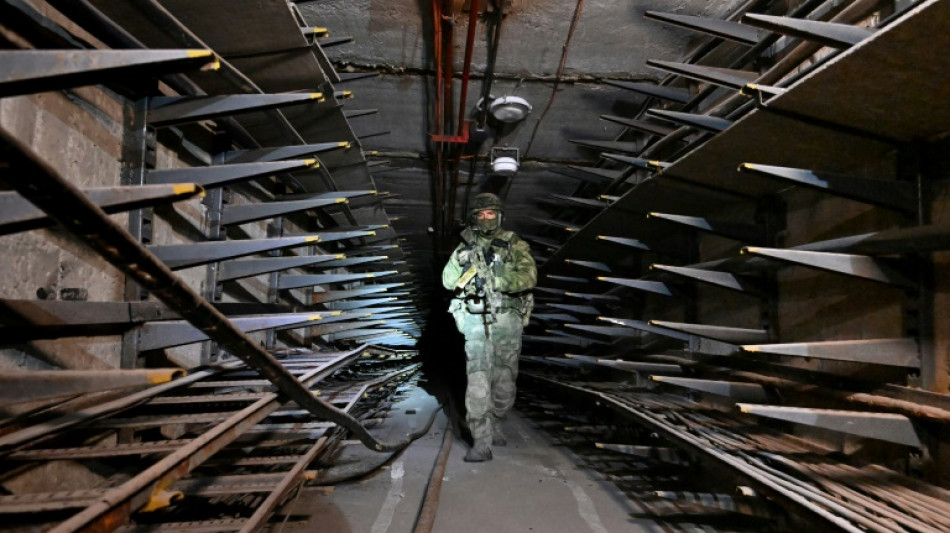
In the tunnels of Azovstal, traces of Ukraine's resistance / Photo: © AFP

 Yamaguchi to face An in hunt for fourth badminton world crown

 Norris clinches pole for Dutch GP
 Norris clinches pole for Dutch Grand Prix

 Pope Leo calls for courage in Rimini visit after stop in tiny San Marino
 Man Utd must learn from 'frustrating' defeat at Hull: Carrick
 Yamaguchi on course for fourth badminton world crown
 Man Utd humiliated by Hull in dismal start to Premier League season
 Anthropic market debut could break SpaceX IPO record: media

 Pope's 'couturier of the sacred' fueled by faith
 Duplantis locked in on 'grinding' for big bars
 Stokes says decision to leave Headingley off Ashes roster 'shambolic'

 New arrival Rodri to miss Elche opener: Barca's Flick
 Atletico's Alvarez to return against Villarreal: Simeone
 Dozens of civilians killed, kidnapped as jihadists clash in Nigeria
 Former envoys urge joint French, UK action on Palestinian territories
 Australia lead by 101 in 2nd Bangladesh Test as 18 wickets fall on day one
 'Aura' battles leap from social media to Latin America streets

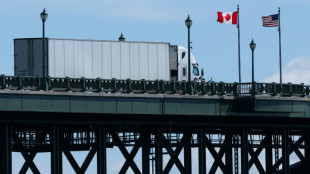
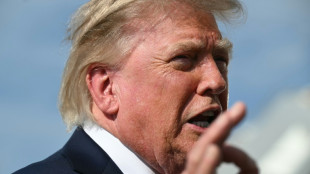 US, Canada fail to reach trade pact to avert Trump tariffs
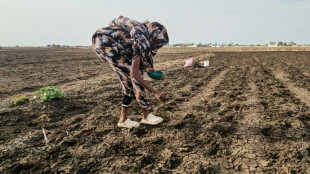 Sudan farms lie barren as El Nino leaves Nile banks dry
 Arctic shipping a daunting prospect in hotly contested region
 In US, rare earths extracted from coal mine wastewater
 Nakashima pounds Fritz, Bejlek beats Keys in Cincinnati upsets
 Canadian negotiator says 'more work to do' on US trade deal

 'Solid' Clark takes solo lead at BMW Championship
 Arteta hails Arsenal's desire after perfect start to title defence

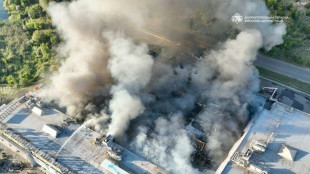
Scrapped metal and concrete debris is all that remains of the Azovstal steel factory in Mariupol, a symbol of Ukraine's weeks-long resistance against the Russian army in the devastated port city.
The defenders of Mariupol made a last stand at Azovstal, taking shelter in a warren of underground tunnels beneath the steel plant before surrendering in May.
Now Russian soldiers and their separatist allies with white armbands patrol the ruins of the Soviet-era factory that was once the pride of Mariupol and employed more than 12,000 people.
AFP journalists were among the first reporters to go inside the bombed-out plant as part of a press tour organised by the Russian defence ministry.
Controlled explosions could be heard at regular intervals across the plant's vast territory as Russian soldiers carried out de-mining operations.
Reporters were taken down into the maze of tunnels where hundreds of Ukrainian defenders and civilians spent weeks holed up underground as the Russians bore down.
The Ukrainian troops finally surrendered in May, with President Volodymyr Zelensky saying the country needed its "heroes" alive.
The plant's network of tunnels and bunkers was built during the Cold War and designed to shield workers from a possible nuclear attack.
Inside one dark room, belongings and clothes look hastily abandoned, scrunched up on the floor and on the metal bunk beds with no mattresses.
Bullet casings lie scattered on the ground, while the tables are covered with bandages, cups, plates and photographs of soldiers, likely those who died in battle.
The organisers of the press tour said the rooms were occupied by fighters from the Azov regiment, a former paramilitary unit which has integrated into the Ukrainian armed forces.
Russia describes the regiment, which has previous links to far-right groups, as a neo-Nazi organisation.
On the walls of a staircase leading down into the tunnels, reporters could see graffiti resembling a "Black Sun", a Nazi symbol. It was not clear who drew it.
- Big role of fighter jets -
The fighters inside Azovstal withstood the attacks of the Russian army for over a month, while the rest of the city had already fallen under Moscow's control after a devastating siege.
Around 2,000 Ukrainian soldiers who surrendered to the Russian forces are believed to be in the custody of pro-Moscow separatists in eastern Ukraine, with Moscow insisting they should stand trial.
Ruslan, a pro-Moscow fighter who took part in the assault on Azovstal, praised the "big role" of fighter jets in the battle for the plant.
"I think that's why they surrendered," said the 34-year-old soldier with a salt-and-pepper beard who goes by the nickname "Wolf".
Originally from Transnistria, a pro-Russian separatist region in Moldova, Ruslan has been fighting in eastern Ukraine since 2014.
The Ukrainians were "trained, they felt comfortable here", he said.
"It was difficult for us because it was unfamiliar terrain and they had everything close at hand. In each room there were supplies of weapons, ammunition."
Another fighter, Andrei, said the tunnels also played a major role.
"It was convenient to hide there, defend themselves," said the 43-year-old, who hails from the region of Donetsk in eastern Ukraine.
The fighter also appeared to contradict the official Russian line that the majority of the "nationalist" fighters at the plant came from other regions.
"The people of Azov were 70 percent from Mariupol, locals," said the soldier who sported a scarf covering his face and wore a cap with the letter Z, a symbol of Russia's military intervention in Ukraine.
He said that because many were locals, they could "bring in" their families to shelter with them.
Hundreds of civilians, including women and children, had been evacuated from beneath Azovstal where they were sheltering with the soldiers.
Three months of fighting in Mariupol have sent hundreds of thousands of people running for their lives and caused untold suffering and death.
Those who stayed are now adjusting to a new life under Russian control.
Some told AFP their main difficulty was the lack of electricity and water.
J.Fankhauser--BTB