French parliamentary election: what's at stake? / Photo: © AFP

 Pogacar wins Vuelta a Espana opening stage
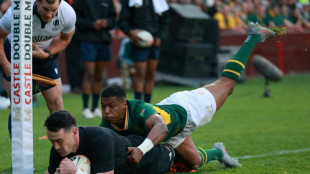 Clinical New Zealand shock wasteful South Africa in first Test
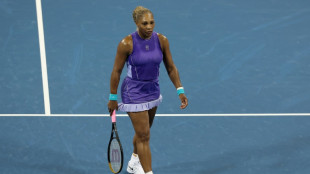
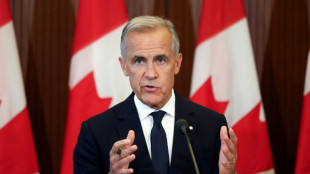 Canada hits back with new tariffs after trade talks with US fail
 Swedish police identify 17-year-old girl as victim in school sword attack
 Carrick keeps calm despite Man Utd misery, Sage beaten in first game as Palace boss
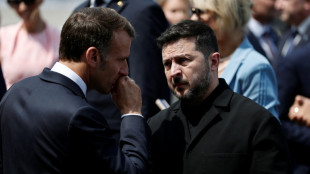 France to deliver interceptor missiles to Ukraine after new Russian strikes
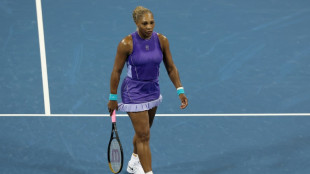 Serena Williams and Alcaraz unite in US Open mixed doubles
 Macron pledges air defence as 13 killed in Russia, Ukraine strikes
 DR Congo capital wary of Ebola nightmare
 Swedish police name 17-year-old girl as victim in school sword attack
 South Korea sends first container ship through Arctic route

 Trescothick eager to keep England job despite Hussey approach
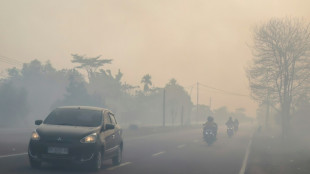 Indonesia deploys hundreds of soldiers to tackle Borneo fires

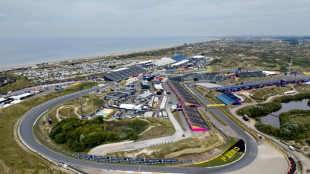 The last lap: Fans, drivers bid fond farewell to Dutch GP
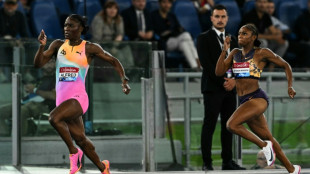 Silesia Diamond League: four events to watch
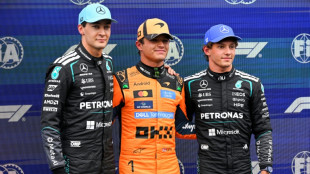
 Russell wins Dutch GP sprint race, Antonelli fourth

 Mercedes driver George Russell wins Dutch GP sprint race

 Ukraine strikes kill two children after Russia's deadly mall attack
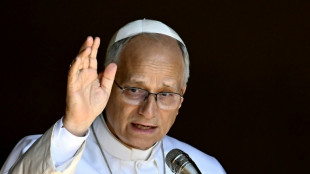
 Pope visits San Marino, before addressing Italian political gathering

 Trump tariffs heap up as Canada tries to curb US reliance
 Australia lose three wickets after skittling Bangladesh for 64
 Bangladesh all out for 64 in 2nd Test after Starc masterclass
 Odyssey effect: stars sell Greece to a new wave of US tourists
 South Korea to send first container ship through Arctic route
 Starc takes 5-11 to leave Bangladesh reeling in 2nd Test
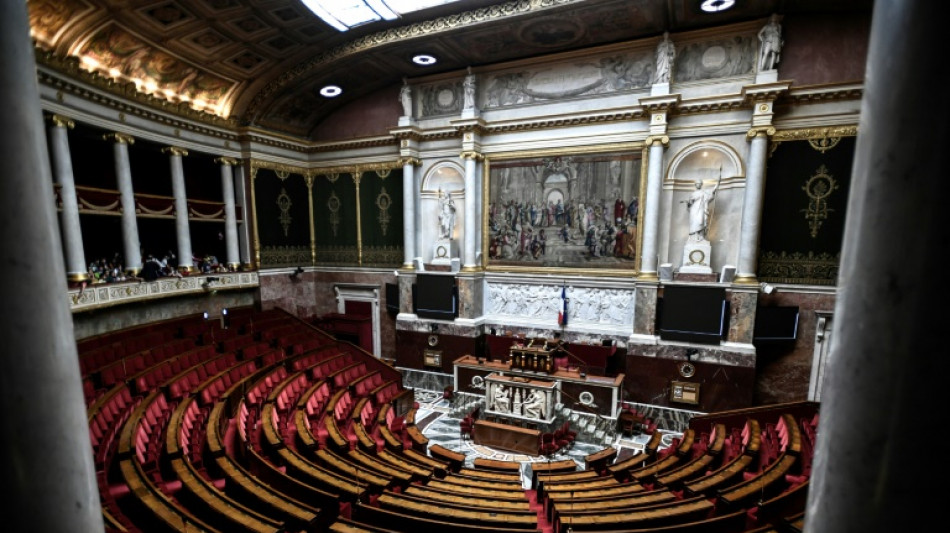
France goes to the polls on Sunday for the final round of parliamentary elections which are crucial for centrist President Emmanuel Macron's plans for his second term.
Macron's "Ensemble" (Together) coalition of centrist and centre-right parties is facing a challenge from a new left-wing alliance called NUPES.
In the first round of voting last Sunday, the two sides were neck-and-neck with 25.75 percent and 25.66 percent respectively.
In the second round, the initial field of candidates in almost all of the 577 constituencies has been whittled down to two contestants who go head-to-head.
Here are the possible outcomes:
- A majority for Macron? -
Macron's Together coalition is seen as the most likely of all the political movements to secure an outright majority of 289 seats.
Parties loyal to the former investment banker enjoyed a landslide victory in the last polls in 2017, but few expect them to get near the 350 seats secured then.
Current projections from pollsters suggest Together is on course for between 255-310 MPs.
Only a performance at the upper end of that range would give Macron a majority and enable him to push through legislation almost without resistance.
"There's a feeling among some people that there'll be a jump in support for us next Sunday," one minister told AFP this week. "I don't believe it."
- Slightly short? -
Many political analysts expect Macron's Together coalition to fall short of a majority despite pleas to voters to give him a free hand.
He urged citizens not to add "French disorder to global disorder" and former prime minister Edouard Philippe said this week it would be "madness" to deprive the president of a majority.
Coalition negotiations are common in most parliamentary democracies, however, and a deal would have to be hammered out after the vote with new allies.
If Together is only slightly short of the crucial 289 seats, a handful of opposition MPs or independents could be induced to join the ruling parties.
If the gap is larger, formal tie-ups would have to be concluded with opposition groups such as the rightwing Republicans or the centre-right UDI.
Alternatively, Macron, 44, would have to rely on vote-by-vote support from rivals for each piece of legislation.
That would make for a messy and unstable legislature.
- Left surge? -
Seen as unlikely but not impossible, NUPES could outperform current expectations which see it winning from 150-220 seats.
Their leader, hard-left figure Jean-Luc Melenchon, 70, harbours hopes of forming the biggest group in parliament and then being named prime minister.
"Projections in terms of seats make no sense at this point, other than maintaining an illusion," he said last Sunday.
Forecasting the parliamentary elections and its 577 constituencies is a challenging task and polling firms have a mixed record.
The left performed better than expected in 1997 and 2007.
NUPES candidates will need working-class and young people to head to the polls in large numbers to stand any chance.
Melenchon has spent all week encouraging them to cast a ballot after record-high abstention rates last weekend.
Higher-than-expected turnout figures would be a positive signal for his coalition and would upset the statistical models used by polling companies.
"We've confounded predictions. Now the challenge is to prove the projections wrong," Julien Bayou, whose EELV green party is a member of NUPES, said last Sunday.
- Far-right gains? -
French far-right leader Marine Le Pen achieved a historic high score in the presidential elections in April and is hoping to translate this support into seats in parliament.
Projections suggest her anti-immigration National Rally (RN) party is on course for 10-45 seats, an increase from the eight it currently holds.
"There's no defeatism on the ground... there are positive dynamics since 2017," she said this week in northern France, where she is certain to be elected from her personal political fiefdom.
She has spoken of "dozens" of new MPs, while the head of her party Jordan Bardella has raised the possibility of 35-40.
More than 15 would enable the RN to create a formal parliamentary group, giving it significantly more visibility as well as resources.
- Other things to watch -
The futures of several cabinet members are on the line, notably high-profile Europe Minister Clement Beaune and Environment Minister Amelie de Montchalin.
They both face tricky contests and would be expected to resign from the government if they fail to win, under a convention that Macron has promised to uphold.
Elsewhere, the prospects of a 53-year-old baker who went on hunger strike last year to prevent the deportation of his African apprentice are being closely followed.
Stephane Ravacley, a political novice, is standing for NUPES in Doubs in southeast France.
P.Anderson--BTB