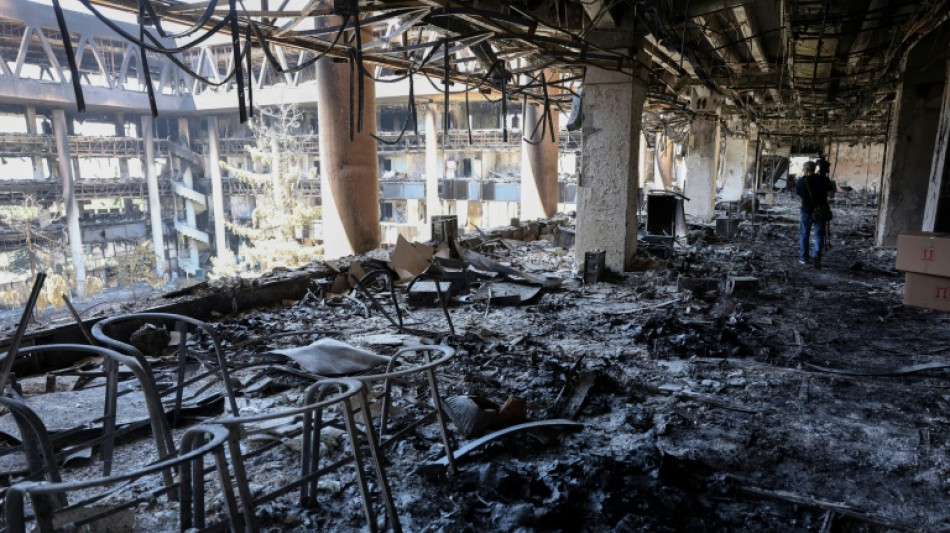
Iran voices 'serious doubts' over Israel commitment to ceasefire / Photo: © AFP

 Kenya reports first-ever Ebola death
 Tennis world No.1 Sinner's season over due to knee injury
 Yemen's Houthis claim attack on Riyadh airport, deny losing territory
 7-Eleven exits India amid mounting competition

 The alleged murder by US marine on Okinawa: five things to know

 End of an era as Messi prepares to hang up Argentina boots

 Superstar duo headline strong New Zealand squad for Rugby League World Cup
 South Korea warns of possible AI use in banking hacks
 EU vows AI rules will protect Europeans. Will they?

 Myanmar leader to visit Malaysia after migrant returns begin

 Germany's AfD poised to preside over state assembly for first time
 Australia's opposition vows 'largest cut to immigration' in country's history
 Ready, set, snooze: Sleep-deprived Japanese compete for best-rested

 Falcons thump Saints 45-24 as New Orleans marks Katrina anniversary
 Tuvalu govt adviser says Australia overstepped in pre-COP visit

 Asian stocks mixed despite tech-led Wall St record
 Tens of thousands expected in Paris for high school protests
 AI borrowing binge rattles US markets

 Young Canadians sue government over alleged climate failures

 White Sox down Guardians to take 2-0 series lead
 NHL record-breaker Ovechkin says current season will be his last
 France roar back in Nations League as Italy beat Turkey
 Messi readies for final farewell in Argentina send-off
 Esposito seals Italy win over Turkey in Nations League

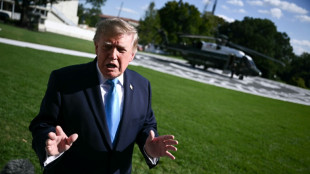 Russia downplays plague reports as Trump offers US help

Iran warned Sunday that it had little faith in Israel's commitment to a fragile ceasefire that ended the most intense and destructive confrontation between the two foes to date.
The 12-day war erupted on June 13, when Israel launched a bombing campaign in Iran that killed top military commanders and scientists linked to its nuclear programme. Tehran responded with ballistic missile attacks on Israeli cities.
Israel said its aim was to keep the Islamic republic from developing an atomic weapon -- an ambition Tehran has consistently denied.
The fighting derailed nuclear talks between Iran and the United States, which later joined its ally Israel's campaign with strikes on Tehran's nuclear facilities.
"We did not start the war, but we have responded to the aggressor with all our power," Iranian armed forces chief of staff Abdolrahim Mousavi was quoted as saying by state television, referring to Israel.
"We have serious doubts over the enemy's compliance with its commitments including the ceasefire, we are ready to respond with force" if attacked again, he added, six days into the ceasefire.
- IAEA dispute -
The conflict rattled the already shaky relationship between Iran and the UN's International Atomic Energy Agency.
Iran has rejected the IAEA's request to inspect its bombed nuclear sites, accusing its chief Rafael Grossi of "betraying his duties" by failing to condemn the Israeli and US attacks.
Iranian lawmakers voted this week to suspend cooperation with the agency.
Foreign Minister Abbas Araghchi called Grossi's request to visit the targeted facilities "meaningless" and "possibly malign in intent".
Tehran also cited a June 12 IAEA resolution criticising Iran's lack of nuclear transparency as a pretext used by Israel to justify launching its offensive the following day.
The backlash drew a sharp rebuke from Germany and Argentina, Grossi's home country.
"I commend Director General Rafael Grossi and his team for their unrelenting professionalism. Threats against them from within Iran are deeply troubling and must stop," German Foreign Minister Johann Wadephul wrote on X.
Argentina's foreign ministry said it "categorically condemns the threats against him coming from Iran".
Neither specified which threats they were referring to, but Iran's ultra-conservative Kayhan newspaper recently claimed documents showed Grossi was an Israeli spy and should be executed.
Speaking to US broadcaster CBS on Sunday, Iranian ambassador to the United Nations Amir Saeid Iravani denied there was any threat to nuclear inspectors in Iran, insisting they were "in safe conditions" but their work was suspended.
- Damage questioned -
The United States carried out strikes on three key facilities used for Iran's atomic programme.
In the days after, Trump said the United States would bomb Iran again "without question" if intelligence indicated it was able to enrich uranium to military grade.
Speaking to CBS on Saturday, Grossi said Iran could "in a matter of months" return to enriching uranium.
Questions remain as to how much damage the US strikes did to Iran's nuclear programme, with Trump and his officials insisting it had been "obliterated".
On Sunday, however, The Washington Post reported that the United States had intercepted calls between Iranian officials who said the damage was less than expected.
That followed an early "low confidence" US military intelligence report that said the nuclear programme had been set back months, not years.
Israel has said Iran's programme was delayed by years, while Tehran has downplayed the damage.
The IAEA said Iran had been enriching uranium to 60 percent, far above the levels needed for civilian nuclear power, although Grossi previously noted there had been no indication before the strikes that Iran was working to build an atomic weapon.
Israel has maintained ambiguity about its own nuclear arsenal, neither officially confirming nor denying it exists, but the Stockholm International Peace Research Institute has estimated it has 90 nuclear warheads.
- 'A new road'-
Iran's health ministry says at least 627 civilians were killed and 4,900 injured during the war with Israel.
Retaliatory missile attacks by Iran on Israel killed 28 people, Israeli authorities say.
During the war, Iran arrested dozens of people it accused of spying for Israel.
Iran's parliament on Sunday voted to ban the unauthorised use of communications equipment, including tech billionaire Elon Musk's Starlink satellite internet service, said the official news agency IRNA.
On Sunday, Washington's envoy to Turkey said the Iran-Israel war could pave the way for a new Middle East.
"What just happened between Israel and Iran is an opportunity for all of us to say: 'Time out. Let's create a new road'," Ambassador Tom Barrack, who is also the US special envoy to Syria, told the Anadolu state news agency.
"The Middle East is ready to have a new dialogue, people are tired of the same old story," he added.
Y.Bouchard--BTB