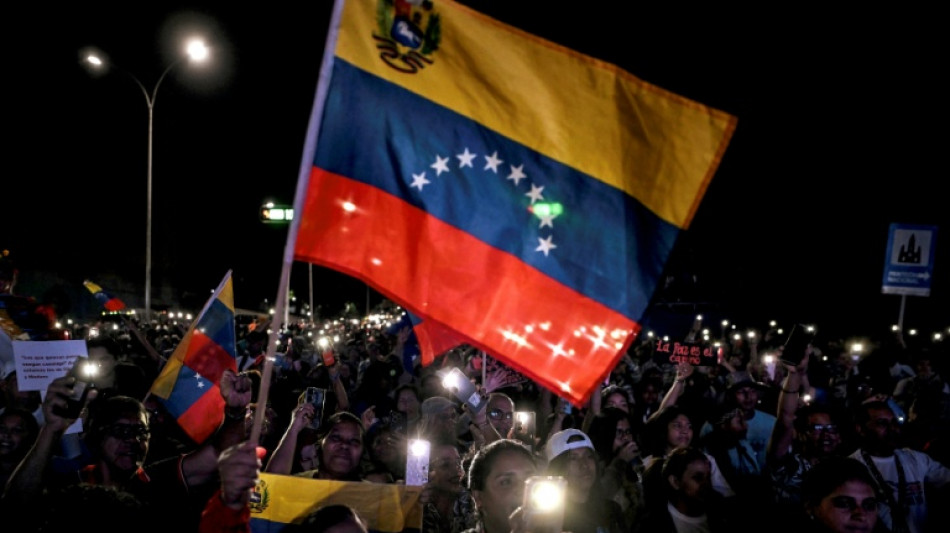
US oil blockade of Venezuela: what we know / Photo: © AFP/File

 Noosha Aubel: €143,056 in annual basic pay — while Potsdam’s residents are expected to serve as cash cows
 Cristiano Ronaldo provisionally suspended by Portugal after walkout
 Brilliant Renshaw ton puts Australia in strong position
 Zelensky blasts diesel deal after Russian strikes kill 15
 Cristiano Ronaldo provisionally suspended after Portugal walkout
 Alcaraz through in straight sets on Shanghai Masters opener
 Palmer signs contract to stay at Chelsea until 2034
 India detains 'cockroach' movement leaders in bid to thwart election protest
 Proposed next EU budget cut back in search for deal
 All Blacks learn from 'failed' Springboks series to punish Wallabies
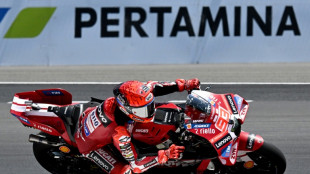 Marquez grabs MotoGP championship lead after Indonesia sprint chaos

 All Blacks extend Eden Park streak with big win over Wallabies
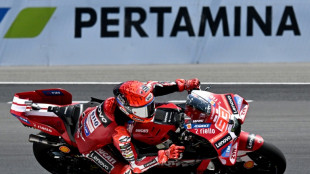 Marquez grabs MotoGP championship lead with Indonesia sprint win
 Schauffele closes in on leaders after 'weird' round in Japan
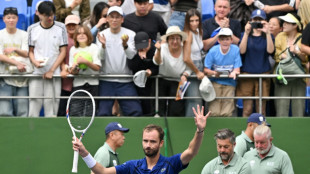 Medvedev through at Shanghai Masters in first match since disqualification
 Trump sows doubt on plan to livestream US military execution
 Hunger and malnutrition stalk Gazans, a year on from ceasefire
 Fernandez trumps MotoGP championship duo to grab Indonesia pole
 October 7 scars push Israel's first-time voters to right
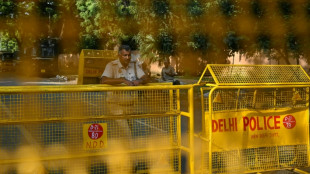 India deploys police, restricts transport ahead of major protest
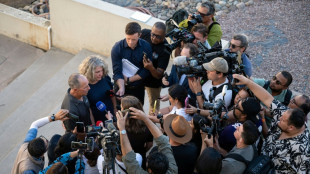 Three Mexicans convicted in murders of Australian, US surfers
 Powerful waves lash California coast as storm threatens more damage

 Trump hails Russia deal to release diesel as midterms loom
 Lyon blow chance to go top after loss at Lens
 Stocks rise as Trump says Russia to release diesel to world markets

US forces in the Caribbean -- where Donald Trump has deployed a massive flotilla of warships -- have been tasked by the president with blockading "sanctioned oil vessels" going to and from Venezuela.
Trump's administration has been piling pressure on the country and its government for months, in an apparent bid to oust leftist leader Nicolas Maduro -- whom Washington accuses of heading a drug cartel.
The US president has said that Maduro's "days are numbered" and pointedly refused to rule out a ground invasion, but the Venezuelan leader has remained defiant so far.
Below, AFP examines the situation in the Caribbean.
- US assets in the Caribbean -
Many questions remain over how the Venezuela blockade will play out, and it is not clear how many tankers will be impacted, or to what degree the US military -- which currently has thousands of personnel in the Caribbean -- would be involved.
There are currently 11 US warships in the Caribbean: the world's largest aircraft carrier, an amphibious assault ship, two amphibious transport dock ships, two cruisers and five destroyers.
There are US Coast Guard vessels deployed in the region as well, but the service declined to provide figures on those assets "for operational security reasons."
Washington has also flown a series of military aircraft -- including long-range bombers -- along the coast of Venezuela, and has reached deals with some countries in the region for the use of their airports for military flights.
- Tanker seized -
The United States has already seized one tanker off Venezuela's coast, taking control of the M/T Skipper last week in a raid that provides a potential preview of future action.
A video released by US Attorney General Pam Bondi showed US forces descending from a helicopter onto the tanker's deck, then entering the ship's bridge with weapons raised.
A US court later released a heavily redacted warrant authorizing the seizure of the ship, which the document said was carried out by the Coast Guard.
- Strikes on alleged drug boats -
Washington's forces began carrying out strikes on alleged drug-smuggling boats in the Caribbean in early September, later expanding those operations to the eastern Pacific Ocean.
The Trump administration has said the strikes -- which have destroyed more than 25 vessels and killed at least 95 people -- are aimed at curbing trafficking.
But White House Chief of Staff Susie Wiles told Vanity Fair magazine that the strikes are aimed at pressuring Venezuela's leadership, saying Trump "wants to keep on blowing boats up until Maduro cries uncle."
- 'Quarantine' of Cuba -
Latin American countries have been targeted with blockades in the past, most famously during the Cuban Missile Crisis in 1962, when Washington established a "quarantine" to stop the Soviet Union from bringing offensive weapons to its Caribbean ally.
Some Soviet ships decided to turn back before reaching the quarantine line, while others were stopped and searched by US forces but cleared to proceed to Cuba.
The measure -- which was called a "quarantine" rather than a blockade because no state of war existed -- was lifted after the United States and Moscow reached a deal to end the crisis, which is widely considered the closest the two countries came to nuclear war.
W.Lapointe--BTB