US funding cuts could reverse decades of gains in AIDS fight: UN
/ Photo: © AFP/File

 Paris Women's Fashion Week: the key trends

 i-payout Introduces a New Approach to Payments, Closing the Beneficiary Information Gap

 New Generation of Crypto Miners Released by ASICID

 New investor forecasts LIV Golf teams could be worth $100 mn each
 Shakira, Pique return to court over children visit arrangements

 Nobel physics prize hails 'ghostly messengers' from space
 France's Mistral unveils latest model in sovereign AI push
 Stocks climb as oil prices retreat

 Vstock Transfer Names Securities Industry Veteran Erica Goodstein General Counsel and Chief Compliance Officer

 Four Indonesian seamen return home after Somali pirate ordeal

 Crisis-striken Haiti postpones elections

 Germany arrests ex-spy chief on suspicion of giving secrets to foreign powers

 Djokovic wins China Open after de Minaur retires
 IMF warns cost-of-living shocks cause 'lasting deterioration' in affordability

 Alcaraz wins Japan Open for first title since injury return
 'We're working to keep football clean', Turkish minister says

 FIFA chief Infantino hit by Norwegian double complaint

 Exiled Catalan separatist leader Puigdemont cleared to return to Spain
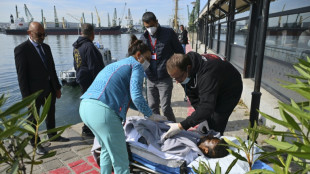
 Stock markets climb as oil prices retreat

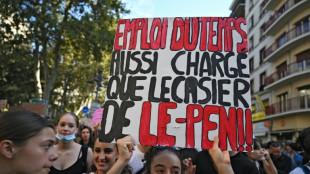 'No future': Thousands mass in France for high school protests
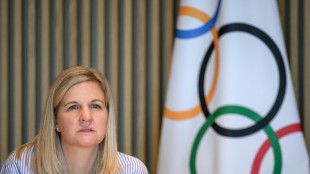
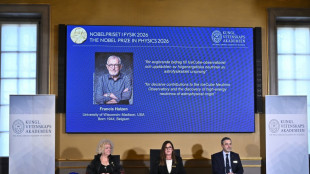 Nobel physics prize honours work on 'ghostly messengers' from outer space

 Bulgaria searches for missing crew after drones hit two more ships in Black Sea
 Le Pen vows drastic cost savings to prevent French 'default'

 'Eats through a straw': French teens wounded in high school protests

 Thousands mass in France for high school protests

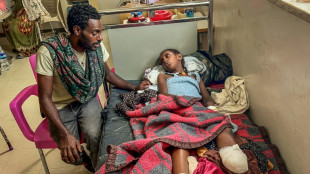
The halt to US foreign aid is a "ticking time bomb" that could reverse decades of hard-fought gains in the fight against AIDS, the United Nations warned Thursday.
Around 31.6 million people were on antiretroviral drugs in 2024 and deaths from AIDS-related illnesses had more than halved since 2010 to 630,000 that year, the UNAIDS agency said in a new report.
But now infections were likely to shoot up as funding cuts have shuttered prevention and treatment programmes, it said.
The United States has been the world's biggest donor of humanitarian assistance but President Donald Trump's abrupt slashing of international aid in February sent the global humanitarian community scrambling to keep life-saving operations afloat.
"We are proud of the achievements, but worried about this sudden disruption reversing the gains we have made," UNAIDS executive director Winnie Byanyima told AFP ahead of the report's launch in Johannesburg.
The agency in April warned that a permanent discontinuation of PEPFAR, the massive US effort to fight HIV/AIDS, would lead to more than six million new infections and an additional 4.2 million AIDS-related deaths in the next four years.
This would bring the pandemic back to levels not seen since the early 2000s.
"This is not just a funding gap – it's a ticking time bomb" whose effects are already felt worldwide, Byanyima said in a press release.
Over 60 percent of all women-led HIV organisations surveyed by UNAIDS had lost funding or had to suspend services, the report said.
In a striking example, the number of people receiving pre-exposure prophylaxis (PrEP) drugs to prevent transmission in Nigeria fell by over 85 percent in the first few months of 2025.
The "story of how the world has come together" to fight HIV/AIDS is "one of the most important stories of progress in global health," Byanyima told AFP.
"But that great story has been disrupted massively" by Trump's "unprecedented" and "cruel" move, she said.
"Priorities can shift, but you do not take away life-saving support from people just like that," she said.
- Key medical research affected -
Crucial medical research on prevention and treatment have also shut down, including many in South Africa which has one of the highest HIV rates in the world and has become a leader in global research.
"Developing countries themselves contribute very much towards the research on HIV and AIDS, and that research serves the whole world," Byaniyma said.
In 25 out of 60 low- and middle-income countries surveyed by UNAIDS, governments had found ways to compensate part of the funding shortfall with domestic resources.
"We have to move towards nationally-owned and financed responses," Byaniyma said, calling for debt relief and the reform of international financial institutions to "free up the fiscal space for developing countries to pay for their own response".
Still, the global HIV response built from grassroots activism was "resilient by its very nature", she told AFP.
"We moved from people dying every single day to now a point where it is really like a chronic illness," she said.
"There is no question that the investment has been worth it, and continues to be worth it. It saves lives."
I.Meyer--BTB