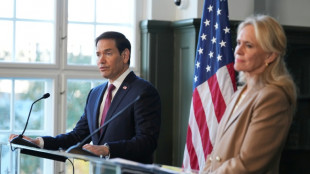
Rubio says Asia might get 'better' tariffs than others / Photo: © POOL/AFP

 Paris Women's Fashion Week: the key trends

 i-payout Introduces a New Approach to Payments, Closing the Beneficiary Information Gap
 New Generation of Crypto Miners Released by ASICID

 New investor forecasts LIV Golf teams could be worth $100 mn each
 Shakira, Pique return to court over children visit arrangements

 Nobel physics prize hails 'ghostly messengers' from space
 France's Mistral unveils latest model in sovereign AI push

 Stocks climb as oil prices retreat
 Vstock Transfer Names Securities Industry Veteran Erica Goodstein General Counsel and Chief Compliance Officer

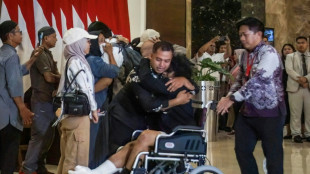 Four Indonesian seamen return home after Somali pirate ordeal

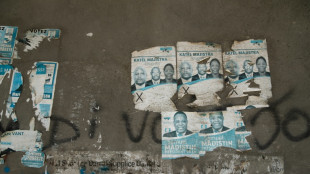 Crisis-striken Haiti postpones elections

 Germany arrests ex-spy chief on suspicion of giving secrets to foreign powers

 Djokovic wins China Open after de Minaur retires
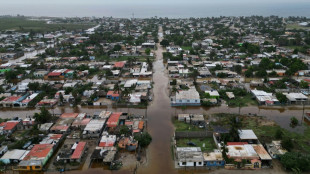
 IMF warns cost-of-living shocks cause 'lasting deterioration' in affordability
 Alcaraz wins Japan Open for first title since injury return
 'We're working to keep football clean', Turkish minister says

 FIFA chief Infantino hit by Norwegian double complaint

 Exiled Catalan separatist leader Puigdemont cleared to return to Spain
 Stock markets climb as oil prices retreat
 'No future': Thousands mass in France for high school protests
 Nobel physics prize honours work on 'ghostly messengers' from outer space

 Bulgaria searches for missing crew after drones hit two more ships in Black Sea
 Le Pen vows drastic cost savings to prevent French 'default'

 'Eats through a straw': French teens wounded in high school protests
 Thousands mass in France for high school protests

US Secretary of State Marco Rubio said Thursday that Asian nations might get "better" tariff rates than the rest of the world, as he attended ASEAN talks focused on Washington's trade war.
Rubio's visit to Malaysia came after US President Donald Trump threatened this week to impose punitive tariffs on more than 20 countries if they did not strike deals with Washington by August 1.
"I would say that when all is said and done, many of the countries in Southeast Asia are going to have tariff rates that are actually better than countries in other parts of the world," Rubio said on the sidelines of the Association of Southeast Asian Nations (ASEAN) meeting in Kuala Lumpur.
"But these talks continue. There'll be talks next week with Japan. There's ongoing talks with virtually every country represented here."
Trump said Monday that duties he had suspended in April would snap back -- even more steeply -- by the new deadline.
He has told more than 20 countries, many in Asia, they face tariffs ranging from 20 to 50 percent, and announced a 50 percent toll on copper imports and a possible 200 percent duty on pharmaceuticals.
Among those targeted were top trade partners Japan and South Korea, which could each be hit with 25 percent.
Indonesia, Laos, Thailand, Malaysia, the Philippines, Brunei and Myanmar -- all members of ASEAN -- face duties ranging from 20 percent to 40 percent.
Vietnam, which is also an ASEAN member, is one of only two countries -- Britain being the other -- to have reached a tentative agreement with Trump.
The levels were not too far from those originally threatened in April, although some were notably lower this time.
- 'Not going to walk away' -
US officials said ahead of Rubio's trip that Washington was "prioritising" its commitment to East and Southeast Asia.
In Malaysia, Rubio said the United States has "no intention of abandoning" the region.
"We've spent decades building these relationships," Rubio told reporters.
"Not only we're not going to walk away from them, we seek to expand them and build upon them with a part of the world that is essential."
Rubio's remarks followed a meeting with Russian Foreign Minister Sergei Lavrov where the US diplomat expressed "disappointment and frustration" about the lack of progress on ending the war in Ukraine.
He also attended a post-ministerial conference, trilateral talks with the Philippines and Japan and met with Malaysia's Prime Minister Anwar Ibrahim for talks on tariffs.
"Malaysia believes that such unilateral actions undermine free trade flows and could have a negative impact on regional economic growth, especially for trading nations like Malaysia," Anwar said in a statement.
"I expressed my stance that the space for negotiations should remain open to ensure fair, equitable and non-oppressive trade outcomes for developing countries."
Rubio said he might also meet with his Chinese counterpart Wang Yi, who is attending the ASEAN meeting.
The two largest economies remain locked in a range of disputes on issues from trade and fentanyl, to Taiwan and cutting-edge technology.
Without mentioning the United States, Wang on Thursday called for a "fairer and more reasonable" international order.
"At the same time, we are also confronted with challenges such as the impact of unilateral protectionism and the abuse of tariffs by a certain major country."
T.Bondarenko--BTB