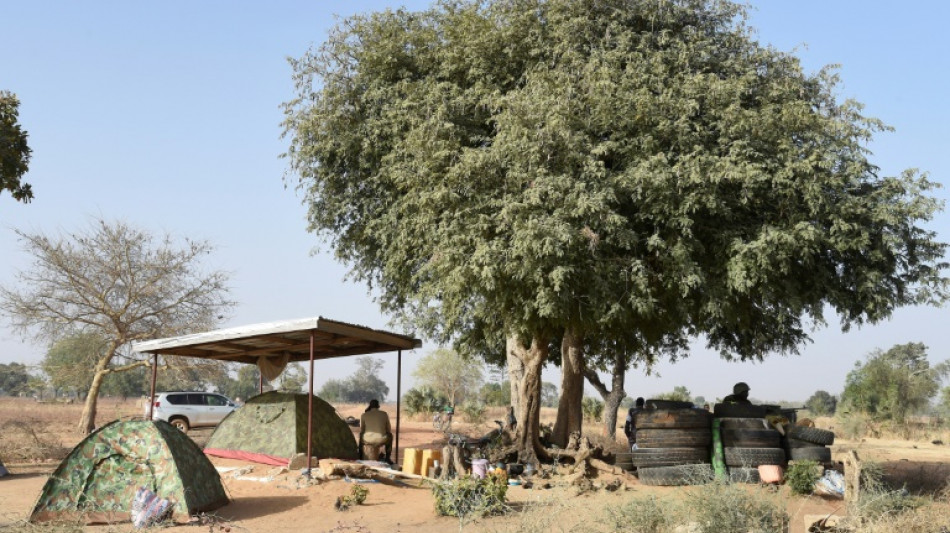
Togo tight-lipped as Burkina jihadists infiltrate north / Photo: © AFP

 England's Nations League surge helps heal World Cup wounds

 Mayor of opposition stronghold Izmir defects to Erdogan party
 Mertens beats Gauff to set up Swiatek clash at China Open

 Benin full of pride at role in Messi's last dance

 France suspends stun grenade use at student protests ahead of PM speech
 Indonesian court hears 'negligence' complaint against state over fires, haze

 Rubio in Greece to urge against Western civilisation 'decline'
 Micron workers at Taiwan plant vote in favour of strike
 In 'The Social Reckoning,' Jeremy Allen White takes on Facebook's 'frightening' ambition
 Chip industry activists call for South Korea to recognise cancer cases
 Famine-scarred southern Madagascar braces for El Nino
 How the EU regulates lobbyists
 I.Coast refuge offers lifelong care for youngsters scorned as 'sorcerers'

 Indian central bank hikes rates for first time in more than 3 years
 Hotel Blacklist Launches New Accommodation Industry Risk Assessment Tool

 Bangladesh nuclear plant draws hope -- and worry

 US beat Canada 1-0 to wrap up four-win international break

 Turkey, Australia's joint COP31 leadership raises doubts

 For Turkish NGOs, COP31 offers rare space for action

 Sleep, appetite, gene-editing experts contend for Nobel chemistry prize

 Nobel Peace Prize haunted by the 'spectre' of Trump

 Africa launches own credit agency in bid for cheaper borrowing

 US, China, EU: three paths to regulating AI

 Australia's High Court rules against coal mine in landmark climate case
 Australia touts new funds for Pacific infrastructure at Fiji 'pre-COP'

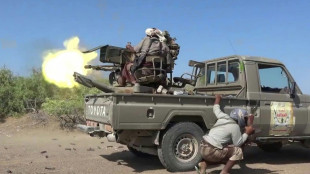
Jihadists from Burkina Faso have stepped up their assaults on northern Togo since the beginning of the year, with the Togolese government tight-lipped on their covert infiltration.
Keen not to sap the morale of the Togolese soldiers fighting the incursion, the small west African nation's authorities have offered little in the way of official comment or figures on violence by jihadists, who have gained ground since their first deadly attack in the country in 2022.
In a rare admission, Togolese Foreign Minister Robert Dussey recently said Islamist fighters had killed at least 62 people since January -- more than double the deaths the government recorded in the whole of 2023.
Those losses reflect a surge in jihadist unrest in Togo's north, at a time when armed fighters linked to Al-Qaeda or the Islamic State group are gaining ground across the wider west African region.
For Togolese political scientist and essayist Madi Djabakate, the lack of coverage in the Togolese press stems from the government's "policy of informational lockdown".
Togo's High Authority for Broadcasting and Communication (HAAC) has "expressly forbidden journalists from mentioning the attacks or human or material losses, so as not to demoralise the troops engaged on the ground", he told AFP.
- Porous borders -
Like neighbouring Benin, Togo is confronted with an overspill of violence from eastern Burkina Faso, where jihadists run rampant.
In 2024, Burkina Faso saw the most deaths of any country in the world from "terrorism" for the second year running, with 1,532 victims out of a worldwide total of 7,555, according to the Global Terrorism Index.
Located near the Togolese border, the Burkinabe province of Kompienga is home to a powerful branch of the Al-Qaeda-linked Group for the Support of Islam and Muslims, known by its Arabic acronym, JNIM.
Just over the frontier, Kpendjal prefecture is the Togolese region worst-hit by jihadist attacks, which west African security specialist Mathias Khalfaoui said was a result of the porous border.
Yet in the past year the violence has spread beyond the borderlands.
In a study for the Konrad Adenauer Foundation, a think tank associated with Germany's conservative CDU party, Khalfaoui said the jihadist advance could easily go under the radar "because of its slow and methodical nature".
"Until 2023, the danger was still concentrated in the territories directly bordering Burkina Faso," the analyst said.
Since May 2024, he said, the jihadists have extended their influence further south, towards the nearby prefectures of Oti and South Oti.
- 'Absence of the state' -
Khalfaoui said the expansion of the jihadists' scope in Togo was "becoming clear".
"We have to go back to December 2022 to find a month when, to our knowledge, there was no attack," Khalfaoui said in his study.
But tackling the issue is a challenge given the dire economic situation of Togo's north, the poorest and least developed part of an already impoverished nation, Khalfaoui added.
Djabakate, the Togolese political scientist, agreed, arguing that the country's current approach was "essentially military and repressive".
"The affected prefectures, notably Kpendjal and West Kpendjal, suffer from a structural absence of the state," Djabakate said.
"Civil servants posted to these areas perceive their assignment as a punishment, given the harsh living conditions and the absence of public services," he added.
Togo has deployed around 8,000 soldiers to the affected region, while the defence budget ballooned from 8.7 percent of GDP in 2017 to 17.5 percent in 2022, according to Foreign Minister Dussey.
The government has also attempted to improve living conditions for Togolese in the north, through an emergency aid programme launched in 2023.
But the situation is unlikely to improve without better coordination on tackling jihadism between countries in a divided west Africa, according to analysts in the region.
C.Meier--BTB