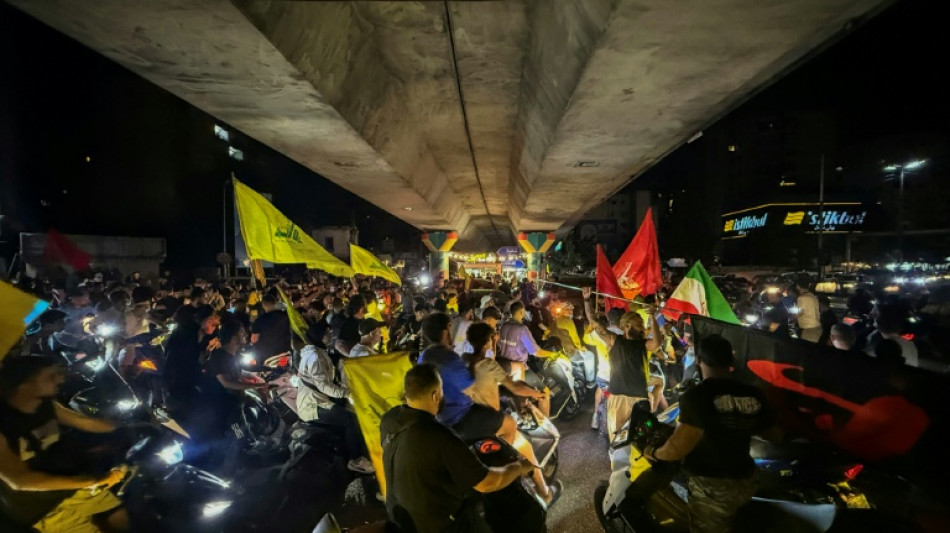
Lebanon says army will begin implementing Hezbollah disarmament plan / Photo: © AFP/File

 Rubio touts US power, calls on Europe to emerge from 'slumber'
 Trump says 'we don't think' Russian plague is bio-weapon
 Five children among 26 killed in Ukraine after Russian strikes

 Man City should 'accept' punishment for rule breaches, says Lineker

 US woman who survived botched execution is awake and speaking

 From 1800s to modern pharma: a Nobel-winning chemistry quest

 Southampton boss Eckert given suspended ban over 'Spygate'
 Russia warns of 'false' information as second plague case reported
 IEA ready to release more oil reserves if necessary
 HSBC 'consults' over UK unit job cuts amid AI adoption

 UK court quashes five ex-traders' Libor rate rigging convictions
 XM Receives “Global Customer Experience Leader Award 2026” at the TrustFinance Performance Awards
 Stocks slide as oil climbs on Mideast flareup

 Heavy casualties in Ukraine after Russian strikes
 French wine harvest set to hit historic low

 Kyiv 'cannot agree' to EU membership limiting food exports: minister

 Arteta targets more Arsenal glory after signing new deal until 2030

 Russell hit with Singapore grid penalty for taking new power unit
 Spotify expands audiobooks to more than 180 markets

 French-Japanese duo wins chemistry Nobel for solving molecular 'mystery'

 England's Nations League surge helps heal World Cup wounds

 Mayor of opposition stronghold Izmir defects to Erdogan party
 Mertens beats Gauff to set up Swiatek clash at China Open
 Benin full of pride at role in Messi's last dance

 France suspends stun grenade use at student protests ahead of PM speech
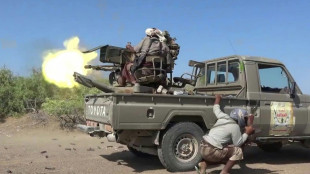
The Lebanese military will begin implementing its plan to disarm Iran-backed Hezbollah, the government said on Friday following a cabinet meeting, amid opposition from the group and its allies.
The cabinet discussed the plan on Friday despite a walkout by Shiite ministers in protest at the proposals.
In August, the Lebanese government ordered the military to draw up plans to disarm the once-dominant militant group by the end of the year, having come under pressure from the United States and Israeli strikes.
In a statement after Friday's meeting, information minister Paul Morcos said that Beirut welcomed the army's proposed measures "to extend the state's authority through its own forces and to restrict the possession of weapons to legitimate authorities".
Responding to questions from journalists, Morcos said "the Lebanese army will begin implementing the plan, but in accordance with the available capabilities, which are limited in terms of logistics, material and human resources".
The cabinet decided to keep the details of the army's plan confidential according to the statement, but Morcos said the military would "submit a monthly report on the matter to the cabinet".
Five Shiite ministers, including those from Hezbollah and its ally the Amal movement, walked out of the meeting, with the Lebanese armed group adamant it would hold onto its weapons.
The walkout happened as Lebanon's army chief entered the meeting to present a plan for disarming the group, local media reported.
Hezbollah and Amal ministers have now walked out of cabinet meetings three times over the disarmament issue.
Multi-confessional Lebanon has a sect-based power-sharing system in which legitimacy unofficially derives from consensus.
The government says disarming Hezbollah is part of implementing the US-brokered ceasefire agreement from November that ended over a year of hostilities between the group and Israel.
- Israeli strikes -
The cabinet session came amid intensified Israeli air strikes on southern Lebanon over the past two days, which killed at least five people, according to the health ministry and the state-run National News Agency.
David Wood, a senior Lebanon analyst at the International Crisis Group, told AFP that "Israel is trying to send a message that only concrete action on disarmament, rather than pledges and words, will do the job".
In August, the government agreed to objectives outlined in a US paper presented by Washington's envoy Tom Barrack. The paper included details on the timetable and mechanism for dismantling Hezbollah's arsenal, and stipulated Israel's withdrawal from Lebanon.
Beirut said at the time that "the Israeli side has not yet shown any commitment" to the contents of the American proposal and "has not taken corresponding steps" in exchange for Lebanon's commitment.
It insisted any progress in implementing the paper was conditional on other parties, primarily Israel.
- Power shift -
In late August, Prime Minister Nawaf Salam said "the path of monopolising arms, extending state authority and monopolising decisions on war and peace is a path that has begun and there is no turning back".
Ahead of the session, posters depicting Salam and Lebanese President Joseph Aoun were put up in the streets of Beirut with the caption: "We are all with you. One army, one arsenal, one state. A new era for Lebanon".
Hezbollah was the most powerful political force in Lebanon before its most recent war with Israel, able to sway and disrupt governments.
The balance of power has since shifted, with Hezbollah badly weakened by the war as well as the overthrow of its ally Bashar al-Assad in Syria.
"A solution must be found, and it is preferable that it be done in a proper manner, and that disarmament be achieved through mutual understanding," Abdul Rahman Trabulsi, a 60-year-old Beirut resident, said, adding that he believes Hezbollah's role "has ended".
In contrast, Ali Khalil, a 20-year-old restaurant worker, said that "weapons will not be taken, it's impossible," adding, "let them go first and fix the government and the state, then think about the weapons".
"If they decide today to seize the weapons, there will be a confrontation," he added.
Hezbollah was the only group to keep its weapons after Lebanon's 1975-1990 civil war, doing so in the name of resistance against Israel, which occupied the south until 2000.
Y.Bouchard--BTB