Lithuania builds shelters as drones prowl border skies / Photo: © AFP

 Alex Bodi pushes ahead with expansion: ALIX LASERS showroom planned for Bucharest
 Fossil fuels off COP31 agenda as global output keeps rising

 Haze not 'a threat' to Singapore F1 race: organisers

 COP31 organisers say to seek 'ambitious' action with their text
 Bartunkova thrashes Muchova to reach China Open semi-finals
 Drone hits Yandex data centre, in first such attack on Russia

 Oil prices surge and stocks sink on fresh inflation worries

 AI startup Manus raises $500m after Meta acquisition blocked by China
 From refuge to repatriations: Malaysia's Myanmar U-turn

 Morikawa says LIV players face 'business decision' after Rahm exit
 Tenzing Norgay's son says Himalayas sending climate warning
 On your bike! Bottas opts for two wheels to reach Singapore GP

 Alcaraz, Sinner, Osaka commit to Australian Open '1 Point Slam'

 Dodgers beat Braves to advance in MLB playoffs, Rays oust Yankees

 'A sun as black as my lungs': how corruption crucified a polluted Albania city

 The British historian helping the French rediscover de Gaulle
 Dodgers beat Braves to advance, Guardians survive in MLB playoffs

 Latin American, Caribbean women top Nobel literature buzz
 US says Fiji-based Chinese official paid bribes for Beijing
 After botched US execution, Christa Pike was nearly taken off life support

 Guinea-Bissau junta urges military unit loyal to ex-president to disarm

 As species decline, green turtles offer glimmer of hope

 Brothers Scott and Beauden Barrett named to start for All Blacks
 EU trade chief seeks to dial down China tensions

 'Never again Bolsonaro': thousands march ahead of Brazil election runoff

Recent drone sorties over Lithuania and its neighbours have sparked fears of a full-scale Russian attack, prompting the small Baltic country to encourage the building of bomb shelters.
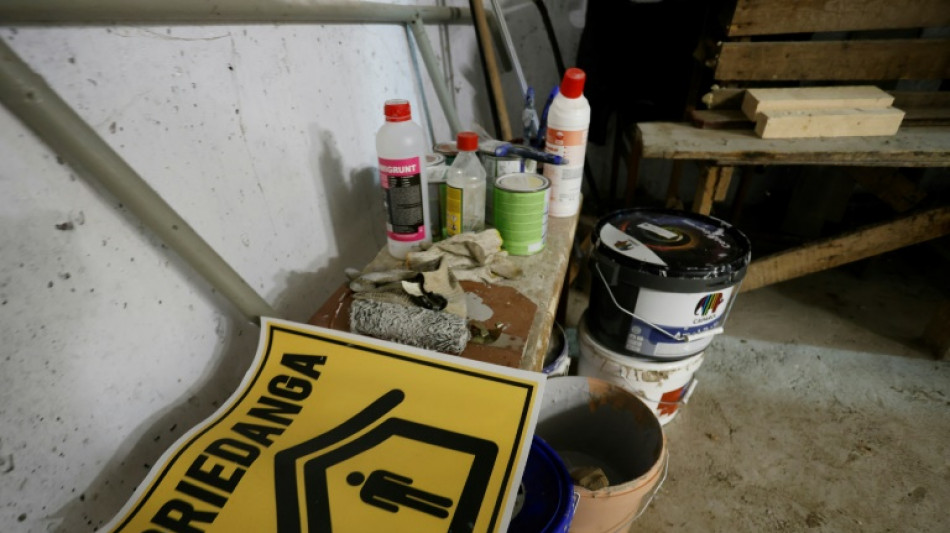
Not every community has yet heeded the call, but residents showed AFP the basement of an apartment block in Lithuania's capital Vilnius where they were readying a bunker in case of war.
"People wanted to have a sense of safety, to know they could hide from bombings and war for at least a few days," said Vidas Magnavicius, the head of the building's residents' association.
"We agreed we needed to prepare," he explained, recalling how the neighbours met to hatch a plan after Russia invaded another neighbour, Ukraine, in February 2022.
Lithuania, a former Soviet republic turned EU and NATO stalwart of 2.9 million inhabitants including a Russian-speaking minority, has anxiously watched the Ukraine conflict and fears it could be targeted next.
Authorities are urging city councils and local communities to accelerate the building of shelters.
In June the government said there were 6,453 shelters in Lithuania that could accommodate around 1.5 million people -- about 54 percent of the country's population.
Just over half the municipalities face a shortage of shelter spaces, and critics say many of the shelters exist only on paper, with few adequately prepared for times of crisis.
- Underground upgrades -
And not everyone is as motivated as Magnavicius and his neighbours.
"As long as there are no drones flying overhead, no one is interested," complained Donatas Gurevicius, a representative of Lithuania's fire and rescue department.
Officials are also looking for ways to talk about preparing for the unthinkable -- war -- without polarising society or being accused of war-mongering.
"It would also be irresponsible to irritate people with talk of war, but we all need to find a way to approach this very complex topic," explained Gurevicius.
Vilnius officials told AFP they plan to upgrade the city's 32 bomb shelters, saying they would have to be ready within 12 hours following an emergency.
The interior ministry launched a civil defence programme last year, offering tens of millions of euros to municipalities to upgrade their bunkers.
It would also like homeowners to install their own shelters, or prepare safe rooms that incorporate lessons from the Ukraine war, such as having at least two structural walls between the room and the outside.
"New apartment blocks and larger public buildings in Lithuania are now required to have bomb shelters, something which countries with high civil defence preparedness, like Finland and Switzerland, have done for decades," said Gurevicius.
Magnavicius and his neighbours invested several thousand euros to clear debris from the basement, install a toilet and upgrade power lines.
"We want to finish it and then have that peace of mind. Other communities are doing the same," Magnavicius said.
Authorities and the public have shown renewed interest in shelters since two Gerbera-type drones of the kind deployed by Russia entered Lithuania from Belarus in July. They caused alarm but no injuries.
- Extreme situations -
Last month, several people joined a course organised regularly by Lithuania's Red Cross on "extreme situations and how to prepare for them", said volunteer Rokas Dvarvytis.
They learn "to recognise dangers in time, to know where to hide and to have supplies", he told AFP.
The lessons also address environmental disasters and nuclear threats.
Participant Violeta Baranauskiene said she would evacuate with her children in case of war, adding: "My husband will remain to defend Lithuania, as it should be."
Vilnius approved a wartime evacuation plan this year. Vulnerable residents would flee while the municipality and those able to fight would help the military.
The interior ministry published an interactive map of all shelters and evacuation points and upgraded a we bsite that shows how to survive at least 72 hours in a crisis.
"The website has existed since 2015, but it wasn't very popular," said Loreta Naraskeviciene, the rescue department specialist responsible for the platform. "Now, interest in the project is growing."
S.Keller--BTB